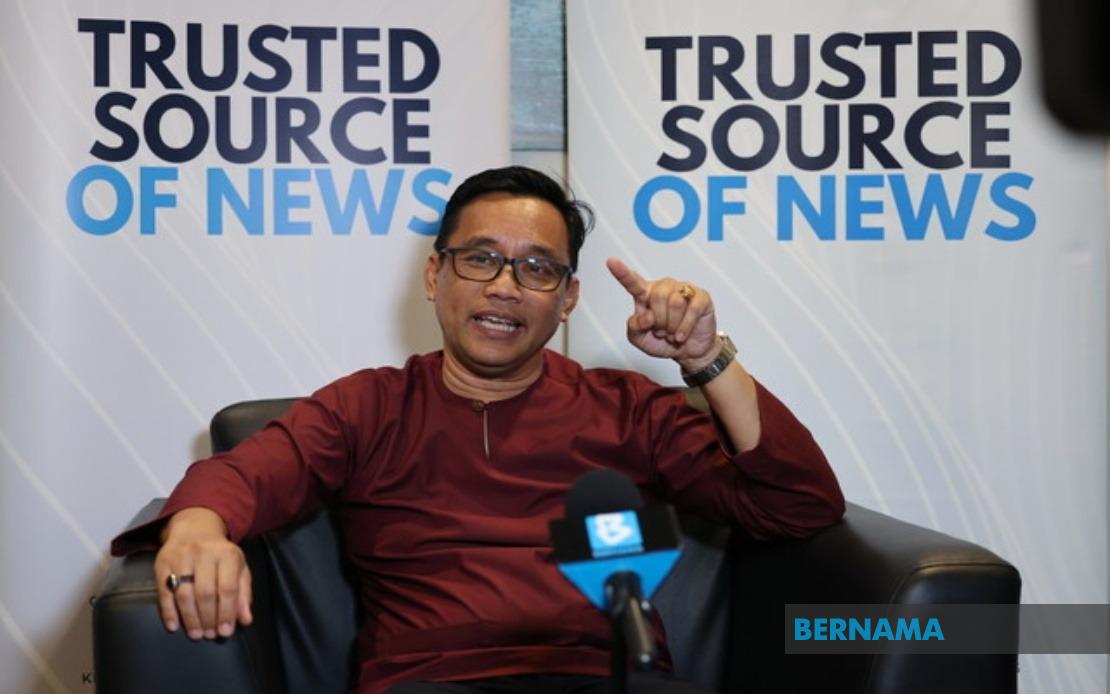
Mohd Khuzzan Abu Bakar is attempting to reclaim the Semerah state seat for Pakatan Harapan in the 16th Johor state election, framing his candidacy not as a redemptive bid following his 2022 defeat but rather as an opportunity to resurrect development work interrupted when the coalition lost state government control in 2020. The 58-year-old former banking officer, who previously served as Johor Youth, Sports, Culture and Heritage Committee chairman, views the campaign as a continuation of unfinished business with the community he has long-standing ties to through birth in Batu Pahat and marriage into a Semerah family.
The centrepiece of Khuzzan's platform centres on reconstructing critical infrastructure initiatives that stalled during the three-year hiatus from office. Among these is the Taman Sri Sulong Youth Mini Complex, a project designed to serve the constituency's younger demographic but left incomplete when Pakatan Harapan's coalition government ended. Beyond this flagship commitment, he intends to address systemic problems that have plagued residents throughout the intervening period, particularly chronic water supply deficiencies affecting Semerah households and recurrent flash flooding that devastates Batu Pahat and Tanjung Laboh during heavy rainfall seasons. These infrastructure gaps represent not merely incomplete projects but ongoing quality-of-life issues that have accumulated frustration over years of deferred solutions.
Khuzzan's economic vision reflects an understanding of Johor's transformation into a hub for investment and technology-driven activity. He has identified youth employment creation as a cornerstone of his agenda, acknowledging that young Johoreans require viable career pathways aligned with the state's modernising economy rather than reliance on traditional sectors. This strategic focus recognises that the Semerah constituency itself contains a substantial younger demographic—Election Commission data shows 37.4 per cent of the 47,431 registered voters are aged between 18 and 39—a cohort whose economic prospects directly influence voting patterns and party loyalty in contemporary Malaysian politics.
The candidate's campaign strategy explicitly embraces digital transformation in ways that reflect broader shifts in Malaysian electoral communication. Rather than depending solely on conventional grassroots methods, his team has prioritised platforms including TikTok, Instagram and Threads to disseminate information about constituency activities and policy positions. Khuzzan noted with surprise that significant numbers of senior citizens have engaged with his social media accounts, indicating that generational divides in digital platform adoption have narrowed considerably. This observation carries implications for how political parties across the Malaysian spectrum must calibrate messaging to reach voters across age groups simultaneously, a necessity that was less acute in earlier election cycles.
Parallel to online engagement, the campaign has incorporated youth-oriented recreational activities—e-sports tournaments, sepak takraw competitions and carrom matches—while simultaneously introducing younger voters to emerging technological domains through artificial intelligence and digital literacy programmes. This dual approach seeks to position Pakatan Harapan as forward-looking on economic preparation whilst maintaining the grassroots community connection that remains essential to Malaysian electoral mobilisation. The integration of AI and technology exposure reflects recognition that Johor's future workforce competitiveness depends on familiarity with these fields, making political engagement around such topics substantively meaningful rather than purely promotional.
Khuzzan's small and medium enterprise framework demonstrates his attempt to translate banking sector experience into tangible economic policy. He proposes strengthening local entrepreneurship by enhancing access to government financing vehicles—specifically TEKUN Nasional and Amanah Ikhtiar Malaysia (AIM)—whilst crucially adding structured financial management guidance to help business owners navigate these support mechanisms more effectively. This represents a more sophisticated approach than merely increasing funding availability; it acknowledges that many entrepreneurs face bottlenecks not in capital access but in understanding how to deploy it strategically. Such targeted support could disproportionately benefit the B40 income group, whose members have indicated receptivity to Pakatan Harapan messaging during the campaign period.
The political context for this Johor election differs meaningfully from the 2022 state polls, which occurred during the country's immediate post-pandemic economic stabilisation phase. Khuzzan anticipates stronger voter turnout this cycle, particularly among Johoreans employed in Singapore—a significant cross-border commuter population whose participation in recent Johor elections has varied based on convenience and political motivation. The two-year interval since the previous state election has also allowed for clearer assessment of the current administration's performance and comparative evaluation of alternative visions for governance and development priorities. This temporal distance provides Pakatan Harapan with greater opportunity to articulate a differentiated platform rather than appearing merely oppositional.
The broader Johor electoral landscape contains 56 contested seats with 172 candidates vying for position, creating a competitive environment where individual constituency campaigns significantly influence overall outcomes. Semerah's specific voter composition—47,431 registered electors with substantial youth and working-age representation—aligns demographically with constituencies where Pakatan Harapan has sought to rebuild support following the 2020 setback. The coalition's focus on long-term development commitments and community-centred initiatives, as demonstrated through Khuzzan's campaign messaging, attempts to differentiate itself from Barisan Nasional's incumbent administrative approach.
Previous electoral performance provides useful context: in 2022, Barisan Nasional candidate Mohd Fared Mohd Khalid secured the Semerah seat with a majority of 4,041 votes. This margin, whilst decisive, represents a competitive rather than overwhelming victory, suggesting the constituency remains genuinely contested territory where voter sentiment could potentially shift under different campaign conditions and messaging frameworks. Khuzzan's persistent engagement with the community despite his defeat indicates either substantial personal popularity or calculated assessment that demographic and political conditions have shifted sufficiently to permit recovery.
Pakatan Harapan's confidence in the Semerah campaign draws partly from positive feedback gathered especially among B40 households and e-Kasih programme recipients, constituencies typically responsive to messaging about welfare commitments and development equity. The coalition has interpreted this encouragement as validating their electoral viability in constituencies where economic hardship influences voting calculations. However, such anecdotal feedback requires cautious interpretation in light of broader state and national political dynamics, which may constrain local campaign effectiveness regardless of grassroots enthusiasm.
The July 11 polling date and July 7 early voting provisions establish the framework for what Khuzzan and Pakatan Harapan anticipate will be a decisive test of their capacity to recover lost ground in Johor. His return to contest Semerah encapsulates broader coalition efforts to reestablish credibility in the state following 2020's governmental transition. Success would require translating campaign messaging about unfinished development, infrastructure completion, and youth economic opportunity into sufficient voter support to overcome the sitting Barisan Nasional incumbent and reclaim what coalition strategists regard as rightfully theirs based on 2018 electoral performance. The outcome in Semerah represents a microcosm of Pakatan Harapan's wider electoral prospects in Johor.

