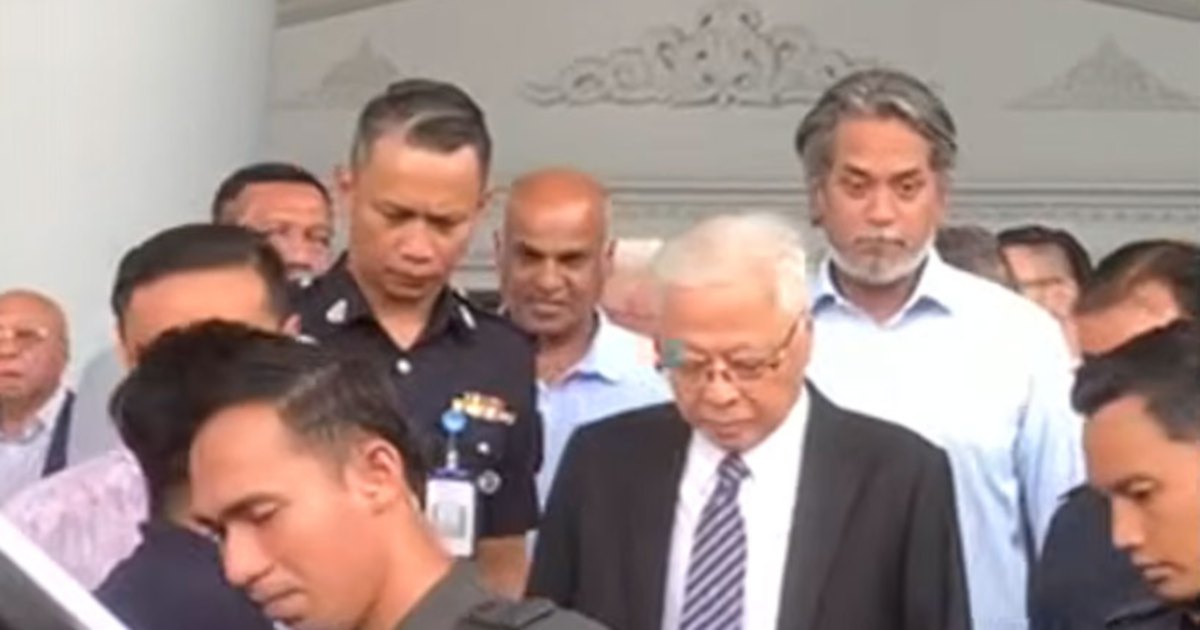
Former Umno Youth chief Khairy Jamaluddin made a conspicuous appearance at the Kuala Lumpur Court Complex today, demonstrating his solidarity with ex-prime minister Datuk Seri Ismail Sabri Yaakob during formal charge proceedings. The high-profile visit by the prominent party figure generated considerable notice among observers and legal observers tracking developments in the case against the former premier.
Khairy's decision to attend the proceedings carries symbolic weight within Umno, where questions about party cohesion remain relevant following the political turbulence of recent years. The former Youth leader, who has maintained an influential voice within party circles despite no longer holding his previous position, appears to be signalling that senior figures remain united around Ismail Sabri during what represents a challenging period for the ex-prime minister.
Ismail Sabri held the office of Prime Minister from August 2021 to August 2022, a tenure marked by complex political circumstances and shifting coalition arrangements. His departure from the highest office followed leadership transitions within the ruling coalition, and his subsequent legal matters have drawn continued scrutiny from both political allies and opponents. The former premier's navigation of these challenges has become a focal point in ongoing conversations about Umno's internal dynamics and its broader political trajectory.
The presence of senior party members at court proceedings often reflects broader political calculations within Malaysia's major political organisations. By appearing at the charge hearing, Khairy demonstrated an unwillingness to distance himself from Ismail Sabri despite the reputational risks that sometimes accompany close association with individuals facing legal proceedings. Such gestures frequently carry messages about party loyalty and factional alignment that extend well beyond the immediate courtroom setting.
Umno has experienced considerable internal repositioning in recent years, with competing voices advancing different strategic visions for the party's future. Within this context, Khairy's visible support for Ismail Sabri may reflect efforts by certain quarters to maintain traditional party structures and prevent excessive fragmentation. The former Youth leader has consistently positioned himself as a custodian of Umno's modernising impulses while maintaining connections to the party's established hierarchy.
For Ismail Sabri, having supporters from his party's senior ranks present during legal proceedings provides both practical and symbolic assistance. The appearance of figures like Khairy suggests that despite any tactical disagreements or policy differences, fundamental bonds of party membership and shared institutional interests remain operative. This kind of visible solidarity can prove important for maintaining political viability and demonstrating that one retains meaningful backing within party structures.
The legal circumstances surrounding Ismail Sabri reflect broader patterns affecting Malaysian politics in this era. Multiple former senior officials and politicians have faced investigations and legal proceedings in recent years, prompting ongoing discussions about the rule of law, selective prosecution concerns, and the relationship between political fortunes and judicial processes. These parallel cases have become central to how Malaysians evaluate the integrity of their legal and political systems.
Khairy's courtroom attendance also sends subtle messages to the broader Umno membership and to competing factional interests within the party. It suggests that alignment with Ismail Sabri does not constitute a liability from a party perspective, and that those who maintain such connections need not fear marginalisation. In Malaysian political culture, where factional loyalty networks remain consequential, such signals carry considerable weight in shaping the calculations of other actors.
The proceedings themselves represent a critical juncture in Ismail Sabri's legal journey, with formal charges marking a transition from investigative phases to more formal adjudication. The seriousness of the charges and the potential consequences for a former premier of Malaysia make these court appearances inherently significant, both for the individual involved and for broader considerations about accountability among former high officials.
Observers of Malaysian politics will likely continue monitoring how various Umno figures position themselves relative to Ismail Sabri's legal situation. The party's response to developments in such cases often provides insights into internal power structures and the resilience of traditional loyalties when tested by external pressures. Khairy's presence today represents one data point in an evolving narrative about how Malaysia's oldest political party manages internal relationships during periods of significant external challenge.

