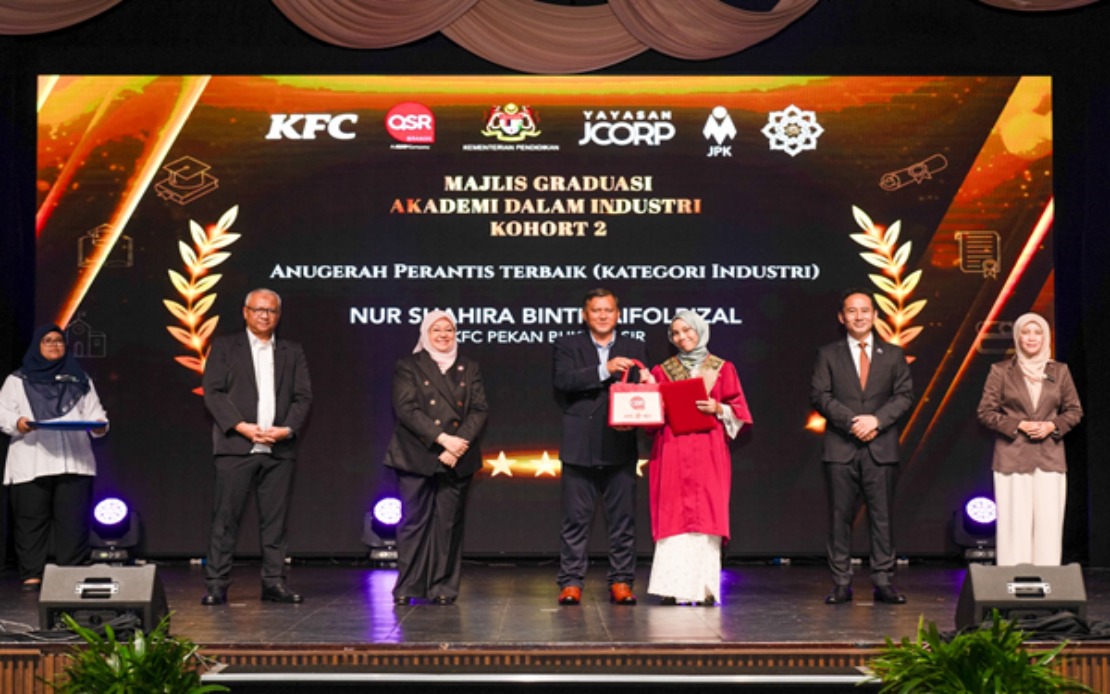
QSR Brands has successfully produced another cohort of 37 skilled graduates through the Applied Dual Involvement (ADI) programme, a collaborative vocational training initiative established with Yayasan JCorp and the Ministry of Education. This second intake represents a significant milestone in the fast-food sector's commitment to developing Malaysia's workforce through practical, industry-focused education. The graduates, who completed their training at KFC restaurants in Johor Bahru, bring the total number of workers trained under this scheme since its inception to 60, underscoring the programme's expanding role in bridging the skills gap in hospitality and quick-service restaurant operations.
The ADI programme emerged in June 2023 as the country's inaugural initiative within the quick-service restaurant industry, born from a strategic collaboration between KFC Malaysia, the Department of Skills Development under the Ministry of Human Resources, and the Ministry of Education. This tripartite approach reflects growing recognition that Malaysia's economic competitiveness depends on integrating classroom learning with real-world workplace experience, allowing young people to develop job-ready competencies before formally entering employment. By combining vocational education with hands-on training in operational environments, the programme addresses a persistent challenge in Malaysia's skills ecosystem: the mismatch between traditional academic preparation and the practical demands of modern service industries.
According to Zulkernai Fauzi, director of the Ministry of Education's Technical and Vocational Education and Training division, the ADI programme serves as a benchmark for how industry and education sectors should work together in Malaysia. He emphasised that the dual pathway allowing students to obtain recognised certifications whilst simultaneously gaining real-world work experience represents the strategic direction the government intends to pursue in developing its technical and vocational education system. This endorsement signals that the model piloted by KFC Malaysia and its partners may inform broader policy approaches across Malaysian vocational training, potentially extending similar partnerships to other sectors facing labour shortages and skills deficiencies.
The inaugural cohort, comprising 23 students, successfully completed industrial training in March 2025, establishing proof of concept for the programme's effectiveness. The second cohort's even larger intake of 37 graduates demonstrates scaling potential and suggests growing appetite among employers and educational institutions to participate in such schemes. This expansion trajectory is particularly meaningful in the Southeast Asian context, where neighbouring countries like Indonesia and Thailand are similarly investing in vocational education reforms, positioning Malaysia to become a regional exemplar of industry-education integration if momentum continues.
Participating students underwent comprehensive training aligned with the vocational syllabus for Fast Food Preparation and Service, acquiring competencies across multiple operational domains. Beyond technical food preparation skills, trainees gained exposure to customer service protocols, restaurant management systems, food safety compliance, and workplace standards essential to professional employment in the hospitality sector. This multi-dimensional approach recognises that success in modern service industries requires not only technical proficiency but also soft skills, customer engagement abilities, and understanding of regulatory compliance—capabilities often overlooked in purely academic training.
The graduating cohort achieved exceptional academic results that validate the programme's pedagogical approach. All students attained a 100 per cent pass rate in Vocational Stream Subjects (MPAK), as well as the Malaysian Skills Certificate (SKM) at both Level 2 and Level 3 designations. Additionally, 95 per cent of participants successfully passed the Sijil Pelajaran Malaysia (SPM) examination, demonstrating that dual-pathway programmes need not compromise traditional academic achievement. Each graduate received five separate qualifications: Vocational SPM, SKM Level 2 and Level 3, a Programme Completion Certificate, and a Certificate of Appreciation from QSR Brands, providing multiple credentials that enhance employment prospects and career mobility.
The graduation ceremony included recognition of exceptional student performance through specialised awards, including the Best Apprentice Award in both industry and SPM categories, alongside recognition for outstanding apprenticeship documentation. These distinctions serve dual purposes: celebrating individual achievement whilst establishing performance benchmarks that guide future cohorts and inform programme refinement. For students from less privileged backgrounds, such recognition provides tangible validation of their capabilities and potential career advancement, addressing a persistent barrier to social mobility in Malaysia's workforce development landscape.
Yayasan JCorp chairman Rozaini Mohd Sani highlighted how the ADI programme democratises access to quality skills training and self-development regardless of socioeconomic background. This accessibility dimension is particularly significant in Malaysia's context, where geographic disparities in educational quality and employment opportunity remain pronounced. By offering comprehensive vocational training through established private-sector partners, such initiatives can reach young people who might otherwise face limited pathways to secure, remunerative employment in growing service sectors. Rozaini emphasised that sustainable workforce development requires ongoing collaboration between educational institutions, corporate partners, and government agencies committed to long-term capacity building.
QSR Brands' chief human resources officer Dr Sharifah Musainah Syed Alwi characterised the programme's success not merely as credential distribution but as testament to rigorous training in authentic operational environments. She underscored that graduates possess practical mastery of industry-recognised competencies developed through genuine restaurant work rather than simulated learning. This distinction matters significantly for employers evaluating job candidates and for graduates seeking meaningful employment; credentials rooted in demonstrated workplace competence carry substantially greater labour-market value than theoretical qualifications. The company's investment in this programme reflects strategic human resources planning, securing a pipeline of pre-trained workers whilst simultaneously strengthening brand reputation as a socially responsible employer.
For Malaysian policymakers and educational planners, the ADI programme's success offers important lessons about scaling vocational education whilst maintaining quality standards. The model demonstrates that private-sector engagement, when structured through formal partnerships with government agencies and educational bodies, can significantly enhance training outcomes without placing excessive burden on state resources. This approach becomes increasingly relevant as Malaysia pursues middle-income to high-income transition, requiring increasingly sophisticated workforce capabilities across service, manufacturing, and emerging technology sectors. Encouraging similar partnerships across hospitality, retail, manufacturing, and digital services could substantially improve youth employment prospects whilst addressing persistent skills shortages reported by employers across multiple industries.
The programme also carries implications for regional workforce development strategies within Southeast Asia. As Malaysia competes with neighbouring economies for foreign direct investment and seeks to develop knowledge-intensive service sectors, demonstrating advanced vocational education capacity becomes strategically important. By highlighting successful public-private partnerships like the ADI programme, Malaysia can position itself as a regional leader in innovative workforce development, potentially attracting regional headquarters and high-value service operations from multinational corporations seeking markets with educated, skilled workforces. The visible success of 60 ADI graduates, combined with exceptional academic results and industry-recognised certifications, provides concrete evidence supporting such positioning.
Looking forward, the ADI programme's trajectory suggests potential for substantial expansion beyond its current fast-food restaurant focus. Government support from both the Ministry of Education and the Ministry of Human Resources indicates policy-level commitment to this model, creating conditions for extension into other high-employment sectors. Healthcare services, hospitality management, retail operations, and emerging technology fields could all benefit from similar dual-pathway approaches. If successfully scaled and adapted across multiple sectors, such programmes could meaningfully reduce unemployment among young Malaysians whilst helping employers address persistent skills gaps, creating virtuous cycles of economic opportunity and human capital development that benefit both individuals and broader national prosperity.

