The Ministry of Human Resources has unveiled a comprehensive response to job displacement caused by ongoing global supply chain disruptions, committing to expand access to Technical and Vocational Education and Training programmes across Malaysia. Minister Datuk Seri R. Ramanan announced the initiative during an event in Johor Bahru, signalling the government's recognition that workers in critical economic sectors face heightened vulnerability as international logistics networks remain strained and production patterns continue to shift.
Workers adversely affected by supply chain instability—particularly those employed in services, manufacturing, and construction—will gain direct access to upskilling and reskilling opportunities through structured TVET pathways. The ministry plans to pair training initiatives with employment support delivered via the Social Security Organisation's MYFutureJobs platform, creating a two-pronged strategy that addresses both capability gaps and job placement challenges. This integration reflects growing acknowledgment that retraining alone proves insufficient; workers require targeted matching between acquired skills and genuine labour market opportunities.
The job matching mechanism represents a critical safeguard against misalignment between training content and employer demand. Officials stressed that placements would be carefully assessed for suitability, avoiding the common pitfall where workers complete retraining only to find positions that neither utilise their new qualifications nor meet their experience levels. This deliberate approach suggests learning from previous workforce transition programmes that occasionally generated underemployment despite formal completion rates.
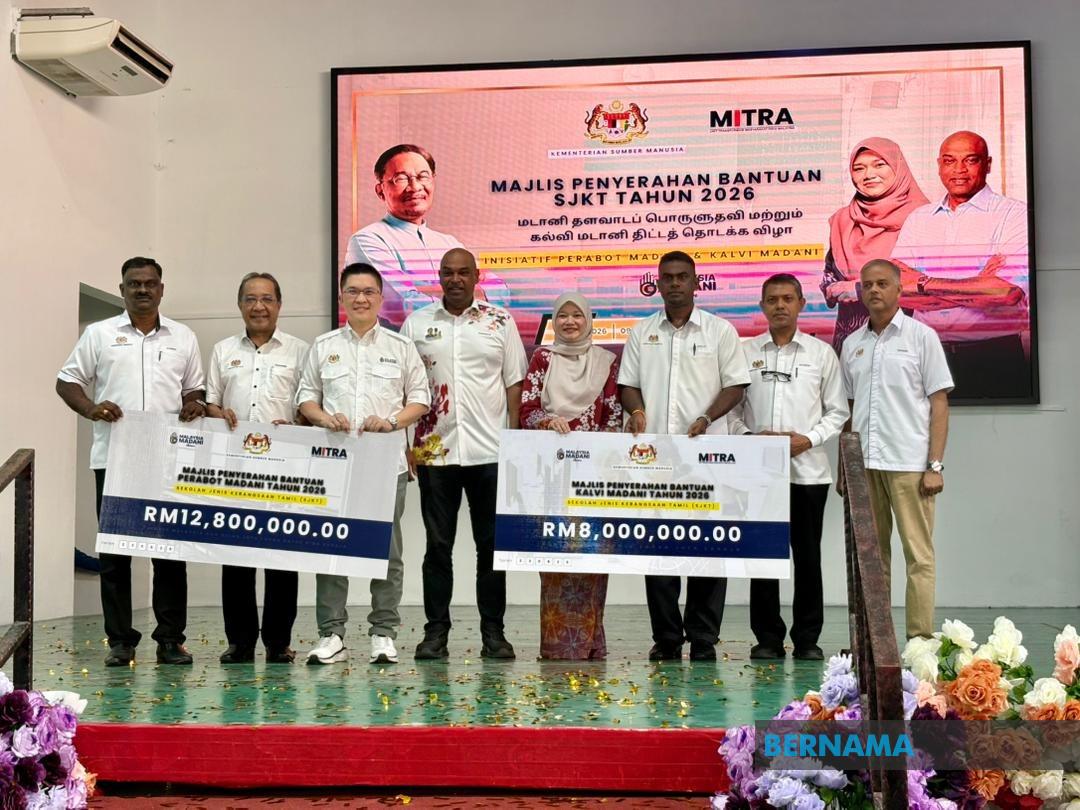
Simultaneously, the ministry launched two companion initiatives targeting Tamil vernacular schools and their student populations. The MADANI Furniture Initiative will distribute RM12.8 million across 361 government-aided Tamil schools, benefiting approximately 39,692 pupils and 5,290 teachers. The programme encompasses 14 categories of high-quality furnishings and equipment—desks, seating, storage units, and cooling devices—with delivery scheduled across monthly phases commencing immediately through August. This investment addresses infrastructure deficits that can undermine learning quality, particularly in resource-constrained educational settings.
The parallel KALVI MADANI Programme commits RM8 million specifically toward supporting Indian pupils in 315 selected Tamil vernacular schools. Beyond infrastructure, this initiative provides free supplementary tuition, nutritional programmes, learning materials and digital devices, alongside measures enhancing teacher welfare. Targeting nearly 10,410 beneficiary students, the programme recognises that educational advancement requires holistic support spanning nutrition, mentoring, resources, and educator sustainability.
These dual announcements reflect Malaysia's multifaceted challenge: addressing immediate workforce disruption while simultaneously strengthening educational foundations for future generations from community groups historically underrepresented in technical and skilled professions. The timing suggests conscious prioritisation as supply chain pressures persist and economic uncertainty continues affecting employment across multiple sectors.
For manufacturing-dependent states like Johor, supply chain vulnerabilities have cascading effects throughout local economies. Factories operating below capacity or restructuring operations inevitably reduce direct employment and contract opportunities for peripheral workers. Construction sector impacts prove equally significant, as infrastructure projects and property development slow when material costs spike and delivery timelines become unpredictable. Service sector workers—from logistics to food service—similarly experience demand destruction as business activity contracts. These interconnected pressures create cumulative displacement affecting thousands of Malaysian workers simultaneously.
The TVET approach addresses structural gaps in Malaysia's workforce development architecture. Historically, vocational education has attracted lower enrolment than academic pathways, yet manufacturing and services sectors increasingly require specialised technical competencies. By positioning TVET as an active response to immediate displacement rather than merely an alternative educational route, the ministry potentially shifts perceptions and increases uptake among workers with prior experience in formal employment.
Education Minister Fadhlina Sidek and Deputy Minister Wong Kah Woh's attendance underscores coordination between human resources and education portfolios—a prerequisite for implementing integrated programmes spanning workforce retraining and school-level support. Such cross-ministry alignment remains challenging to execute effectively but proves essential when programmes involve multiple stakeholder communities and delivery mechanisms.
The initiatives carry particular significance for East Coast and Southern Peninsula economies where manufacturing concentration runs high and Tamil vernacular school populations remain proportionally substantial. Workers in these regions facing displacement will gain identifiable pathways toward reskilling, whilst schoolchildren benefit from enhanced learning environments and comprehensive educational support. Yet programme success ultimately depends on implementation fidelity—ensuring furniture reaches schools, that TVET courses align with employer needs, and that job matching produces genuine employment outcomes rather than statistical placements.
Looking forward, these programmes indicate government awareness that supply chain stabilisation will not restore prior employment patterns wholesale. Structural shifts in global manufacturing, nearshoring dynamics, and automation trends suggest permanent reallocation of labour across sectors and geographies. Consequently, worker transition support may represent an ongoing necessity rather than temporary crisis response, requiring sustained funding and sophisticated implementation capacity.