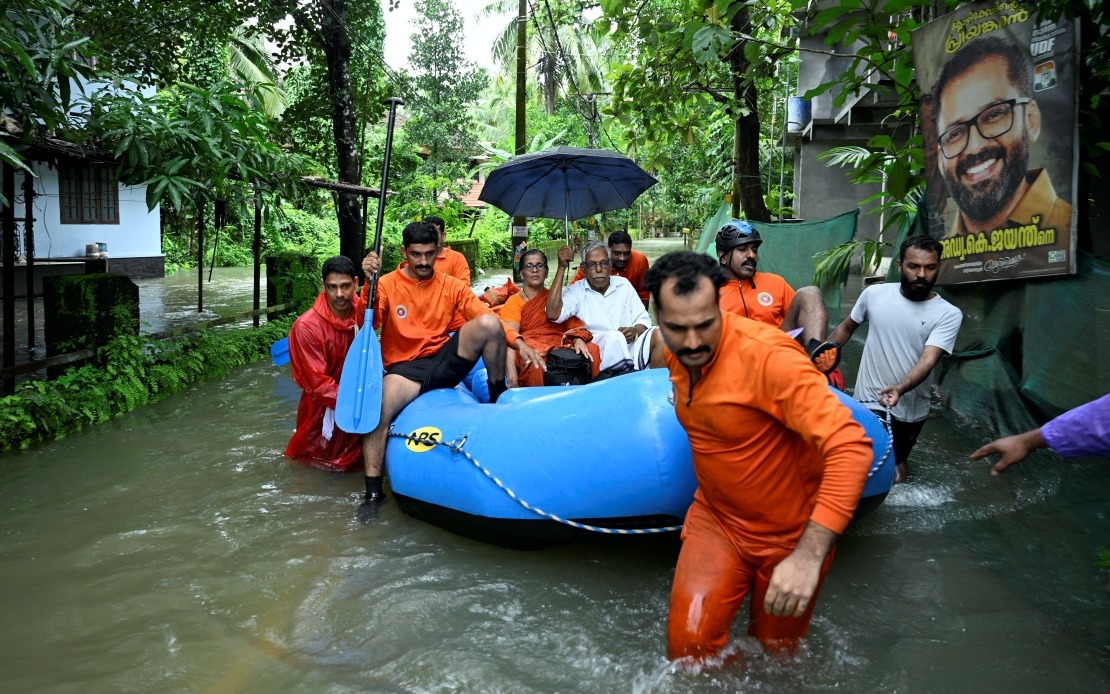
The monsoon disaster unfolding across Kerala has claimed at least 26 lives as heavy rains continue their destructive march through the southern Indian state, triggering a humanitarian crisis that has forced thousands into emergency shelters. Kerala Chief Minister V D Satheesan confirmed the escalating casualty figures on Wednesday, revealing a situation that extends far beyond the immediate death toll to encompass widespread displacement, property destruction, and agricultural devastation affecting hundreds of thousands of people across the region.
The scale of displacement presents an immediate challenge to state authorities already stretched thin managing emergency response operations. A staggering 27,048 people have been forced from their homes by the deluge, with officials establishing 462 relief camps across Kerala to provide basic shelter and services to those rendered homeless. The sheer number of camps required underscores the geographic spread of the disaster, which has not been confined to a single area but has instead affected multiple districts across the state's geography. The coordination required to maintain functioning shelters, distribute food and medical supplies, and track displaced populations represents a logistics operation of considerable scale.
Beyond those unaccounted for in the immediate aftermath, the casualty picture remains incomplete. Eleven people have sustained injuries serious enough to require medical attention, while four individuals remain missing and feared dead, leaving some families in an agonising state of uncertainty as search and rescue operations continue amid dangerous conditions. The missing persons cases highlight the challenges emergency responders face in accessing affected areas, where swollen rivers, washed-out roads, and ongoing landslides obstruct movement and complicate rescue efforts.
The economic dimensions of the disaster extend significantly into Kerala's agricultural sector, a vital component of the state's economy and livelihood for millions. Crop damage has been recorded across 1,882 hectares of farmland, a figure that becomes more meaningful when understood in human terms: 23,537 farming families have seen their crops destroyed or severely damaged, jeopardising their immediate income and threatening food security for dependents relying on harvest proceeds. For smallholder farmers with limited financial buffers, such losses can precipitate cascading economic hardship that persists long after floodwaters recede.
Chief Minister Satheesan announced a package of relief measures designed to provide immediate financial assistance to affected families, including enhanced compensation for those who have lost loved ones, residential structures, and accumulated property. The recognition that standard compensation frameworks would prove inadequate in the face of such catastrophic losses suggests authorities understand the depth of suffering experienced across the state. However, compensation serves principally as damage mitigation rather than genuine recovery—families have already lost irreplaceable lives and homes.
The meteorological outlook offers little immediate relief. India's weather service issued an orange alert for Kerala on Wednesday, a classification indicating the expectation of heavy to very heavy rainfall with potential for significant disruption. The India Meteorological Department forecasts widespread precipitation across Kerala, neighbouring coastal Karnataka, and Telangana extending through August 11, meaning residents face at least another week of potentially dangerous conditions. This extended forecast suggests the current crisis may intensify further before stabilising, with implications for the already-strained emergency response infrastructure.
The geographic distribution of impact reflects the particular vulnerability of Kerala's northern regions to monsoon intensity. Areas including high-range regions of Kozhikode and Kannur have endured heavy rainfall since August 1, triggering the cascading failures—flooding and landslides—characteristic of monsoon disasters in Kerala's terrain. The state's geographical features, including mountainous terrain and river systems, amplify rainfall impacts, transforming heavy precipitation into destructive floods that sweep through valleys and inundate communities with little warning. Days after the heaviest downpours ceased in some areas, floodwaters continue pooling in low-lying zones, keeping hundreds of houses submerged and preventing displaced residents from assessing or salvaging property.
For Malaysian and Southeast Asian observers, Kerala's monsoon crisis offers instructive parallels regarding climate vulnerability and disaster response capacity. The monsoon system that devastates Kerala seasonally affects the broader region, and similar flooding patterns have impacted Malaysia, Thailand, and other neighbouring countries. The scale of Kerala's current emergency—27,000 displaced persons, 462 active relief camps, significant agricultural losses—reflects both the intensity of monsoon precipitation and the challenge any state faces in rapid response mobilisation. The state's decision to establish over 460 separate relief operations suggests that even well-resourced Indian states struggle to achieve seamless emergency coordination when disasters exceed anticipated severity thresholds.
The agricultural impact merits particular attention given Southeast Asia's comparable dependence on smallholder farming and monsoon-dependent crop cycles. When Kerala's farming population—nearly 24,000 families affected—loses crops to flooding, they experience economic shock similar to scenarios playing out across Southeast Asia during seasonal rains. The state's announcement of enhanced compensation acknowledges that recovery requires more than standard disaster protocols, a lesson relevant to any region where agricultural livelihoods concentrate among vulnerable populations lacking financial reserves to absorb production losses.
As Kerala manages the immediate crisis of displaced families and damaged infrastructure, the longer-term dimensions of this disaster will emerge in coming weeks. The true toll on family incomes, agricultural production, and economic output will become clearer as flood waters recede and damage assessment teams complete surveys across affected districts. For a state whose agriculture and tourism sectors generate substantial economic value, the implications extend beyond individual suffering to broader economic implications affecting state revenue and employment throughout Kerala's economy.

