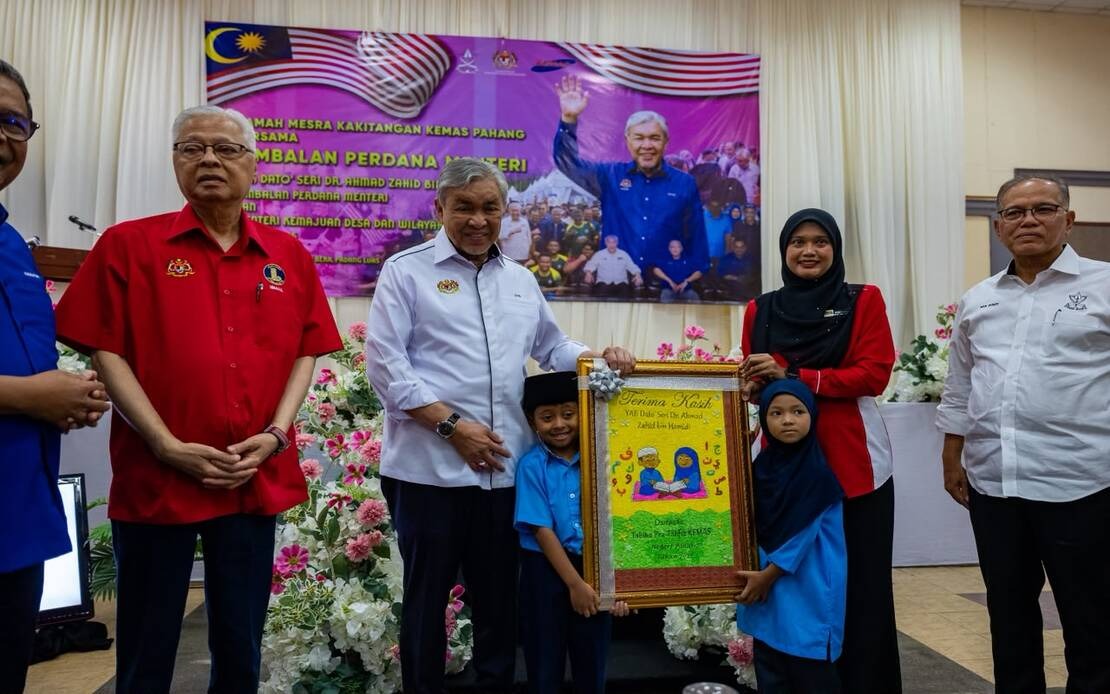
Malaysia's Rural and Regional Development Ministry has signalled an ambitious overhaul of early childhood education through its Community Development Department, KEMAS, aiming to marry contemporary technology with faith-based learning as the nation grapples with a younger generation entering formal schooling earlier than before. Deputy Prime Minister Datuk Seri Dr Ahmad Zahid Hamidi outlined the vision during a community engagement programme in Bera, Pahang, highlighting how the institution must adapt to remain relevant while safeguarding core values that have defined its six decades of grassroots service.
The timing of this initiative proves significant given recent structural shifts in Malaysia's education system. The government has lowered the compulsory school entry age from seven to six years old, placing greater responsibility on pre-primary providers to establish foundational learning capabilities earlier in childhood development. This policy change has naturally elevated the importance of KEMAS-run kindergartens, known locally as Tabika, and childcare centres, or Taska, which now serve as critical institutions in preparing children for formal primary education. The expansion of these early education responsibilities demands corresponding investments in both infrastructure and pedagogical methods.
Ahmad Zahid stressed that KEMAS cannot remain static despite its historical achievements. The department has enrolled approximately 8.4 million children since inception, representing an enormous institutional legacy that nonetheless risks obsolescence if it fails to incorporate modern learning tools. He advocated for aggressive rollout of Smart Class technology and smartboard implementation across KEMAS kindergartens, framing digital literacy not as a luxury but as a foundational skill for children who will eventually compete in an increasingly technology-dependent economy. This technological dimension reflects broader Southeast Asian trends where nations are rushing to ensure rural and lower-income populations gain equal access to digital learning infrastructure.
The memorisation programme expansion represents the counterbalance to technological advancement. Beginning next academic year, KEMAS kindergartens will move beyond the existing framework of teaching children selected passages from the Quran's final section, Juzuk 30. Instead, pupils will memorise complete surahs including Yasin, Al-Waqiah, Al-Mulk, and As-Sajdah—texts that demand sustained cognitive effort and religious engagement from young learners. This decision reflects persistent emphasis within Malaysian educational policy on anchoring moral and spiritual development within early childhood curricula, a perspective that distinguishes Malaysia's approach from secular models adopted elsewhere in the region.
Implementation success will depend critically on teacher preparation. Ahmad Zahid acknowledged this bottleneck explicitly, insisting that KEMAS educators must themselves achieve mastery of these memorisation techniques before they can guide pupils effectively. This prerequisite suggests the ministry recognises that programme ambition frequently founders when training infrastructure lags behind policy directives. Building a cadre of qualified instructors capable of delivering both technology-enhanced lessons and structured Quranic memorisation represents a substantial capacity-building challenge, particularly in rural areas where KEMAS operates most extensively.
The initiative also underscores deepening coordination demands across government tiers. Ahmad Zahid called for closer collaboration between federal authorities, state governments, parliamentarians, and state assembly members to supply necessary technological facilities and funding. This multilevel governance requirement reflects Malaysia's federal structure but also highlights potential implementation pitfalls where resource constraints or political misalignment at state level could compromise nationwide rollout. Pahang Menteri Besar Datuk Seri Wan Rosdy Wan Ismail's presence at the announcement suggested state-level buy-in, yet sustaining such cooperation across all 13 states and federal territories remains an institutional challenge.
Financial sustainability emerges as an implicit concern throughout Ahmad Zahid's remarks. He explicitly commended Pahang's allocation of land titles, grants, and renovation funding to KEMAS facilities, suggesting that state governments play disproportionate roles in supplementing federal allocations. For resource-constrained states, this expectation may prove unrealistic, potentially creating regional disparities in early education quality that mirror broader developmental inequalities. The deputy prime minister's emphasis on political stability and cross-party cooperation perhaps reflects awareness that education funding can face disruption during electoral transitions or periods of government instability.
The broader context involves Malaysia's positioning within a rapidly evolving regional education landscape. Other Southeast Asian nations are similarly investing in early childhood development, viewing such investment as critical to long-term human capital accumulation. Singapore, Thailand, and Vietnam have all prioritised upgrading pre-primary education infrastructure. Malaysia's dual-track approach—simultaneously enhancing technological capacity while intensifying religious instruction—represents a distinctive national orientation that differentiates its human development strategy from regional competitors. Whether this combination generates superior developmental outcomes remains an open empirical question.
Ahmad Zahid's framing of the initiative centred on preserving institutional legacy while enabling generational renewal. He positioned KEMAS not merely as an early childhood service provider but as a community-building institution fundamentally embedded within rural Malaysia's social fabric. This institutional identity provides political durability, as KEMAS enjoys cross-party support and deep community connections accumulated over six decades. However, that same institutional stability could inhibit rapid adaptation if entrenched personnel resist technological change or if traditional approaches to religious instruction prove incompatible with modern pedagogical science.
The memorisation programme's expansion particularly warrants scrutiny regarding child development appropriateness. While religious education enjoys constitutional and cultural legitimacy in Malaysia, scholars of early childhood development debate whether intensive memorisation work suits children aged four to six. The quality of implementation—whether memorisation occurs through rote repetition or through pedagogically sophisticated approaches integrating meaning-making—will substantially influence developmental benefits. Teachers requiring intensive training in both cognitive development and Islamic education represent the lynchpin determining success.
Looking forward, KEMAS faces the challenge of scaling both technological and religious dimensions simultaneously across a dispersed rural network. The Smart Class initiative requires reliable electricity, internet connectivity, and ongoing device maintenance—infrastructure gaps that persist in numerous Malaysian rural areas. Parallel expansion of Quranic memorisation demands trained instructors possessing both religious knowledge and early childhood education credentials, a scarce resource combination. Success requires not merely policy announcements but sustained institutional investment and political will extending across electoral cycles.
The initiative ultimately reflects Malaysia's determination to ensure that rural and lower-income populations receive early education quality comparable to urban counterparts. By combining technological modernisation with culturally embedded religious instruction, the government signals commitment to a distinctly Malaysian model of early childhood development. However, translating policy ambition into equitable implementation across diverse contexts and resource constraints remains the central institutional test.

