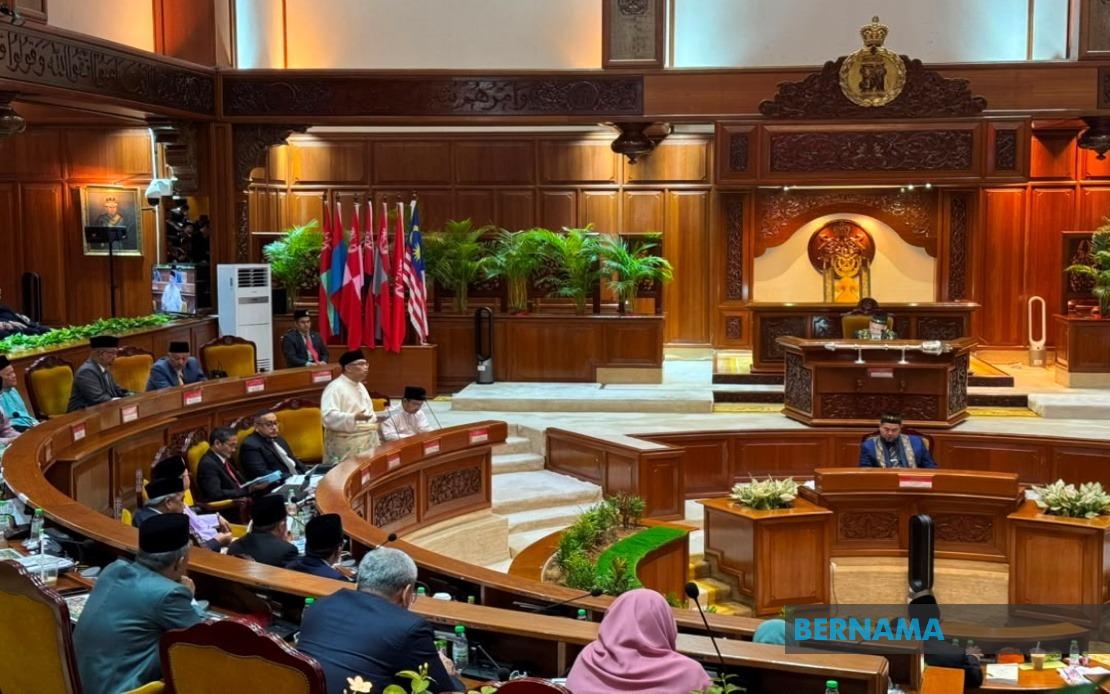
The Kelantan State Legislative Assembly has unanimously approved the Syariah Criminal Offences (Kelantan) Bill 2026, marking a significant overhaul of the state's Islamic criminal justice framework. The legislation, which comprises nine sections, 62 clauses, and supporting schedules, seeks to modernise and clarify the application of Syariah law while introducing mechanisms designed to balance punishment with rehabilitation. The passage of this comprehensive bill reflects growing efforts among Malaysian states to standardise and strengthen their Islamic legal systems in response to evolving social and religious needs.
At the heart of the reforms lies a restorative sentencing framework that represents a departure from purely punitive approaches. According to Kelantan Deputy Menteri Besar Datuk Dr Mohamed Fadzli Hassan, community service sentences must now be completed within a strict one-year timeframe, creating a structured pathway for offenders to contribute meaningfully to society while serving their sentences. This approach acknowledges the importance of rehabilitation alongside accountability, particularly for first-time or minor offenders who might benefit from engagement with their communities rather than extended incarceration alone.
The bill introduces a compounding mechanism that grants significant discretionary authority to the Sultan of Kelantan. Through gazzetted orders, the ruler can designate which offences qualify as compoundable—meaning they can be settled without full prosecution—and establish the procedures and documentation required for such settlements. This innovation provides flexibility within the Islamic legal system, potentially reducing court congestion while allowing for out-of-court resolution of less serious matters. However, the delegation of these determinations to the Sultan underscores the centralised nature of Islamic judicial authority in Malaysia's constitutional monarchy.
Penalty enhancements constitute another pillar of the reforms, with whipping designated as the primary punishment for severe moral and religious offences. The strengthened penalties target infractions including attempted apostasy, parental neglect of a child's religious upbringing, violations of modesty and bodily integrity, consumption of alcohol, gambling, illicit sexual relations, and pregnancy outside wedlock. By elevating these penalties, Kelantan's legislature signals heightened concern about perceived threats to religious observance and moral standards, reflecting broader conservative religious trends across Malaysia's Muslim-majority states.
Six new clauses expand the bill's scope significantly. Clause 10 criminalises the neglect or abandonment of mandatory prayers, establishing religious observance as an enforceable legal obligation rather than merely a spiritual duty. Clauses 15 and 16 introduce novel provisions concerning the obligation to guard private parts and other body parts, creating specific offences around indecency that previously lacked explicit statutory definition. These additions reflect efforts to translate religious teachings into measurable legal standards, though their application may raise questions about enforcement and individual privacy.
Clause 33 introduces protection of intellect from damaging influences as a legal imperative, potentially encompassing substance abuse and other behaviours deemed harmful to cognitive function. This represents an expansion into the preventive realm, seeking to protect individuals and the broader community from activities that undermine mental faculties. Clauses 59 and 60 provide the procedural infrastructure for compounding, delineating how authorities exercise their settlement powers and establishing the legal mechanisms for offence resolution outside court proceedings.
The bill substantially revises the Kelantan Syariah Criminal Code Enactment (EKJS) 2019 in several respects. Section 11 of the 2019 enactment, which addressed desecration of religious sites, has been repealed and reconstituted as Clause 12, refocused specifically on disturbance to Muslim places of worship. This narrowing may reflect both practical concerns about enforcement and theological priorities. More controversially, Section 14 of the 2019 code concerning sodomy has been entirely removed from its original form, with the subject matter incorporated into the broader Clauses 15 and 16 provisions on bodily integrity and modesty.
For Malaysian observers, these developments carry implications beyond Kelantan's borders. The bill demonstrates how individual states leverage their constitutional authority over Islamic affairs to advance particular religious and moral agendas. As other states contemplate similar reforms, the Kelantan model may inspire comparable legislation elsewhere, potentially creating varied interpretations of Islamic criminal law across Malaysia's thirteen states and three federal territories. This fragmentation raises questions about legal consistency and the mobility of citizens between jurisdictions.
The restorative sentencing component reflects contemporary global criminal justice trends emphasising rehabilitation and reintegration. However, its implementation alongside heightened penalty rates creates potential tensions—communities must balance supportive reintegration with enforcement of stronger punishments for designated offences. The success of this dual approach will depend heavily on judicial discretion and the quality of community service infrastructure available within Kelantan.
From a religious freedom perspective, some provisions warrant careful monitoring. The expansion of prayer obligation enforcement and bodily modesty requirements into statutory law raises questions about the boundary between religious guidance and state coercion. While Malaysia's Constitution recognises Islam's special position and grants states authority over Islamic affairs, the practical enforcement of such provisions could affect individuals who interpret religious requirements differently or who struggle with compliance.
The bill's unanimous passage suggests broad political consensus within Kelantan's legislature, yet this masks potential divisions among legal experts, civil society, and affected communities. Religious scholars, human rights advocates, and ordinary citizens may hold divergent views on the appropriateness and practical effects of specific provisions, particularly those addressing bodily autonomy and religious observance enforcement.
Looking forward, the implementation phase will prove crucial. The effectiveness of community service programmes, the exercise of compounding discretion, and the training of enforcement officers will all shape whether the Syariah Criminal Offences Bill 2026 achieves its stated objectives of clarity, systematisation, and balanced justice. As Kelantan implements this legislation, other states will closely observe outcomes, potentially influencing their own Islamic legal reform trajectories and contributing to the ongoing evolution of Islamic jurisprudence within Malaysia's federal framework.

