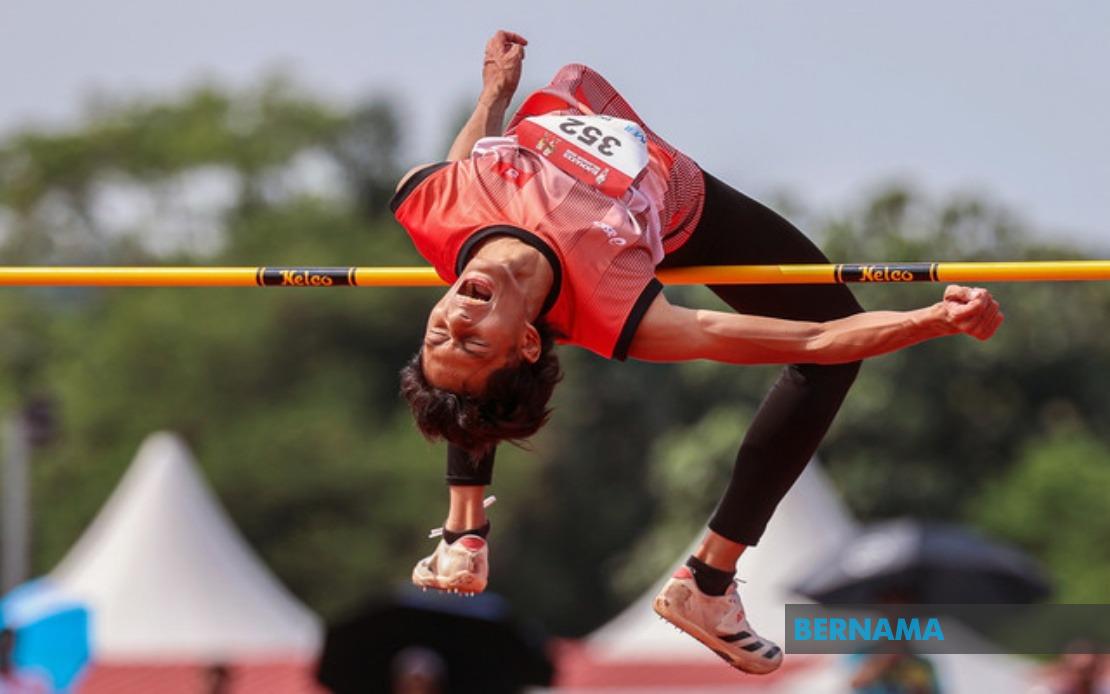
In a remarkable turnaround that epitomises the unpredictability of competitive athletics, Kelantan high jumper Dzul Darwisy Adam Khairulaswari has claimed the top prize at the Selangor Malaysia Games (SUKMA) 2026 edition, held at the Universiti Putra Malaysia Sports Centre in Serdang. The 18-year-old's triumph represents a dramatic ascent from his 11th-place finish at the Sarawak edition two years prior, demonstrating the significant strides young Malaysian athletes can achieve within a single Olympic cycle.
Dzul Darwisy's winning performance saw him clear a height of 2.09 metres, a personal milestone that carries substantial implications for Malaysia's athletics pipeline. The victory marks only Kelantan's second gold medal in track and field events at this biennial competition, underscoring the relative scarcity of athletic excellence emerging from the northeastern state at the national games level. His achievement arrives amid growing concerns about the depth of Malaysia's athletic talent pool and the consistency of performance across regional talent development programmes.
The competition itself reflected the competitive standard of high jump in Malaysia, with two Kedah representatives claiming the remaining podium positions. Muhamad Nawawi Mohamad captured the silver medal after recording 2.07 metres, while Muhammad Naufal Zulkifli secured bronze with a clearance of 2.04 metres. The Kedah contingent's strong showing in a single event underscores the geographic concentration of athletic investment within certain states, a pattern that Malaysian sports administrators have long wrestled with when attempting to democratise excellence across the federation.
For Dzul Darwisy personally, the significance of this victory transcends the immediate medal tally. He articulated in post-competition remarks that winning represented a transformative moment in his athletic career, describing the achievement in almost spiritual terms given the years of near-misses and disappointments that preceded it. His previous attempts at major national competitions, including the Malaysian School Sports Council (MSSM) championship where he placed third in Form Three, had failed to yield top honours despite showing promise.
The athlete's journey illustrates the extended development arc required for track and field athletes to reach their potential. High jump, in particular, demands not merely raw athletic ability but technical precision, spatial awareness, and psychological resilience—qualities that often take years to fully develop. Dzul Darwisy's earlier stagnation between his Form Three MSSM result and this year's performance demonstrates how easily young athletes can plateau without access to superior coaching, appropriate facilities, or competitive opportunities that push them toward their ceiling.
Interestingly, Dzul Darwisy revealed that he competed through significant physical adversity, managing a back injury throughout the games that undoubtedly compromised his technical execution and explosive power output. Despite this handicap, he still managed to extend his personal best from 2.03 metres to 2.09 metres—a gain of six centimetres that would normally require several months of focused training rather than competition performance. This raises questions about the quality of his preparation and the untapped potential he may possess once free from injury.
Looking forward, the athlete has articulated ambitious targets that will test whether his Selangor performance represents genuine breakthrough or exceptional execution on a single occasion. His immediate objective involves clearing 2.16 metres, a benchmark he believes necessary to secure qualification for the Southeast Asian Games—a competition that carries prestige and international exposure far beyond SUKMA's regional scope. Such progression would place him among the region's elite high jumpers and establish him as a genuine prospect for continental honours.
Beyond the SEA Games qualifier, Dzul Darwisy has set his sights on breaching the SUKMA record of 2.21 metres, a standard established by A. Kavee Alagan of Negeri Sembilan during the 2012 edition hosted in Pahang. This record has endured for over a decade, suggesting either that the performance level represents a genuine ceiling for Malaysian high jumpers or that the right combination of athlete, training, and opportunity has not yet converged. Breaking this benchmark would position Dzul Darwisy as the outstanding high jump talent of his generation within Malaysia.
The presence of former national high jump champion Lee Hup Wei at the finals, now serving as the national reserve coach, carries potential significance for Dzul Darwisy's trajectory. Established athletes transitioning into coaching roles often bring invaluable technical knowledge and competitive experience, particularly in technical events like high jump where marginal gains in approach speed, takeoff timing, and bar clearance technique prove decisive. The visibility afforded by his gold medal performance may facilitate access to such expertise at the national level.
Dzul Darwisy's ascent from SUKMA also provides broader perspective on Malaysian athletics' competitive landscape. The sport remains characterised by individual talents emerging episodically rather than systematic development pipelines producing consistent medals. State-level investment in athletics remains inconsistent, with facilities and coaching quality varying dramatically across Peninsular Malaysia, Sabah, and Sarawak. Dzul Darwisy's breakthrough, while genuinely impressive, ultimately highlights both the potential and the fragmentation within Malaysian athletics development structures.

