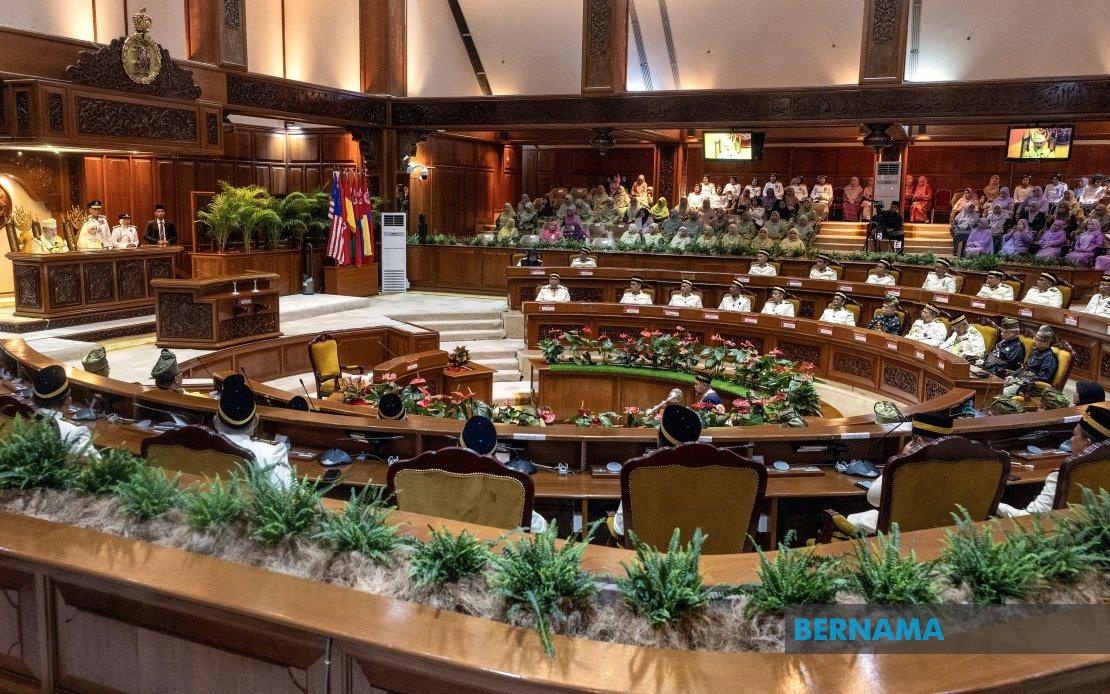
The Kelantan state government is set to introduce fresh Syariah criminal legislation to the State Legislative Assembly this coming Tuesday, marking a pivotal moment in the state's efforts to navigate complex constitutional boundaries between federal and state religious jurisdiction. The proposed Syariah Offences (Kelantan) Bill 2026 represents the government's carefully calibrated response to the Federal Court's seismic ruling from February 2024, which invalidated a substantial portion of the existing Syariah legal framework that had governed religious offences in the northeastern state for the past five years.
Deputy Menteri Besar Datuk Dr Mohamed Fadzli Hassan disclosed the legislative timeline following a State Executive Council meeting, emphasising that the new bill is designed as a direct successor to the Kelantan Syariah Criminal Code (I) Enactment 2019. The earlier version had faced a significant constitutional challenge when the Federal Court, in a decisive 8-1 majority judgment, declared 16 of its 18 contested provisions void. That landmark decision, which emerged from a constitutional challenge brought by Kelantan lawyer Nik Elin Zurina Nik Abdul Rashid and another party, fundamentally reshaped the debate over how Malaysian states can legislate on matters touching Islamic religious law.
The Federal Court's reasoning centred on a crucial constitutional principle: that the State Legislative Assembly had ventured beyond its prescribed powers by attempting to criminalise offences that fall squarely within Parliament's exclusive legislative domain. This ruling reverberated across Malaysia, forcing a broader national conversation about the appropriate division of authority between Kuala Lumpur and the states in an area of governance that touches upon sensitive questions of religion, federalism, and the constitutional balance of power. For Kelantan, a state where Islam occupies a central role in governance and public administration, the decision necessitated wholesale legislative reconstruction rather than minor amendments.
The drafting process for the replacement legislation has been underway since mid-2024, reflecting the considerable technical and constitutional complexity involved. According to Mohamed Fadzli, the Committee for the Amendment of the Kelantan Syariah Criminal Code (I) Enactment 2019 has overseen this work, bringing together a multidisciplinary team that spans civil law practitioners, Syariah legal specialists, academic experts in constitutional matters, and sitting Syariah judicial officers. This collegiate approach signals Kelantan's intent to produce legislation that is constitutionally sound while remaining substantively robust in addressing religious offences within permissible bounds.
Crucially, the proposed bill has undergone scrutiny and endorsement from the Kelantan Council of Ulama operating under the auspices of the Kelantan Islamic Religious and Malay Customs Council (MAIK). This religious and scholarly vetting process reflects a dual commitment: to ensure the legislation aligns with Islamic jurisprudential principles while simultaneously respecting the constitutional framework established by the courts. For Malaysian policymakers navigating the intersection of religious law and constitutional governance, such consultation represents a best-practice approach to legitimising legislation in the eyes of both the judiciary and the faith community.
The new bill's structure comprises nine distinct parts encompassing 62 clauses alongside one schedule, a more comprehensive architecture than might be suggested by its label as replacement legislation. Notably, the bill was crafted deliberately around the constitutional principle of "pith and substance," a juridical doctrine that examines whether legislation truly addresses matters within a legislature's jurisdiction by looking at its essential character rather than merely its stated purpose. This careful constitutional choreography reflects lessons learned from the February 2024 judgment, where the court examined whether certain provisions extended into federal territory by their substance despite state nomenclature.
The drafting team has reportedly incorporated the Federal Court's grounds of judgment throughout the legislative process, demonstrating a methodical effort to build a bill that withstands the precise constitutional objections that felled its predecessor. This forward-looking approach differs markedly from simply restating invalidated provisions in new language—instead, the bill introduces what Mohamed Fadzli described as "new and reformative provisions" alongside a renewed emphasis on religious obligations. Such innovation suggests the government is using the setback as an opportunity to modernise Syariah offence legislation rather than merely restore the status quo ante.
The political dynamics surrounding the bill's reception remain significant. Mohamed Fadzli's explicit appeal for unanimity among state assemblymen signals awareness that the legislation requires broad support to succeed both politically and, potentially, in any future constitutional challenge. In Kelantan, where the Perikatan Nasional coalition holds control and Islamic governance resonates with core constituencies, such backing appears probable, yet the history of the previous enactment demonstrates that legal vulnerability can emerge despite political consensus. The coming parliamentary debate will offer an opportunity for elected representatives to engage substantively with constitutional boundaries while addressing the genuine policy objective of maintaining a functional Syariah criminal justice system.
For the wider Malaysian context, Kelantan's legislative struggle illuminates fundamental tensions within the federal system. The February 2024 ruling did not prohibit states from legislating on Syariah matters; rather, it established that such legislation must operate within defined constitutional limits and avoid duplicating or conflicting with federal jurisdiction. This nuanced principle requires legislators to distinguish carefully between matters properly within state authority—such as procedure and enforcement mechanisms—and substance that belongs to federal domain. Other states with their own Syariah legislation will likely observe Kelantan's approach with keen interest, potentially learning from both the constitutional landmines the state hit and the solutions it now proposes.
The introduction of this bill next week represents more than routine legislative business. It embodies the ongoing evolution of Malaysian constitutional practice as courts, governments, and legislatures jointly clarify the meaning of federation in an Islamic context. Whether the new Kelantan Syariah Offences Bill 2026 achieves constitutional durability will depend not only on its intellectual rigour but also on whether it genuinely respects the boundaries that the Federal Court established. For legal observers, policymakers, and faith communities across Southeast Asia, the outcome carries implications extending well beyond the northern state's borders.

