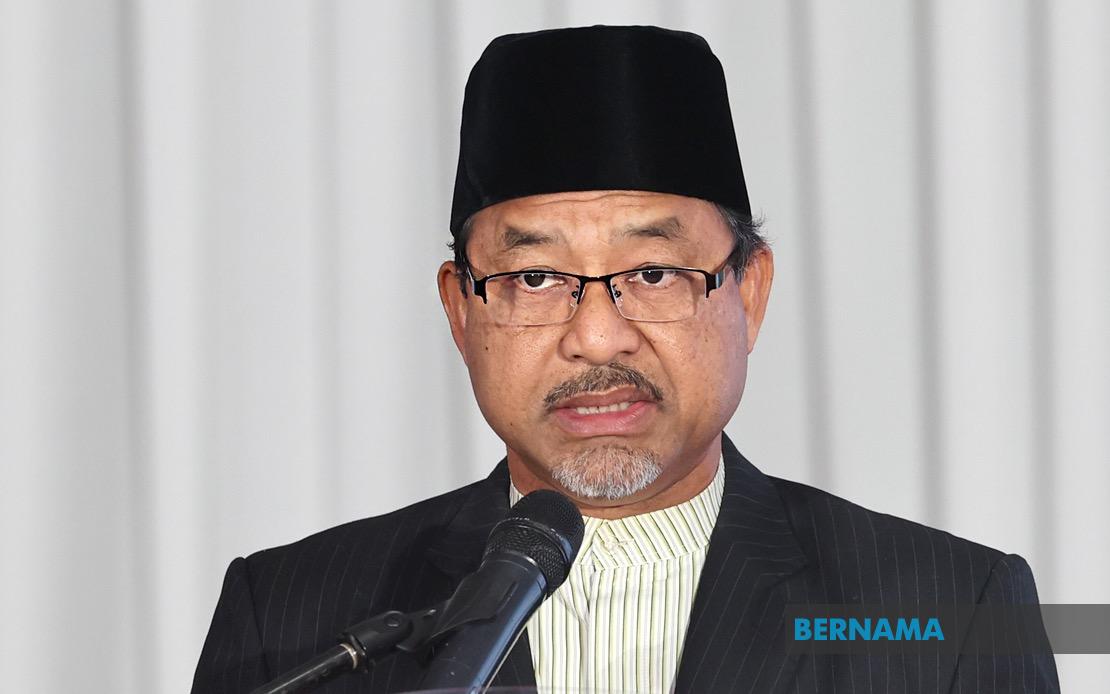
Kelantan has demonstrated sustained commitment to environmental stewardship by maintaining 778,708.34 hectares of forested terrain, which constitutes 51.79 per cent of the state's total land mass. This achievement, revealed during a state legislative assembly sitting in Kota Bharu on August 11, represents a significant milestone in the state's conservation efforts and positions Kelantan ahead of the national benchmark established under the Peninsular Malaysia Forestry Policy, which mandates a minimum of 50 per cent forest and tree coverage across the peninsula.
Menteri Besar Datuk Mohd Nassuruddin Daud underscored that the state's forest retention aligns with broader environmental commitments and reflects deliberate policy choices prioritising ecological preservation. The figure demonstrates that Kelantan, a state traditionally dependent on natural resource extraction, has navigated the delicate balance between economic imperatives and conservation objectives. This positioning is particularly noteworthy given the competitive pressures for land conversion in Malaysia's resource-rich northeastern region, where agricultural expansion and industrial development frequently challenge forest preservation goals.
The state's forest management strategy extends beyond simple preservation by incorporating an active classification framework. The Kelantan Forestry Department has systematically identified government-held parcels suitable for formal designation as Permanent Reserved Forests (HSK), a legal status that provides enhanced protection against unauthorised conversion. Simultaneously, additional forest areas have been classified according to functional categories under Section 10(1) of the National Forestry Enactment (Adoption) (Amendment) (No. 3) 2025, ensuring that protected zones serve specific conservation, watershed, or biodiversity purposes rather than remaining under generic protection.
Kelantan's approach integrates technological innovation with traditional conservation methodology, addressing a persistent weakness in forest protection across Malaysia. The state government has deployed advanced monitoring systems capable of detecting alterations in forest composition and identifying potential encroachment activities at nascent stages before they become entrenched. This preventative approach represents a significant departure from reactive enforcement, where violations are typically discovered only after substantial damage has occurred. Early detection mechanisms allow administrators to intervene swiftly, reducing both environmental degradation and the administrative burden of protracted enforcement proceedings.
Verification protocols form a critical component of Kelantan's forest protection regime. Information concerning forest area changes or suspected encroachment does not automatically trigger enforcement action; instead, trained personnel conduct on-site patrols and comprehensive field inspections to confirm findings. This measured approach prevents false positives while establishing a factual foundation robust enough to withstand legal scrutiny. For Malaysian states, whose enforcement capacity is often constrained by budgetary limitations and staffing shortages, this methodical verification process represents best practice in sustainable resource administration.
The state administration has embraced the Greening Malaysia campaign as a vehicle for forest restoration and enhanced tree-planting initiatives. This programmatic dimension transforms forest management from a primarily defensive posture—protecting existing reserves—into a proactive agenda of ecosystem expansion and rejuvenation. The campaign acknowledges that maintaining static forest acreage is insufficient given widespread degradation of remaining forests through selective logging, agricultural pressure, and climate-related stress. Kelantan's participation signals recognition that achieving long-term sustainability requires active restoration alongside preservation.
Kelantan's governance philosophy integrates sustainability principles with economic pragmatism, a positioning increasingly essential as Malaysia navigates the tension between development and environmental stewardship. Officials have explicitly adopted a "balanced approach" that refuses to position conservation and economic development as irreconcilable opposites. This framing acknowledges that Kelantan cannot sustain itself through conservation alone and that rural communities depend on income-generating activities. Rather than attempting to freeze Kelantan's economy in aspic, the state's framework permits strategic economic activity while maintaining the ecological foundations necessary for intergenerational welfare.
This developmental philosophy reflects the emergence within Malaysian governance of a sustainability paradigm grounded in meeting "current needs without compromising the ability of future generations to meet theirs"—a direct invocation of the Brundtland Commission's foundational definition. For Southeast Asia, where forest loss rates remain among the world's highest and where growing populations create mounting pressure on remaining natural areas, Kelantan's articulation of this principle carries broader significance. The state serves as a potential model for resource-dependent jurisdictions seeking to chart courses between exploitative extraction and conservation that protects livelihoods.
The state's ability to sustain forest cover above the 50 per cent threshold reflects institutional arrangements and administrative practices that have proven effective despite the economic and political pressures that typically drive deforestation. Understanding Kelantan's mechanisms offers insights for other Malaysian states confronting similar conservation challenges. The integration of technological monitoring, systematic reserve designation, community engagement through greening campaigns, and measured enforcement suggests that ambitious forest retention targets need not remain aspirational if supported by adequate institutional design and genuine political commitment.
Kelantan's forest statistics carry implications extending beyond state boundaries. As one of Peninsular Malaysia's largest remaining forest repositories, Kelantan's forests contribute significantly to regional water security, biodiversity conservation, and climate regulation functions benefiting populations across northern Malaya. The state's conservation success therefore generates positive externalities for neighbouring Terengganu, Perak, and Pahak, creating interdependencies that suggest forest management might benefit from enhanced inter-state coordination mechanisms beyond current protocols. Regional cooperation frameworks could optimise conservation outcomes while respecting state-level administrative autonomy.
Looking forward, Kelantan's achievement in maintaining above-threshold forest cover should not breed complacency regarding future pressures. Climate change impacts, shifting commodity prices, demographic changes, and technological innovations will create new challenges to forest preservation over coming decades. The state's current success provides a foundation upon which more ambitious conservation goals might be constructed, potentially targeting expansion of forest cover beyond present levels. Such advancement would position Kelantan as a conservation leader within Malaysia's broader environmental policy landscape while demonstrating that economic development and forest retention remain compatible when approached through coherent, well-resourced strategic frameworks.

