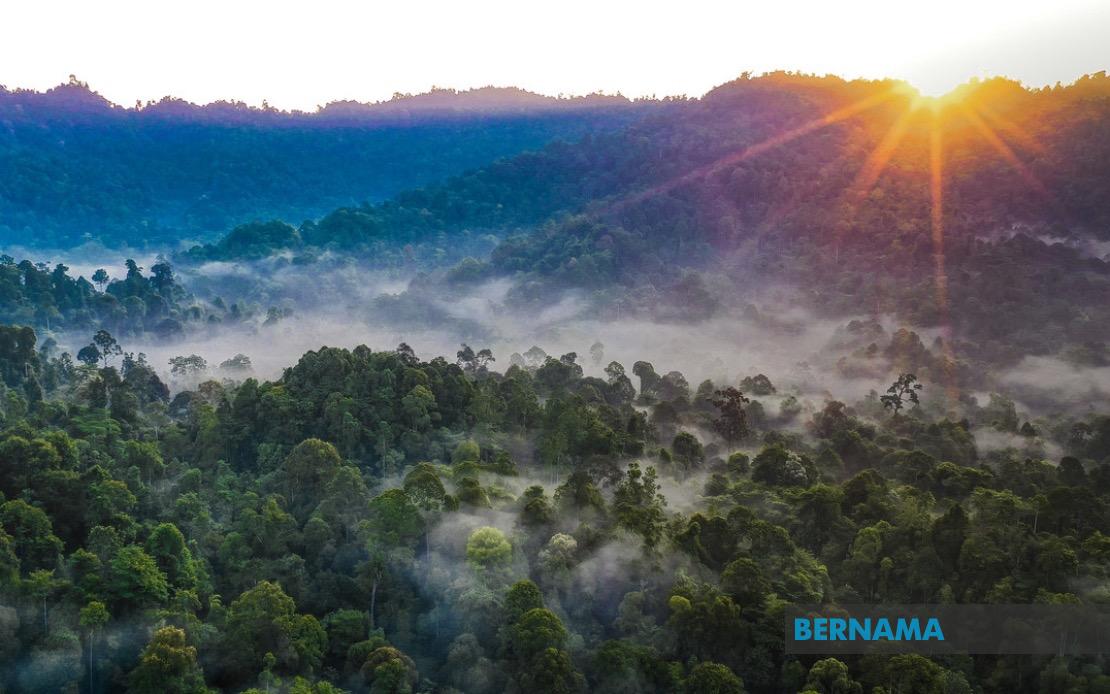
Kelantan's state government has committed to a forest conservation policy whereby any forest reserve area that loses its protected status will be offset by designating alternative land as replacement reserve. Deputy Menteri Besar Datuk Dr Mohamed Fadzli Hassan made the undertaking during an Exco meeting at the Kota Darulnaim Complex in Kota Bharu on July 15, emphasizing that this approach ensures the state's total forest reserve acreage remains stable despite development pressures.
The assurance comes amid public concern over the recent degazetting of Temangan Forest Reserve in Machang, which has been cleared to permit granite mining operations. The timing of the announcement suggests an effort to address environmental anxieties while maintaining economic development opportunities. The reserve's status change was necessary to implement a mining approval granted more than a decade ago, creating a tension between preservation mandates and existing commercial rights that the government now seeks to manage through compensatory conservation.
According to Mohamed Fadzli, the Temangan situation originates from a 2009 approval decision that allocated granite mining rights within what was then a protected forest reserve. For approximately fourteen years, this approval remained dormant without implementation. The recent degazetting decision essentially operationalized a commitment that had been on the books since the global financial crisis, suggesting that economic considerations have gained priority in the state's recent policy orientation.
The deputy menteri besar indicated that he personally engaged the Kelantan State Forestry Department to verify the mechanics and timeline of forest reserve replacement. This intervention appears designed to demonstrate governmental oversight and accountability, signalling that the degazetting decision was not made unilaterally without forestry input. The department's assurance that replacement areas would be formally designated provides a procedural framework, though the practical identification of suitable replacement land remains unspecified.
For Malaysian environmental advocates and forestry professionals, the replacement model represents a potentially important precedent in balancing resource extraction with conservation goals. Kelantan, like several other peninsular states, has faced recurring tensions between preserving diminishing forest cover and facilitating mineral extraction that generates state revenue and employment. The articulated policy commits the government to maintaining forest reserve totals even as specific locations change, a quantitative rather than qualitative approach to environmental stewardship.
The granite mining sector in Kelantan has been economically significant, particularly for construction material supply across the northern region and into Klang Valley demand centres. However, the industry has also drawn scrutiny from environmental groups concerned about habitat fragmentation, water quality impacts, and landscape degradation. The Temangan reserve sits within Machang, an area with established mining activity, suggesting that the degazetting decision reflects existing regional economic patterns rather than opening entirely new extraction frontiers.
From a Southeast Asian perspective, Kelantan's reserve replacement policy offers a middle-path approach that neither abandons forest conservation nor eliminates extractive industries entirely. Countries across the region grapple with similar pressures as economic development competes with environmental protection. Indonesia, Thailand, and Vietnam have adopted various models of forest offset and compensation arrangements, though their efficacy varies considerably depending on enforcement capacity and political will.
The credibility of Kelantan's commitment depends significantly on identifying and formally designating replacement forest reserves within a reasonable timeframe. Delayed or incomplete implementation would undermine the policy's conservation value, potentially converting the replacement mechanism into a technocratic shell that permits de facto forest loss. Transparency regarding which areas have been or will be designated as replacements would strengthen public confidence in the process.
Kelantan's state government may face questions from federal authorities and environmental constituencies regarding how replacement reserves are selected and monitored. The Forestry Department's assurance suggests internal coordination, yet the public lacks clarity on replacement site identification criteria, tenure arrangements, and long-term management responsibilities. These procedural details will determine whether the policy represents substantive environmental protection or administrative accommodation of mining interests.
The broader context includes Malaysia's commitments under international environmental agreements and growing domestic awareness of forest cover loss. Federal forestry statistics show continued decline in total forest acreage across peninsular Malaysia despite some state-level preservation efforts. Kelantan's policy, if rigorously implemented, could contribute to slowing that trajectory, though replacement efforts must account for ecological functionality, not merely hectarage numbers.
Investors and mining companies operating in Kelantan may view the replacement policy as clarifying regulatory frameworks, potentially reducing future uncertainty about forest-related approvals. However, the requirement to identify replacement reserves could also slow future degazetting decisions if suitable alternative areas become scarce or politically contentious. The policy's economic implications for the mining sector remain somewhat ambiguous pending implementation details.
Looking forward, the success of Kelantan's forest reserve replacement approach will likely influence whether other Malaysian states adopt similar models. Environmental groups will monitor implementation closely, particularly the timeline for replacement designation and the ecological characteristics of replacement areas. The state government's follow-through on this commitment will substantially affect its credibility on environmental governance more broadly.

