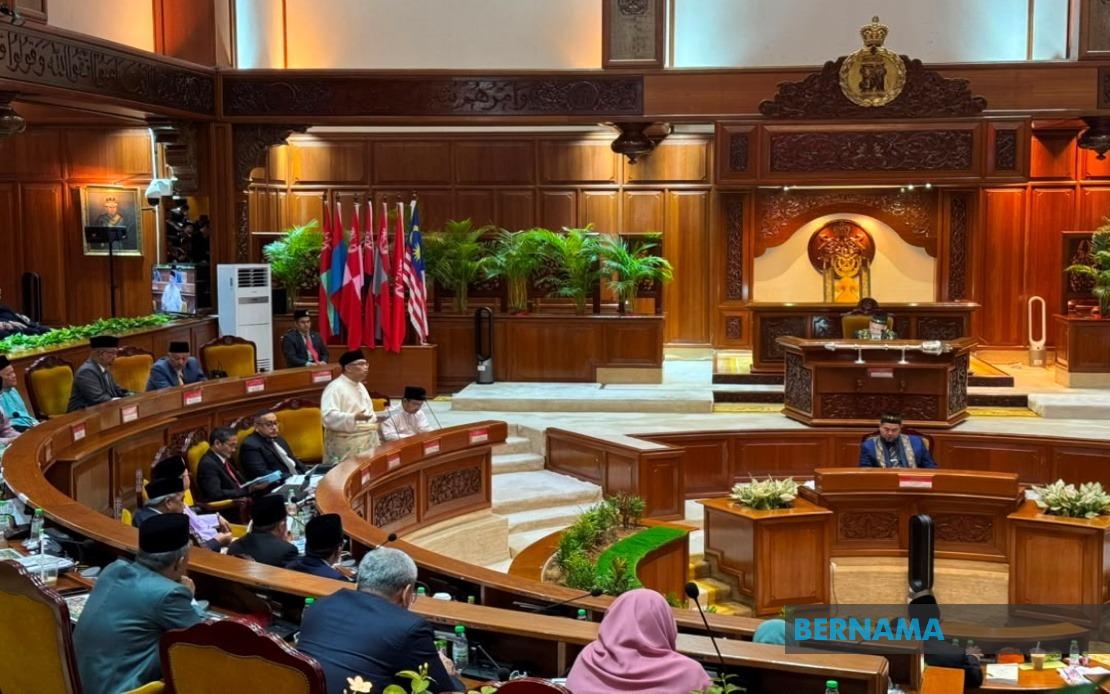
The Kelantan state legislative assembly has unanimously passed the Syariah Criminal Offences (Kelantan) Bill 2026, marking the culmination of efforts to reconstruct the state's Islamic criminal legislation following a significant judicial setback. Deputy Menteri Besar Datuk Dr Mohamed Fadzli Hassan tabled the comprehensive bill on August 12, with six state assemblymen participating in the parliamentary debate before it secured unanimous approval in the presence of Speaker Datuk Mohd Amar Nik Abdullah.
The passage of this legislation represents a direct response to a landmark February 2024 Federal Court decision that fundamentally reshaped the landscape of Syariah law in the state. In an 8-1 majority ruling, the court invalidated 16 of 18 provisions contained within the Kelantan Syariah Criminal Code (I) Enactment 2019, determining that the state assembly lacked constitutional authority to legislate on certain criminal offences that fall within federal jurisdiction. This judgment was triggered by a petition filed by a Kelantan-based lawyer and prompted intense constitutional debate regarding the boundaries between state and federal legislative powers in the sphere of Islamic law.
Menteri Besar Datuk Mohd Nassuruddin Daud emphasized during the assembly sitting that the new bill was not hastily constructed but rather underwent rigorous development and multiple review stages prior to presentation. His remarks underscored the government's commitment to crafting legislation that would withstand constitutional scrutiny while preserving the substantive intentions of the original enactment. The process of revision and refinement reflected acknowledgment of the legal constraints imposed by the Federal Court judgment and an attempt to operate within those defined boundaries.
The structural architecture of the 2026 Bill demonstrates considerable scope, comprising nine distinct parts, 62 clauses, and one schedule. This expanded framework incorporates several substantive reforms intended to modernize and clarify the legal provisions governing Islamic criminal matters within Kelantan. Among the key amendments are provisions addressing the obligation of performing mandatory prayers, protection of private bodily parts and organs, safeguarding intellectual capacity, implementation of restorative justice approaches, prioritization of whipping as the preferred form of corporal punishment, and establishment of a compound settlement mechanism for certain offences.
The restoration of Syariah criminal legislation in Kelantan carries particular significance for Malaysia's broader constitutional architecture. The state has historically positioned itself as a jurisdiction with robust Islamic jurisprudential traditions, and the ability to maintain effective Syariah law enforcement is viewed locally as integral to the Islamic governance framework. However, the 2024 Federal Court decision necessitated careful recalibration of legislative approach to align with constitutional realities regarding the division of competencies between Putrajaya and Kota Bharu.
Menteri Besar Mohd Nassuruddin articulated that the revitalisation strategy underlying the bill was not unprecedented or externally imposed, but rather reflected the foundational principles that were already embedded within the 2019 enactment. This framing suggests that the 2026 legislation represents continuity rather than radical departure, though necessarily refined to accommodate federal constitutional constraints. The government's positioning implies that substantive objectives remain consistent even as formal structure undergoes modification.
The unanimous passage of the bill across the assembly indicates broad political alignment within Kelantan's legislative body regarding the legislative direction. This unanimity is noteworthy given that such Islamic law matters occasionally generate diverse viewpoints among assemblymen. The consensus likely reflects widespread recognition of the necessity to restore legal clarity following the Federal Court's invalidation of earlier provisions, coupled with acknowledgment that the revised framework represents an optimal solution given constitutional limitations.
For Malaysian legal observers and constitutional scholars, the bill exemplifies the ongoing tension between state autonomy in religious affairs and federal supremacy in criminal jurisdiction. The Federal Constitution reserves certain criminal law matters to federal authority, yet grants states considerable power over Islamic religious law. The 2024 court decision drew a stricter line than previously assumed regarding where that boundary lies, particularly concerning offences that bridge religious obligation and secular criminal consequence. Kelantan's response through this revised bill tests the practical capacity of states to legislate Islamic criminal matters within the new constitutional interpretation.
The inclusion of restorative justice and compound mechanisms in the 2026 bill reflects evolving approaches within Islamic jurisprudence toward rehabilitation and settlement alternatives. These provisions suggest modernization of enforcement approaches beyond purely punitive frameworks, potentially offering flexibility for addressing Islamic law breaches through reconciliation and compensation rather than exclusively through formal prosecution. Such mechanisms align with contemporary criminal justice trends while remaining grounded in Islamic legal tradition.
Regional implications warrant consideration as other state governments operating their own Syariah courts and criminal jurisdictions will likely monitor Kelantan's legislative approach closely. The validity and operability of the 2026 bill in practice may influence how other states—including Terengganu, Pahang, and Selangor—calibrate their own Islamic criminal legislation in light of the 2024 Federal Court precedent. If Kelantan's reconstructed framework proves legally resilient, it may provide a template for other jurisdictions seeking to strengthen their Syariah criminal provisions.
The two-year interval between the Federal Court judgment and the present assembly passage allowed government draftsmen sufficient time to consult with constitutional lawyers, Islamic legal experts, and judicial officials regarding optimal legislative design. This extended preparation period presumably enhanced the bill's prospects for constitutional durability, though ultimate validation will depend on potential future legal challenges or judicial interpretation. The care invested in the revision process suggests a legislative body determined to craft sustainable Islamic law provisions rather than merely restoring previous language.

