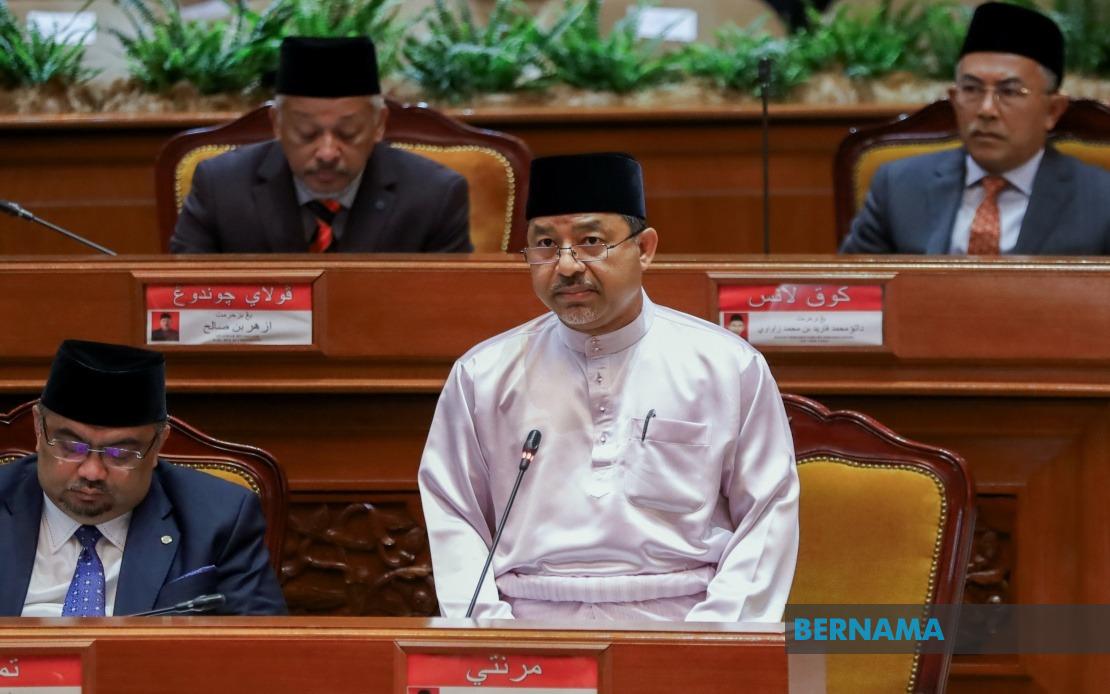
Kelantan's position as the custodian of the nation's most substantial Malay reserve land holdings was reaffirmed this month when the state government released updated statistics showing the northeastern state controls 526,083 hectares of protected Malay reserve territory. This expansive landmass, representing 91.5 per cent of Kelantan's total land area and encompassing 816,020 individual titles, underscores the state's unique demographic and administrative character within Peninsular Malaysia. The figures, presented during a sitting of the Kelantan State Legislative Assembly by Menteri Besar Datuk Mohd Nassuruddin Daud, reflect land administration records compiled as recently as June this year, providing the most current snapshot of Kelantan's land composition.
In contrast, non-Malay reserve land in Kelantan occupies a comparatively modest footprint of 48,344 hectares, or 8.4 per cent of the state's total land ownership spread across 43,255 titles. The overall picture across Kelantan's 574,427 hectares of documented land ownership, involving 859,275 titles, demonstrates the overwhelming predominance of Malay reserve designations throughout the state. This composition reflects historical land policies aimed at protecting indigenous Malay land ownership and has remained a defining feature of Kelantan's administrative structure for decades. The stability of these figures indicates that the state has successfully maintained its reserve land holdings without reduction, a point the Menteri Besar specifically highlighted when responding to questions raised by Datuk Abdul Rahman Yunus, the assemblyman for Pasir Tumboh.
The geographic distribution of Kelantan's Malay reserve land reveals significant variation across the state's 11 districts, with some areas demonstrating near-complete reserve land saturation while others maintain marginally greater diversity in land ownership classifications. Gua Musang emerges as the district with the single largest concentration of Malay reserve land, commanding 122,735 hectares of protected territory. This is followed by Pasir Mas with 56,656 hectares and Tanah Merah with 56,246 hectares, while Kuala Krai rounds out the highest-ranking districts with 53,473 hectares. These four districts alone account for a substantial proportion of Kelantan's total reserve holdings, reflecting the state's rural character and the historical settlement patterns of Malay communities across the northeast.
When examined through a percentage lens rather than absolute area, the dominance of Malay reserve classifications becomes even more pronounced in certain districts. Tanah Merah records the highest reserve land percentage at 99.9 per cent, indicating that virtually all documented land in this district falls under Malay reserve protection. Several other districts follow closely behind, including Tumpat, Pasir Puteh, Bachok, Pasir Mas, Kota Bharu, and Jeli, all exhibiting similarly elevated percentages of reserve land designation. This concentration suggests that non-Malay land ownership, where it does exist in Kelantan, tends to be confined to specific urban or commercial localities rather than distributed evenly across the state.
The constitutional and legal framework governing Kelantan's Malay reserve lands derives substantial authority from Section 13A of the Kelantan Malay Reservations Enactment, which establishes both protections and regulatory mechanisms governing these properties. This legislative foundation permits non-Malay individuals to acquire ownership within designated Malay reserve areas, provided they obtain appropriate authorization, thereby introducing a degree of flexibility into what might otherwise be viewed as an entirely rigid classification system. Simultaneously, the same statutory provision arms state authorities with considerable discretionary power to oversee and regulate all transactions involving Malay reserve land, including the prerogative to prohibit sales or transfers that officials determine would undermine or compromise the foundational interests underpinning the reserve system.
For Malaysian policymakers and observers of land administration, Kelantan's maintained position as the preeminent holder of Malay reserve land carries implications extending beyond mere statistical interest. The state's ability to preserve its reserve land base without erosion demonstrates effective institutional management and suggests that existing regulatory frameworks have successfully prevented fragmentation or loss of protected territory. This contrasts with some other states where reserve land has experienced gradual diminishment through various mechanisms including conversion, sale exemptions, or administrative adjustments. Kelantan's record thus provides a case study in how consistent application of reserve land policies can sustain their original protective intent across multiple decades.
The socioeconomic dimensions of Kelantan's dominant reserve land position warrant examination within the broader context of rural development and economic opportunity. While Malay reserve designations provide ownership protection for Malay communities, they simultaneously constrain property utilization options and can complicate access to capital through mortgaging or corporate partnerships. The concentration of reserve lands in Kelantan, coupled with the state's historically slower economic development trajectory relative to western Malaysian states, raises questions about whether the existing reserve land framework adequately balances protection with development incentives. Progressive policy discussions increasingly recognize that maintaining reserve status while facilitating productive economic use represents an important policy frontier.
Regional perspectives from other Peninsular Malaysian states provide context for appreciating Kelantan's distinctive position. No other state commands such a substantial absolute area or percentage of Malay reserve land, reflecting Kelantan's particular demographic composition and historical administrative decisions. States like Terengganu, Pahang, and Kedah maintain significant reserve land holdings, yet none approaches Kelantan's scale of protection. This variation across states suggests that reserve land policy implementation reflects not only uniform federal guidelines but also state-specific political preferences and administrative priorities. Understanding these differences proves essential for any comprehensive analysis of land administration across the federation.
Looking forward, Kelantan's documented land statistics provide a baseline for monitoring whether the state can sustain its reserve land holdings amid pressures from urbanization, commercial development, and demographic changes. The meticulous record-keeping evidenced by the Menteri Besar's presentation suggests governmental commitment to tracking reserve land dynamics with precision. However, future challenges may emerge as economic development pressures intensify and as younger generations of Malay landowners seek greater flexibility in deploying their assets. Policymakers will likely face recurring tensions between preserving the protective intent of reserve designations and permitting beneficial development that could enhance rural prosperity and individual property values in Kelantan.

