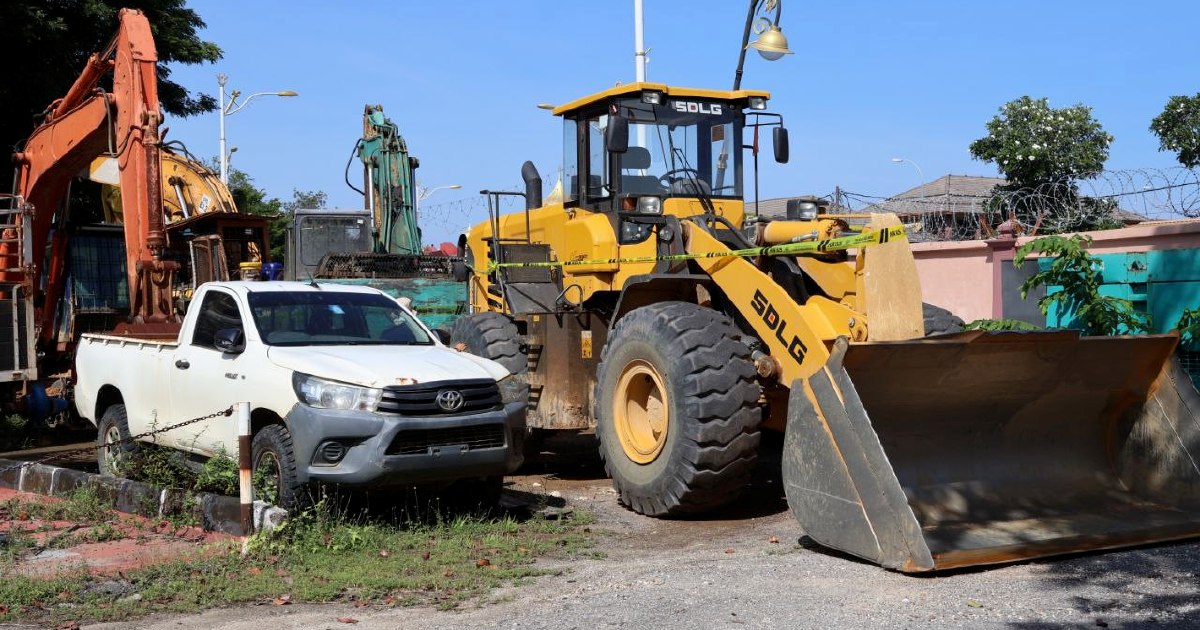
Authorities in Kelantan have begun a formal investigation into a major unlicensed gold mining enterprise discovered in the Gua Musang district. The action was triggered by the discovery and seizure of extensive heavy machinery and equipment valued at approximately RM4.2 million, signalling what may be one of the more significant illicit mining operations uncovered in the state in recent times.
The discovery highlights growing concerns about illegal mining activities across Peninsular Malaysia, particularly in rural and forested regions where enforcement presence is more limited. Gua Musang, located in the southwestern section of Kelantan near the Perak border, has historically been a region where illicit mining activities have occasionally surfaced. The district's terrain and relative remoteness have made it attractive to operators seeking to evade regulatory oversight.
Illegal gold mining represents both an economic and environmental challenge for Malaysian authorities. The confiscated equipment includes heavy machinery commonly used in extraction and processing operations, which requires significant capital investment and indicates the scale and organisation of the enterprise. The RM4.2 million valuation of seized assets alone demonstrates the financial stake involved in such underground operations.
This investigation adds to an emerging pattern of enforcement actions against illegal mining across Malaysia. Regional mining activities—whether involving gold, tin, or other minerals—have historically generated substantial informal revenue streams. The Kelantan case underscores the persistent difficulty regulators face in monitoring vast tracts of forest and agricultural land where unauthorised extraction occurs.
For Malaysian readers familiar with resource governance issues, the implications extend beyond this single operation. Illegal mining diverts mineral wealth from legitimate taxation and regulated industries, creates environmental degradation through habitat destruction and water contamination, and often involves informal employment networks that escape proper workplace safety oversight. Operators of such ventures typically extract resources without meeting environmental impact assessments or contributing to state royalties.
The Kelantan government's decision to formalise an investigation paper signals commitment to pursuing accountability in the matter. Such investigations typically examine operational scope, participants, supply chains, and financial flows. Authorities will likely seek to establish how long the operation functioned, what quantities of gold were extracted, and how the material was processed and distributed. These details matter for understanding the scale of economic leakage and potential environmental damage.
The geographic context is particularly relevant for regional observers. Gold mining in Southeast Asia has repeatedly surfaced as an issue linking environmental protection, indigenous land rights, and organised crime concerns. While Malaysia's regulatory framework is more developed than some neighbours, these periodic discoveries show that enforcement gaps persist. The fact that substantial machinery remained on-site long enough to be seized suggests either recent detection of a long-standing operation or rapid police action following a tip-off.
Neighbouring Perak, which shares a border with Gua Musang, has faced its own cycles of illegal mining problems, particularly in relation to tin extraction and, in recent years, mineral sands. The mobility of illicit mining enterprises across state borders complicates enforcement efforts. Operators may shift locations as pressure increases, creating a game of regulatory catch-up across multiple jurisdictions. This underscores why inter-state coordination among authorities remains essential for effective suppression.
For legitimate mining interests in Kelantan and surrounding states, such enforcement actions serve an important function. Licensed operators who comply with environmental standards, pay government royalties, and maintain safety protocols face competitive disadvantages against unlicensed rivals with no such obligations. The seizure and investigation help level the playing field, though only if they culminate in effective prosecution and deterrence.
The machinery seizure itself raises logistical questions about storage and eventual disposition. Large-scale mining equipment is expensive to maintain and difficult to relocate. Whether the confiscated materials are auctioned, retained for evidence, or ultimately scrapped depends on investigation outcomes and court determinations. These downstream processes affect the final economic impact of enforcement action.
Environmental restoration represents another consideration. Whatever damage occurred at the mining site—soil disturbance, vegetation removal, potential water contamination—will require assessment and remediation planning. The environmental cost of illegal extraction often exceeds the value of seized equipment, making prevention through effective surveillance and early detection preferable to remedial measures after the fact.
Kelantan's investigation also occurs within a broader context of resource management priorities. The state government, like others across Malaysia, must balance economic development with environmental protection and regulatory compliance. Mining—whether legal or illegal—affects these considerations. The formal investigation demonstrates that authorities recognise these trade-offs and are taking steps to ensure that extraction activities conform to established rules.
As the investigation proceeds, outcomes will likely include attempted identification of responsible parties, examination of market connections for extracted gold, and assessment of whether this represents isolated activity or part of a wider network. The wider enforcement implications for Kelantan and the region will become clearer as details emerge from the investigation process.

