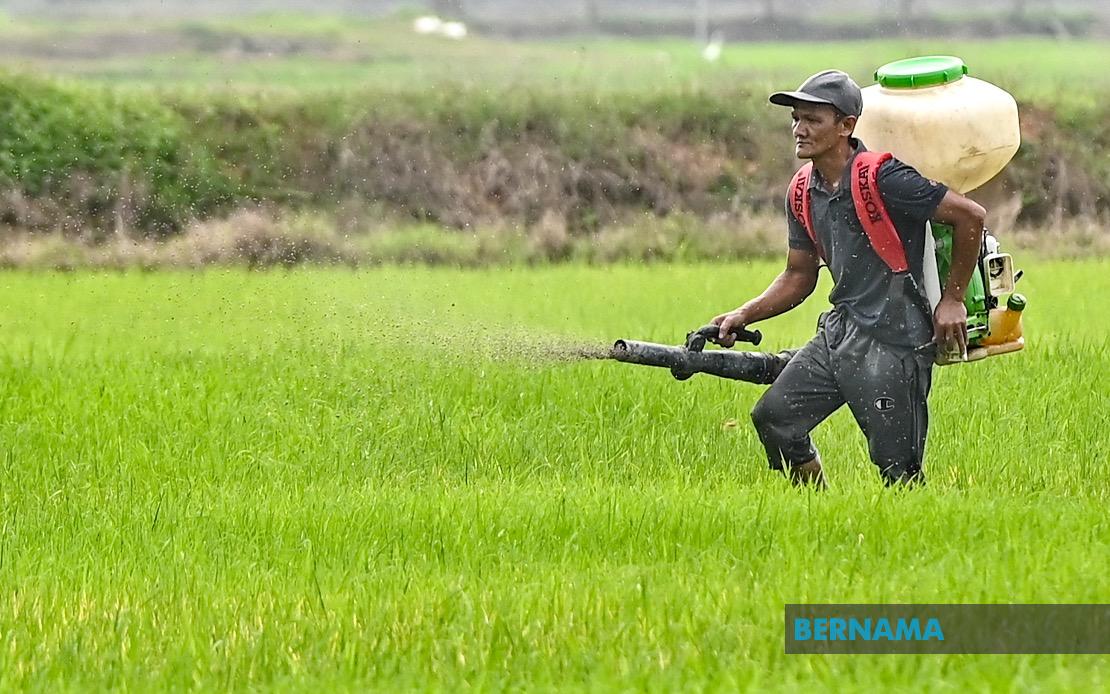
The Kelantan state government is channelling RM3.64 million into its Agriculture Department this year to spearhead ten strategic development initiatives designed to strengthen the state's food production capacity and rural economy. State Agriculture, Agro-Food Industry and Commodity Committee chairman Datuk Tuan Mohd Saripudin Tuan Ismail disclosed the funding allocation during a state legislative assembly sitting at the Kota Darulnaim Complex in Kota Bharu, in response to questions from elected representatives regarding the government's approach to ensuring long-term food security.
The investment programme encompasses a broad spectrum of agricultural activities aimed at revitalising underutilised farmland and expanding commercial production. Key components include initiatives to increase padi cultivation across available land parcels, diversified commodity crop expansion, and enhanced vegetable and fruit production systems. Beyond land-based farming, the allocation also targets entrepreneur development programmes designed to help individual farmers transition from subsistence to market-oriented operations. This multi-sector approach reflects recognition that sustainable agricultural growth requires simultaneous investment in infrastructure, training, and business support services.
Commercial farming has emerged as a particular focus, with the Kelantan State Agriculture Development Corporation (PKPNK) spearheading advanced cultivation techniques at designated agro-technology zones. The Rong Chenok Agro Valley facility has become a demonstration hub for modern farming methods, including chilli fertigation systems that optimise water and nutrient use, honeydew melon cultivation, and hydroponic vegetable production. These projects serve dual purposes: generating revenue through commercial sales whilst establishing proof-of-concept operations that smaller farmers can replicate on their own land using simplified techniques and locally-adapted knowledge.
Kelantan's livestock sector has emerged as a significant employment and income source for rural communities. More than 380 breeders have accessed state government support programmes focused on cattle, goats, sheep, deer, buffalo, and quail rearing. Beyond live animals, the government has provided essential equipment and infrastructure that reduce operational costs and improve production efficiency. This broad participation indicates that livestock farming has transformed from a marginal activity into a recognised livelihood strategy within the state's agricultural economy, complementing traditional padi farming and reducing income vulnerability during harvest fluctuations.
The fisheries and aquaculture sector represents one of Kelantan's most dynamic growth areas, particularly given the state's extensive coastal geography and river systems. During 2025, the aquaculture sector generated 7,901.74 tonnes of production valued at RM76.2 million, with authorities establishing an ambitious target of 8,000 tonnes for the current year. To reach these targets, RM382,094 was directly distributed to 122 fish and prawn breeders, alongside broader infrastructure development. The Kelantan State Agriculture Development Corporation operates at maximum capacity, producing one million catfish fry and 500,000 tilapia fry annually to meet breeding demand. Additionally, the corporation's white prawn project operating from Pantai Geting in Tumpat district generates approximately 400,000 kilogrammes of production yearly, establishing Kelantan as a significant regional aquaculture producer.
Expanding aquaculture production necessitates strengthened hatchery infrastructure throughout the state. Government efforts have resulted in construction of more than 130 artificial hatcheries, providing breeding facilities previously unavailable to small-scale operators. To replenish wild fish stocks and support artisanal fisheries, authorities have released 1.26 million fish and prawn fry into public waters, balancing commercial aquaculture expansion with sustainability objectives. These complementary activities—hatchery development, controlled breeding, and wild stock replenishment—reflect a sophisticated understanding that comprehensive fisheries management requires multiple simultaneous interventions across both commercial and subsistence sectors.
Government support extends beyond production into critical market access infrastructure. As of June, approximately 1,560 rural entrepreneurs had benefited from 74 marketing infrastructure facilities and 99 distinct marketing outlets established throughout Kelantan. These facilities address a fundamental constraint that limits many small-scale producers: the inability to reach consumers efficiently or negotiate fair prices with large intermediaries. By providing dedicated retail and wholesale space, the government has created platforms enabling farmers to capture greater value from their production.
The Kota Bharu Rural Transformation Centre has emerged as the flagship agricultural marketing facility, functioning simultaneously as an agro-food distribution hub and entrepreneur incubation space. Housing approximately 800 entrepreneurs, the centre has generated cumulative sales exceeding RM4.16 billion since its establishment in 2012, demonstrating sustained demand for accessible agricultural market infrastructure. This performance indicates that when farmers and small businesses receive adequate space, logistical support, and exposure to potential customers, they respond with increased production and commercial activity that generates tax revenue and employment extending beyond agriculture itself.
Kelantan's agricultural development strategy reflects broader Southeast Asian patterns wherein states attempt to enhance food self-sufficiency whilst creating rural employment alternatives. Malaysia faces structural agricultural challenges including aging farmer populations, land fragmentation, rising production costs, and intense competition from imported produce. Kelantan's approach—simultaneously modernising commercial operations through technology demonstration, supporting traditional smallholder farming, and investing heavily in market access infrastructure—represents a pragmatic attempt to address multiple constraints simultaneously rather than pursuing ideologically-pure but economically-fragile solutions.
The investment programme carries particular significance for Malaysia's wider food security agenda. As global supply chains face disruptions from climate change and geopolitical tensions, domestic agricultural production capacity assumes heightened importance. Kelantan's focus on aquaculture expansion and diversified crop production contributes to national objectives reducing reliance on imported protein and vegetables. Furthermore, by actively supporting rural entrepreneurs rather than relying exclusively on large-scale commercial operations, the state maintains agricultural production distributed across numerous locations, enhancing resilience against localised disasters or production failures.
For neighbouring states and the broader Southeast Asian region, Kelantan's experience provides instructive lessons regarding agricultural development funding efficiency. The state allocates relatively modest resources—RM3.64 million annually—yet distributes benefits across 380 livestock breeders, 122 aquaculture operators, 1,560 agricultural entrepreneurs, and numerous infrastructure facilities. This broad impact suggests that careful programme design emphasising market infrastructure and technology transfer yields greater returns than capital-intensive projects benefiting limited beneficiaries.
The coming months will reveal whether Kelantan achieves its 8,000-tonne aquaculture target and expands beyond current production levels. Success requires sustained funding, effective programme management, and continued farmer participation. Failure would signal that structural constraints—possibly including inadequate extension services, input supply disruptions, or weak market demand—require attention beyond funding allocation. International experience suggests that agricultural development programmes succeed when capital investment combines with technical training, market development, and institutional reforms ensuring farmers can access credit and inputs at competitive rates.

