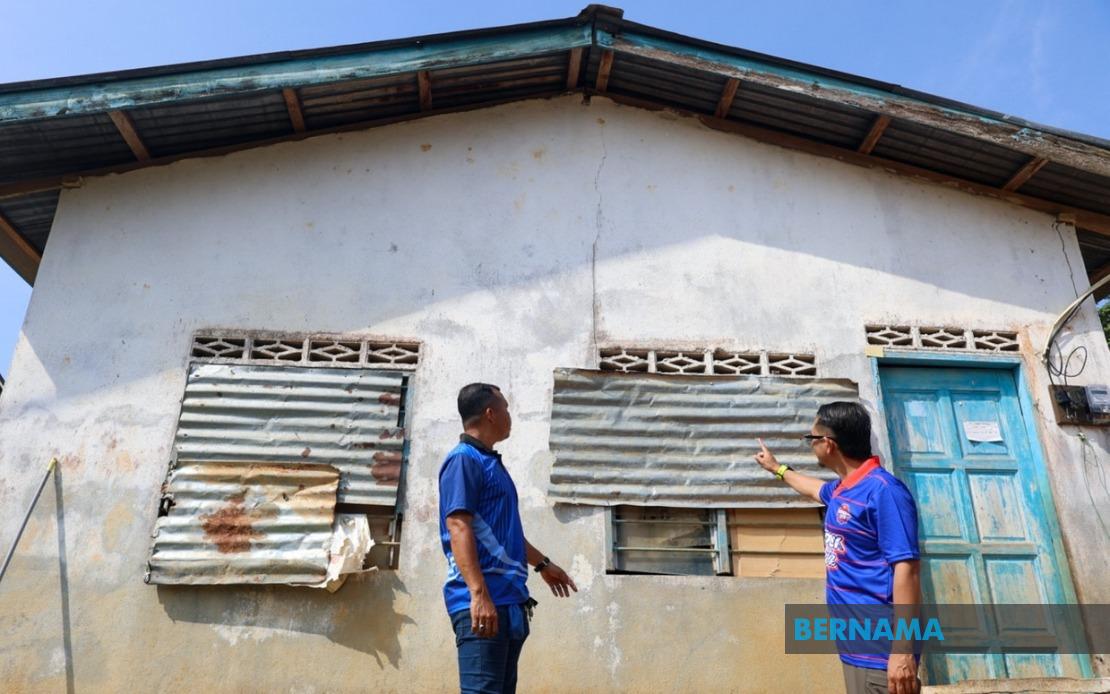
The Kelantan state government has mapped out a comprehensive action plan addressing the most pressing needs of indigenous communities living in two of the state's most isolated settlements. After recent field visits to the Pasik Resettlement Scheme (RPS Pasik) and Kampung Kuala Wok, state authorities have prioritised five critical areas affecting approximately 1,524 Orang Asli residents who call these remote regions home. Nenggiri Assemblyman Mohd Azmawi Fikri Abdul Ghani outlined the findings following ground inspections conducted in early August, highlighting the gap between community aspirations and current living conditions in these challenging frontier communities.
The housing crisis stands foremost among the identified priorities, with a troubling proportion of dwellings requiring substantial structural intervention. Residents have been enduring inadequate accommodation marked by deteriorating roofs, compromised building integrity, and dangerously outdated electrical systems that pose fire hazards and deny families basic comfort and safety. Beyond remedial work, the communities have articulated a growing demand for new housing units to absorb natural population increase, particularly young couples establishing households. This demographic pressure reflects the communities' stability and growth, yet underscores the infrastructure deficit. Mohd Azmawi Fikri indicated that state officials will engage the Department of Orang Asli Development (JAKOA) to explore construction programmes that can address both immediate repairs and longer-term housing expansion, though he offered no timeline for implementation.
Wildlife conflict has transformed from a seasonal nuisance into a persistent security challenge since 2022, when wild elephant incursions into settled areas intensified. These animals have fundamentally altered community life, constraining residents' freedom to conduct daily activities, cultivate agricultural plots, and move safely through their territories. The psychological toll extends beyond documented attacks or injuries; families live with constant vigilance and anxiety about children playing outdoors or elders gathering forest resources. This recurring crisis demands a multifaceted response combining wildlife management protocols, early warning systems, and potentially modified settlement planning to reduce human-elephant contact zones.
Electricity supply represents another foundational need, with many households still lacking consistent or safe power access. Reliable electricity enables educational activities, small-scale commercial ventures, medical equipment operation, and improved living standards more broadly. The government's consideration of these gaps indicates recognition that development cannot proceed without basic utilities infrastructure, though the technical and financial barriers to extending grids into terrain requiring four-wheel-drive vehicles remain formidable.
Distribution of essential goods has emerged as a critical vulnerability amplified by geographical isolation. RPS Pasik and Kampung Kuala Wok sit approximately 200 kilometres by rough roads from the nearest major centre at Gua Musang, creating a dramatic distance barrier that drives up costs and restricts access to affordable necessities. The government is actively examining proposals to include RON95 petrol in the Essential Goods Distribution Programme, recognising that the nearest petrol station lies roughly 50 kilometres away. This consideration reflects an understanding that transportation costs effectively price goods beyond community reach, undermining economic participation and forcing reliance on informal, often exploitative trading relationships.
The Jualan Rahmah programme, which aims to stabilise prices for essential items through targeted subsidies and direct sales mechanisms, has been identified as requiring expansion or intensification. For communities this remote, price stability programmes offer practical relief from cost-of-living pressures that disproportionately affect low-income households with limited market alternatives. Authorities are simultaneously studying proposals to enhance delivery frequency, though the source material does not elaborate on specific expansion plans or budget allocations.
The physical isolation that characterises these settlements illuminates why standard service delivery fails communities in such remote locations. Four-wheel-drive vehicles remain essential transport in areas where road conditions deteriorate significantly during monsoon seasons, and the round-trip journey from Gua Musang covering approximately 200 kilometres represents a substantial barrier to accessing government services, medical facilities, and market opportunities. This infrastructure constraint has cascading effects: it increases costs of service delivery, limits employment prospects, restricts educational access, and forces dependence on limited local resources.
Mohd Azmawi Fikri's public articulation of these priorities signals potential momentum toward remedial action, though translating identification into implementation remains uncertain. The involvement of multiple agencies—particularly JAKOA for housing coordination—suggests institutional complexity that could either facilitate comprehensive solutions or fragment response efforts across competing departmental mandates. The timeframe for addressing these priorities remains unspecified, and the financial implications have not been disclosed, making it premature to assess government commitment beyond rhetorical acknowledgment.
For Orang Asli communities across Malaysia facing similar isolation, the Kelantan government's structured identification of needs offers a template for advocacy and baseline assessment. Yet the persistence of such fundamental deficits—housing quality, wildlife safety, electricity, essential goods access—after resettlement programmes have been implemented raises questions about programme design, monitoring, and adequacy of initial resource allocation. These communities represent citizens entitled to development benefits that urban and suburban populations take as given, yet geography and historical marginality have created systematic deprivation requiring sustained, adequately resourced intervention.
The wider policy implication extends to development equity in Southeast Asia, where indigenous populations in frontier regions frequently experience multi-dimensional disadvantage compounded by isolation. Malaysia's Orang Asli communities in places like RPS Pasik exemplify this pattern, and their experiences offer lessons for regional peers addressing similar challenges in remote terrain. Without decisive action translating identified needs into funded programmes with clear accountability mechanisms, government recognition alone risks becoming performative acknowledgment rather than catalytic intervention.

