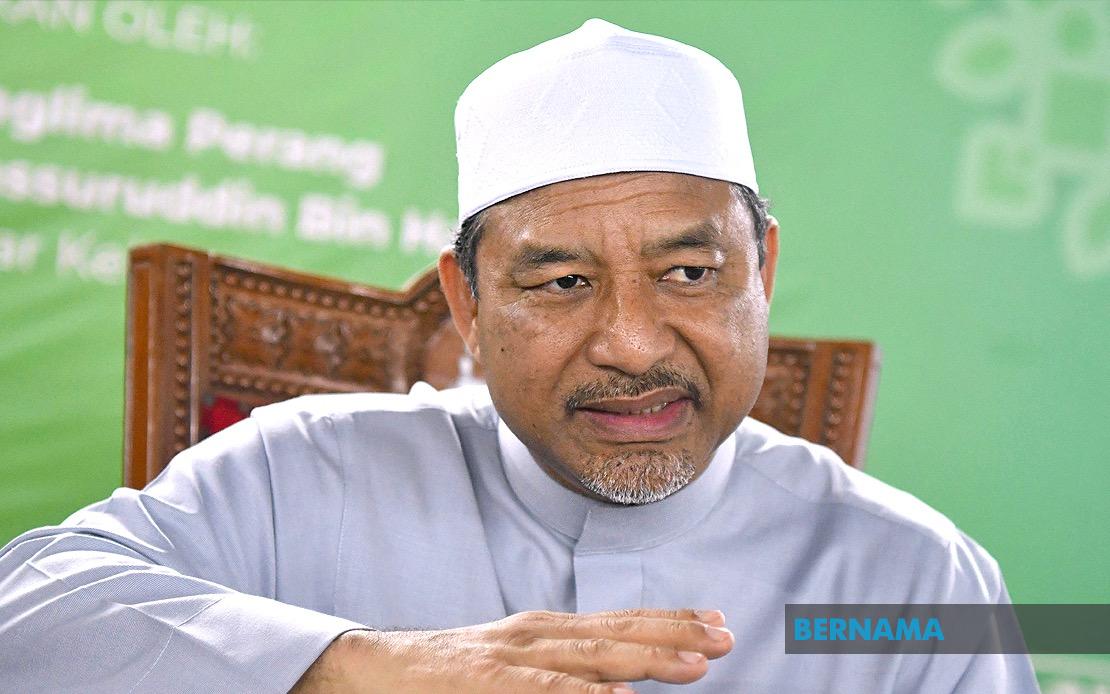
Kelantan's approach to cultural preservation represents a deliberate effort to maintain the state's artistic identity while adhering to Islamic values, according to the state government's leadership. At the closing ceremony of the Kelantan Arts Festival (FKRK) 2026 in Pasir Puteh on July 4, Menteri Besar Datuk Mohd Nassuruddin Daud articulated a nuanced policy that neither dismisses traditional practices outright nor accepts them uncritically. Instead, the state has adopted a framework whereby cultural elements undergo refinement to ensure compatibility with Islamic teachings, allowing heritage practitioners to continue their work within defined moral and ethical boundaries.
The Menteri Besar's remarks clarify what has occasionally been perceived as tension between cultural conservation and religious strictness in Kelantan, a state known for its strong Islamic governance. Rather than viewing these concerns as contradictory, the state government frames cultural refinement as a legitimate expression of Islamic values themselves. This positioning suggests that Islam in Kelantan is not merely a constraint on cultural expression but potentially a wellspring for it. Mohd Nassuruddin emphasised that the state has never fundamentally opposed arts or traditional practices simply because of their age or origin. What matters is the substance: whether practices embody values aligned with Islamic teachings regarding decorum, morality, and social responsibility.
Historically, certain traditional performances have faced restrictions under this framework, but the state's approach now permits their revival once problematic elements are removed or recontextualised. This distinction is significant for cultural practitioners who work in Kelantan's performing arts sector. Rather than permanent prohibitions, artists and troupes can collaborate with state authorities to adapt their work, a process that theoretically opens pathways for previously restricted performances to return to public stages. The arrangement requires negotiation and compromise from all parties but avoids the finality of outright bans that might otherwise drive cultural knowledge underground or towards neighbouring states.
Kelantan's cultural inventory reflects the depth of Malay-Muslim heritage that the state seeks to safeguard. Traditional games such as gasing uri, congkak, dam aji, and tating exemplify the types of practices receiving renewed attention. The Menteri Besar specifically commended efforts to revive these games, framing their resurgence as a counterbalance to technology's influence on young people's lifestyles. In an era when digital entertainment dominates leisure time, the state government's investment in reanimating traditional pastimes carries both cultural and social welfare dimensions. These games embody pedagogical values—mathematical reasoning in congkak, strategic thinking in dam aji—that enhance their relevance beyond mere nostalgia.
The FKRK 2026 festival itself served multiple purposes beyond entertainment. Spanning four days and organised jointly by the Ministry of Tourism, Arts and Culture and the National Culture and Arts Department (JKKN) Kelantan, the event functioned as a platform for knowledge exchange among heritage practitioners. Such gatherings create networks essential for sustaining living traditions that depend on intergenerational transmission. Younger performers can learn directly from masters, and administrators gain insights into practitioners' needs and constraints. For Kelantan's tourism sector, these cultural displays offer authentic attractions that differentiate the state in Malaysia's competitive tourism landscape, particularly as domestic and regional visitors increasingly seek meaningful cultural experiences rather than standardised entertainment.
Kelantan's broader cultural heritage encompasses performing arts, traditional games, handicrafts, and culinary traditions that collectively narrate the wisdom and philosophy embedded in Malay community life. This holistic understanding of culture—spanning material and immaterial dimensions—reflects international best practices in heritage preservation. The state government's framing positions these elements as treasures to be transmitted to future generations rather than relics confined to museums. This distinction proves crucial for sustainability; living traditions thrive through active practice, not preservation in amber. By integrating cultural activities into contemporary life and economic structures, Kelantan increases the likelihood that younger generations will value and participate in these practices.
The economic dimension of cultural preservation deserves emphasis in the Malaysian context, where heritage tourism increasingly drives regional development. Kelantan's strategy integrates arts and culture into its broader economic planning, recognising that cultural authenticity attracts tourists and generates income for artisans, performers, and hospitality sectors. This economic rationale provides sustainable incentives for cultural maintenance beyond purely sentimental or religious arguments. When traditional craftspeople can earn viable livelihoods, when performance groups attract paying audiences, and when tourists spend money in communities celebrating their heritage, cultural preservation becomes economically rational as well as culturally important.
The relationship between Islamic principles and cultural development in Kelantan illustrates how religious frameworks need not inevitably constrain creativity and heritage. The state government's articulation suggests that Islam itself embodies values—discipline, aesthetic refinement, community responsibility—that can enhance rather than diminish cultural expression. This perspective contrasts with occasional international perceptions that Islamic governance inherently limits artistic freedom. Kelantan's model, if successfully implemented, demonstrates that thoughtful integration of religious and cultural values can produce outcomes satisfactory to both practitioners and communities with strong religious commitments.
For other Malaysian states and Southeast Asian regions grappling with similar questions about cultural preservation amid religious and modernising pressures, Kelantan's approach offers instructive lessons. The emphasis on refinement rather than rejection, on negotiation rather than prohibition, and on economic sustainability alongside cultural value suggests pragmatic pathways forward. These strategies acknowledge that cultural heritage exists not in isolation but within communities with evolving values and economic needs. By treating cultural practitioners as stakeholders in dialogue rather than supplicants seeking permission, the framework creates conditions for genuine participation in preservation efforts.
Moving forward, the success of Kelantan's cultural preservation strategy will depend on consistent implementation and genuine collaboration between state authorities, cultural practitioners, religious scholars, and community members. The state's commitment to the Kelantan Arts Festival as an annual event signals institutional dedication, yet sustained progress requires resources, training programmes, and market development for cultural products and experiences. As Malaysia navigates the dual imperatives of modernisation and heritage preservation, Kelantan's evolving model merits attention as a case study in reconciling these seemingly competing demands through dialogue, refinement, and recognition of culture's intrinsic and economic value.

