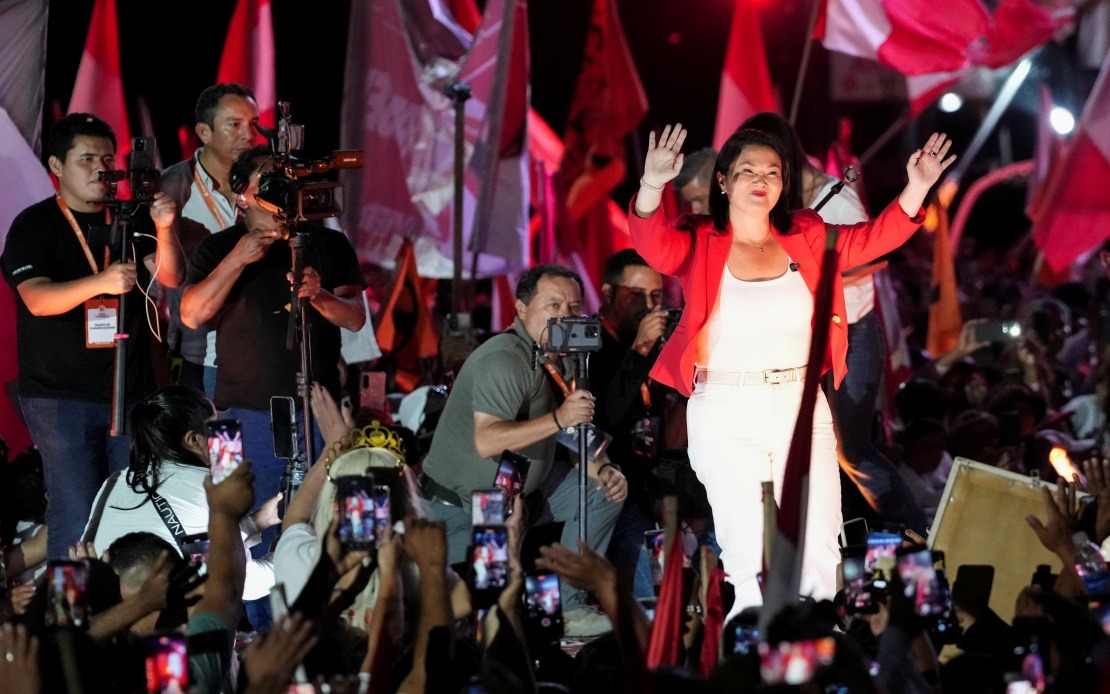
Keiko Fujimori of Peru's Popular Force party has emerged victorious in the country's presidential election, securing 50.135 per cent of valid votes cast in the June 7 election according to the complete official count released by Peru's National Office of Electoral Processes (ONPE). The razor-thin margin underscores how deeply polarised the South American nation remains, with Fujimori's rival Roberto Sanchez of the Together for Peru coalition capturing 49.865 per cent of the electorate's support.
The numerical breakdown reveals the extraordinary closeness of this electoral contest. Fujimori accumulated 9,223,396 votes compared to Sanchez's 9,173,755, a difference of just 49,641 ballots across millions cast. This slender victory margin—representing less than one percentage point—demonstrates the fractured political landscape Fujimori will inherit and the challenges ahead in building consensus for her legislative agenda. In a nation where presidential candidates typically require broader mandates, such a narrow plurality raises questions about the legitimacy and durability of any governing coalition.
Fujimori's triumph marks a significant personal milestone after three unsuccessful presidential campaigns. Her ascent to Peru's highest office represents a dramatic political comeback, particularly given the controversial legacy of her father, former President Alberto Fujimori, who governed Peru during the turbulent 1990-2000 period. That era, while credited with economic stabilisation and counterterrorism operations against insurgent groups, also remains tainted by accusations of human rights abuses and authoritarian governance that continue to haunt Peruvian politics and judicial proceedings.
Her opponent, Roberto Sanchez, carries a distinctly different political pedigree. Sanchez served as a minister under the leftist government of Pedro Castillo, who led Peru from 2021 until his self-coup attempt and subsequent arrest in December 2022. The contest thus reflected a fundamental ideological and stylistic divide between centre-right continuity under Fujimori and the progressive agenda that Castillo briefly championed before his political collapse. Sanchez's near-victory suggests the electorate remained substantially divided between these competing visions for national direction.
The electoral authority completed processing all 92,766 tally sheets from polling stations by the time the official results were announced, representing the culmination of a meticulous tallying process designed to ensure accuracy and legitimacy. This comprehensive verification through the ONPE's real-time vote-counting platform provided transparency throughout the counting period, allowing domestic observers and international monitors to track results as they accumulated across Peru's diverse geography—from coastal urban centres to remote Andean regions.
Roberto Burneo, who presides over Peru's National Jury of Elections, indicated that the formal proclamation of these results was scheduled for Friday following the Monday announcement of the final official count. This procedural step carries constitutional significance, as the formal proclamation represents the judiciary's certification of the election's legitimacy and confers full legal authority upon the president-elect to assume office. The timeline reflects Peru's established democratic protocols, even as the nation navigates complex questions about electoral legitimacy and social cohesion.
For Malaysian observers and Southeast Asian regional analysts, Peru's electoral outcome carries instructive parallels regarding polarisation and institutional resilience. Like several regional democracies, Peru faces persistent challenges reconciling competing ideological camps, managing economic inequality that fuels political divisions, and maintaining institutional integrity amid accusations of corruption and abuse of power. Fujimori's victory by such a narrow margin mirrors similar tight elections across Asia and Latin America, where fractured electorates struggle to produce clear mandates for governance.
The Fujimori family's enduring political presence across three decades also reflects patterns evident in Southeast Asian politics, where established political dynasties retain substantial electoral appeal despite—or sometimes because of—controversial historical records. Her electoral persistence despite previous defeats demonstrates how personalised political leadership, family networks, and deep organisational structures can transcend specific policy platforms or individual scandals. This phenomenon resonates across the region, where family-based political organisations often prove more electorally durable than ideologically coherent parties.
Fujimori's wafer-thin mandate will complicate her ability to implement significant legislative reforms during her presidency. Without commanding majority support across Peru's electorate, she cannot claim a popular mandate to overturn existing policies or pursue transformative agendas. Congressional negotiations will prove essential, particularly given Peru's history of divided government and legislative obstruction. Her administration's success will likely depend substantially on political negotiation and compromise rather than ideological assertion, a constraint that applies regardless of her party's congressional representation.
The election's closeness also underscores Peru's profound political fragmentation. The nation's inability to produce commanding consensus behind any candidate reflects deeper societal divisions rooted in economic inequality, regional disparities, and conflicting visions of national development. These fissures will persist regardless of electoral outcomes, potentially constraining any president's capacity to address Peru's substantial challenges in poverty reduction, infrastructure development, and institutional strengthening. Regional stability in South America may depend significantly on whether Peru's new administration can build sufficient political consensus to address these underlying social tensions constructively.

