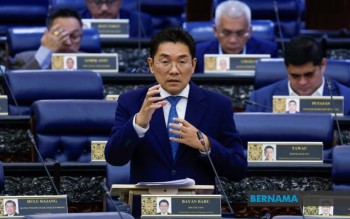
Deputy Investment, Trade and Industry Minister Sim Tze Tzin announced that Kedah has secured RM1.4 billion in approved investments spanning 50 projects during the first quarter of 2026, signalling renewed momentum in the state's industrial sector. The achievement was disclosed during parliamentary questioning, where Sim outlined the administration's broader vision for transforming the northern region into an integrated economic powerhouse that extends beyond traditional manufacturing corridors into underserved rural communities.
The investments concentrate on three strategic industrial zones that have become anchors for Kedah's economic transformation. Kulim Hi-Tech Park, long established as the state's premier electronics and semiconductor hub, continues to attract sizeable allocations alongside newer initiatives like Kedah Rubber City and the Kerian Integrated Green Industrial Park. These three zones represent different industrial trajectories—from high-tech manufacturing to resource-based processing and sustainability-focused production—creating a diversified portfolio less vulnerable to single-sector downturns.
Central to the government's rationale is ensuring that prosperity generated by these flagship industrial areas radiates outward to surrounding districts, particularly Sik, Baling, and Padang Terap. These predominantly rural areas have historically lagged urban and semi-urban zones in employment quality and income levels. The strategy acknowledges that large anchor investments alone do not guarantee inclusive development; deliberate mechanisms must channel opportunities downward through the supply chain and local economy.
A critical pillar of this inclusive approach involves infrastructure enhancement designed to physically connect rural districts with industrial zones. The scheduled widening of Federal Route FT004 from the Kulim Hi-Tech Park interchange to Bukit Karangan exemplifies this commitment. Slated for completion by April 2028, the project targets the bottleneck that currently constrains logistics and commuting flows between the industrial park and inland communities. Improved connectivity reduces transportation costs, making it economically viable for suppliers and manufacturers based in Baling, Sik, and Padang Terap to service major industrial clients.
Beyond infrastructure, the government recognizes the comparative advantage of these rural districts in agriculture and food processing. Rather than compete directly with high-tech manufacturing, the strategy positions Baling, Sik, and Padang Terap as specialized nodes within the northern economy. Agro-industries, food processing, and value-added agricultural production are classified as priority sectors by the Investment Ministry, signalling that capital and incentives will flow toward modernizing these traditional strengths rather than imposing incongruous industrial models.
The newly implemented New Incentive Framework, effective from March 2026, introduces financial architecture designed to nudge foreign investors toward deeper local engagement. Investors who increase their reliance on local vendors and domestically manufactured inputs become eligible for enhanced government incentives, creating economic pressure favoring localization without mandates. This mechanism recognizes that multinational enterprises often favor established supply chains and international suppliers out of convenience and risk minimization rather than cost considerations.
By offering superior incentives for localization, the framework rebalances the calculus, making it financially prudent for foreign investors to develop relationships with Malaysian vendors, particularly those in neighboring districts. As supply chains deepen, employment expands beyond factory floors into distribution, warehousing, quality assurance, and technical services. Small and medium enterprises in rural areas gain access to stable, large-volume customers capable of absorbing increased production.
Technology transfer represents a secondary but equally significant dimension of this localization approach. Foreign investors establishing ties with local suppliers typically provide training and technical guidance to ensure quality standards and reliability. Over time, Malaysian vendors accumulate capabilities and know-how, positioning themselves to service not only the initial foreign partner but increasingly to compete independently. This capability-building effect amplifies long-term benefits beyond employment creation.
The parliamentary question from Ahmad Tarmizi Sulaiman, representing the rural constituency of Sik under the Perikatan Nasional banner, underscores the political salience of inclusive development in Malaysia's northern states. Rural constituencies have historically expressed frustration that industrialization benefits concentrate in urban centers, leaving agricultural communities behind. By making specific commitments regarding Sik, Baling, and Padang Terap, the government addresses these constituency concerns while demonstrating that economic policy can be geographically calibrated.
Sim's emphasis on "sharing economic benefits inclusively" signals a departure from earlier development models that treated industrialization and rural welfare as competing priorities. Contemporary development theory increasingly recognizes that distributed growth proves more politically sustainable and economically resilient than concentrated gains. Malaysia's experience with regional imbalances and political grievances over unequal development validates this perspective.
The RM1.4 billion in quarterly approvals, if sustained, would translate into approximately RM5.6 billion annually, substantially exceeding recent historical averages for Kedah. However, the critical metric extends beyond headline investment figures to actual employment creation and vendor participation among rural residents. Implementation challenges—from infrastructure delays to potential misalignment between investor needs and local supplier capabilities—could undermine ambitious rhetoric. Success requires sustained coordination between federal ministries, state governments, and private sector stakeholders.
For Malaysian policymakers and regional observers, Kedah's trajectory offers insights into how federal investment strategy can address spatial inequality while attracting capital. The approach combines traditional infrastructure investment with newer incentive architecture, acknowledging that modern development requires both hard and soft infrastructure. As Southeast Asia competes for manufacturing relocation from China and evolving global supply chains, states capable of demonstrating inclusive growth models may gain competitive advantage in attracting long-term, committed investors.

