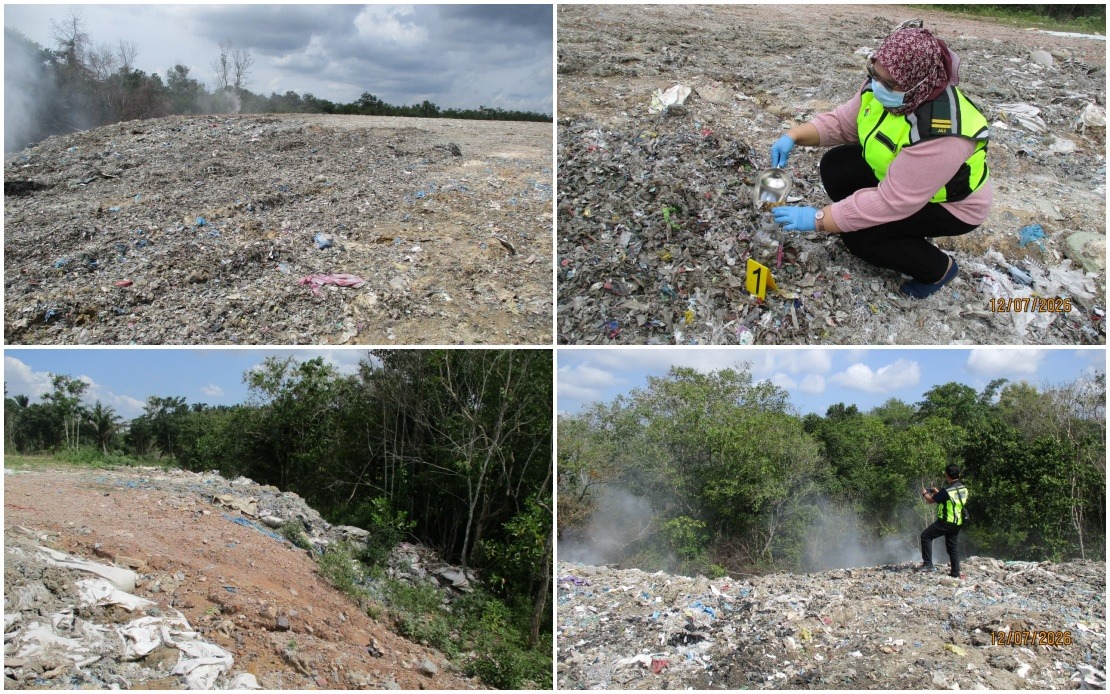
Environmental authorities in Kedah have uncovered an unauthorised waste disposal operation in Bukit Banyan that had been running without proper regulatory oversight or approval. The discovery came after residents filed complaints with the Kedah Department of Environment about noxious smoke in the vicinity, prompting officials to conduct an on-site inspection that revealed concerning practices that breach multiple environmental regulations.
Upon investigation, the DOE team found that a substantial area of approximately 250 square metres had been converted into an informal dumping ground for domestic and solid waste. The vegetation had been completely cleared from the plot to create space for accumulating refuse, creating what appears to be an active illegal disposal site. State DOE Director Sharifah Zakiah Syed Sahab confirmed that the site lacked any formal authorisation from the federal Environment Director-General, a mandatory requirement for all solid waste management operations in Malaysia.
The most alarming aspect of the discovery is evidence of open burning at the location. Investigators determined that the smoke detected by residents originated from deliberate burning of the accumulated waste by individuals seeking to salvage valuable metals from the discarded materials. This practice, known as informal recycling or scavenging, poses severe environmental and health risks including air pollution, toxic fume emission, and contamination of surrounding soil and water sources. The burning of unsorted domestic waste releases hazardous substances into the atmosphere that can affect respiratory health in nearby communities.
Evidence suggests that the dumping and burning operation has been linked to a waste contractor operating in the Sungai Petani district. According to the DOE's preliminary findings, the contractor appears to have been collecting domestic waste from industrial facilities across the district but disposing of it illegally rather than transporting it to authorised sanitary landfills. This cost-cutting approach not only circumvents proper waste management fees but also places the environmental burden on the community and local ecosystems.
The regulatory breaches identified at the site are serious under Malaysian environmental law. Investigators have documented violations of Section 29A(1) of the Environmental Quality Act 1974, which prohibits open burning on any parcel of land, and Section 34A(6) of the same legislation, which criminalises the operation of sanitary solid waste landfill facilities without proper written approval. These provisions exist specifically to prevent the type of informal, unmonitored dumping that has been occurring in Bukit Banyan.
To gather additional evidence and document the scope of environmental damage, the Kedah DOE collected multiple samples of solid waste from the site for laboratory analysis by the Department of Chemistry. These tests will help determine the chemical composition of the dumped materials and identify any hazardous substances that may have been improperly disposed of. The laboratory findings will strengthen the enforcement case and may reveal whether the site has been used as a dumping ground for industrial or chemical waste beyond domestic refuse.
The case now moves into the enforcement phase, with the Kedah DOE referring the matter to the Solid Waste and Public Cleansing Management Corporation, or SWCorp, which holds statutory responsibility for oversight and enforcement of waste management practices across Malaysia. SWCorp's involvement signals that authorities are treating this as a significant breach requiring coordinated action between state and federal agencies. The corporation has powers to conduct further investigations, impose penalties, and mandate site remediation and closure.
This incident highlights ongoing challenges with informal waste management in Malaysia's industrial zones and suburban areas. Contractors operating on tight margins sometimes resort to illegal dumping to reduce operational costs, and enforcement capacity remains stretched across Malaysia's states. The reliance on public complaints to detect such sites underscores the importance of community vigilance and the need for more proactive environmental monitoring, particularly in areas where multiple industrial facilities operate.
For residents in surrounding communities, the discovery raises questions about potential long-term environmental exposure and whether similar illegal disposal sites may exist undetected elsewhere in the district. The burning of uncontrolled waste can release particulates and volatile organic compounds that affect air quality over extended periods, potentially impacting respiratory health. Schools, residences, and healthcare facilities located within a few kilometres of such sites face heightened exposure risks that warrant closer attention from health authorities.
The case also reflects broader waste management pressures facing Malaysia as industrialisation and consumption patterns generate increasing volumes of refuse. Authorised landfills and recycling facilities sometimes operate at or beyond capacity, creating perverse incentives for cost-cutting operators to seek unregulated alternatives. Expanding proper waste infrastructure and strengthening enforcement mechanisms remain critical priorities for environmental management across Southeast Asia's rapidly developing economies.
Moving forward, the outcome of the chemical analysis and the penalties imposed by SWCorp will send important signals about enforcement seriousness. If the contractor and site operators face meaningful sanctions, it may deter similar practices elsewhere. However, sustainable solutions require investment in accessible, affordable waste management infrastructure and regular inspection regimes that make illegal dumping economically and legally risky compared to compliant practices.

