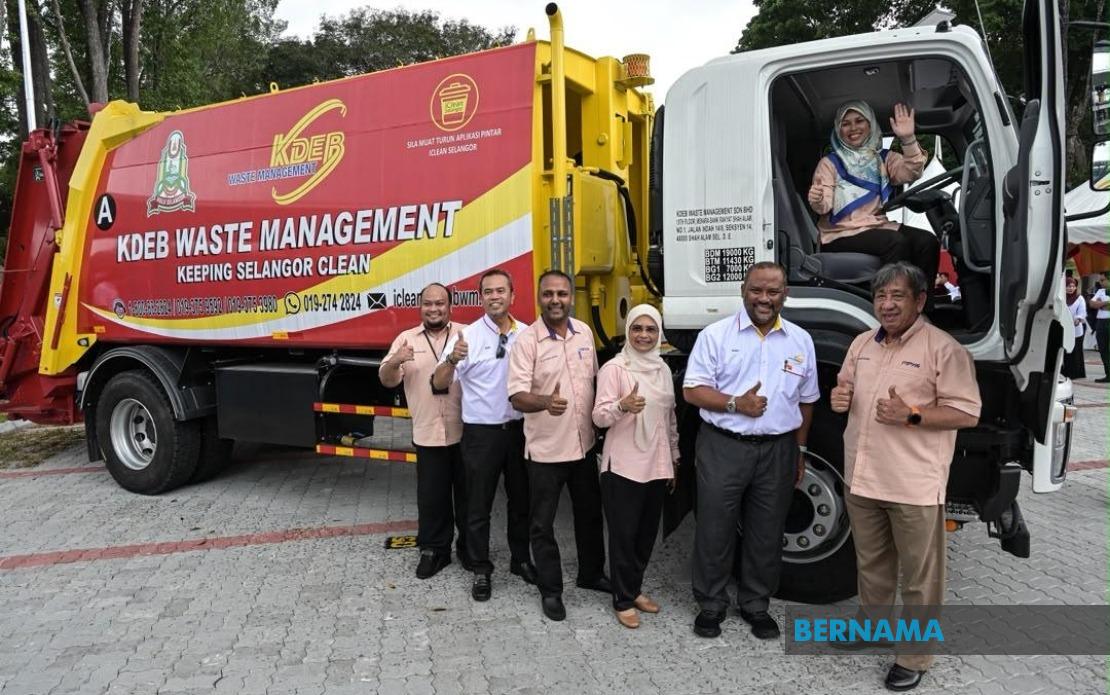
Domestic waste collection in Hulu Selangor has entered a new phase following KDEB Waste Management's (KDEBWM) delivery of 33 modern compactor lorries to service the municipal council's growing residential areas. The fleet handover ceremony, held on July 6, marked the official commencement of the company's second consecutive seven-year contract with the Hulu Selangor Municipal Council (MPHS), which began on July 1 and will run until June 30, 2033.
The expanded fleet comprises three truck categories selected for their operational efficiency: 18 Isuzu units, five Mitsubishi Fuso vehicles, and 10 UD Trucks. According to KDEBWM managing director Datuk Ramli Mohd Tahir, each vehicle incorporates advanced engineering specifications designed to maximise collection capacity while maintaining safety standards and environmental compliance. This modernisation strategy reflects growing waste volumes in the district, with the company now handling between 150 and 250 tonnes of domestic refuse daily—a significant jump from the 100 to 150 tonnes collected under the previous arrangement. Projections suggest daily volumes could eventually reach 300 tonnes as residential development continues.
The partnership between MPHS and KDEBWM represents a substantial municipal investment, with the seven-year contract valued at RM117.2 million, translating to approximately RM16.7 million in annual expenditure. This financial commitment underscores the council's recognition that reliable waste infrastructure underpins public health and environmental quality in rapidly developing areas like Hulu Selangor. MPHS president Julaiahah Jamaludin emphasised that beyond domestic waste, the council is coordinating with KDEBWM to extend collection services to industrial waste streams, particularly targeting small and medium enterprises operating throughout the district.
A fundamental operational shift accompanies the new fleet deployment: the introduction of door-to-door collection beginning July 1. This departure from traditional roadside collection points requires residents to adopt new practices and follow specific protocols. Households are now required to place all domestic waste in plastic garbage bags, securing them tightly before depositing into covered bins with a minimum 120-litre capacity. Each bin must display the corresponding house or lot number to prevent mix-ups during collection. The mandatory bin lid requirement serves dual purposes—preventing pest intrusion and blocking rainwater infiltration that could compromise collection vehicles and create operational delays.
The discontinuation of leach bins represents a significant operational streamlining, eliminating an intermediate collection stage that previously added complexity to the system. Under the new framework, KDEBWM contractors follow predetermined collection schedules, arriving at residential frontages at designated times. This structured approach theoretically improves route efficiency and allows residents to plan accordingly. However, the system's success hinges on widespread compliance with new waste segregation and containment standards, presenting a substantial communication and enforcement challenge for both the council and the contractor.
For Malaysian municipalities facing similar waste management pressures, Hulu Selangor's experience offers instructive lessons about scaling collection services. The district's demographic expansion has accelerated waste generation faster than traditional systems could accommodate. By investing in modern fleet infrastructure and implementing systematic collection protocols, MPHS has positioned itself ahead of many comparable councils struggling with ageing equipment and informal procedures. The seven-year contract duration provides operational stability necessary for capital investments in vehicle acquisition and maintenance scheduling.
The environmental implications of this upgrade warrant consideration. Modern compactor lorries equipped with sealed compartments reduce fugitive emissions and minimise waste spillage during transport—environmental benefits that traditional open trucks cannot deliver. Furthermore, optimised routing through door-to-door collection potentially reduces fuel consumption per tonne collected compared to informal curbside accumulation models. These efficiency gains align with Malaysia's broader solid waste management objectives outlined in national environmental policy frameworks.
Yet implementation challenges remain substantial. Residential compliance with the new bin requirements demands sustained public education, as many households may resist changing established disposal habits. The council must invest in communication campaigns explaining the practical benefits—improved hygiene, pest prevention, and more reliable collection—while clarifying penalties for non-compliance. Previous similar initiatives in Malaysian municipalities have encountered initial resistance before achieving acceptance.
The coordination between MPHS and KDEBWM regarding small and medium enterprise waste represents an underexplored dimension of municipal waste management. SMEs frequently operate outside formal waste collection frameworks, either disposing of refuse informally or incurring substantial costs for private collection. Bringing these businesses into an organised collection system via concession panel arrangements could simultaneously improve environmental practices and provide reliable revenue streams for both the council and contractors. However, success requires clear pricing structures and enforcement mechanisms to prevent underground dumping.
Looking forward, the MPHS-KDEBWM model demonstrates how structured partnerships between municipal authorities and private service operators can enhance public service delivery. The investment in fleet modernisation, coupled with systematic collection procedures and clear resident expectations, establishes a framework applicable to other Malaysian municipalities experiencing similar growth pressures. As urbanisation accelerates across the region, sustainable waste management increasingly depends upon precisely these combinations of modern infrastructure, operational discipline, and community participation—factors that Hulu Selangor's initiative now exemplifies.

