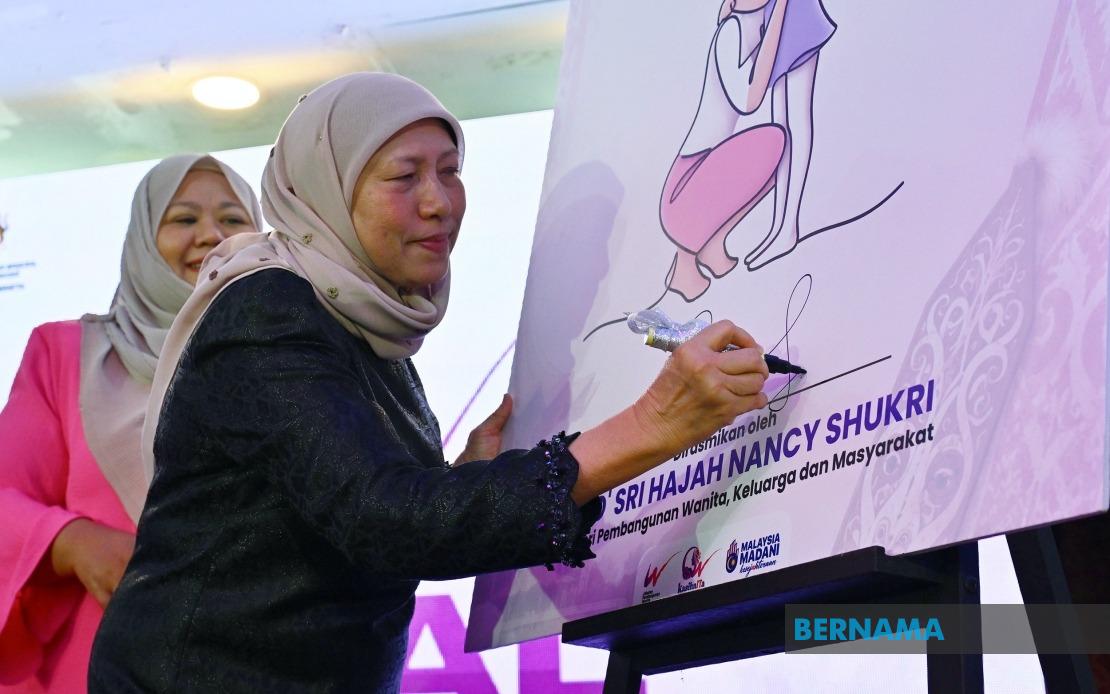
The Ministry of Women, Family and Community Development (KPWKM) has rolled out its Single Mothers Support programme, known as KasihnITa, to Sarawak, marking the latest phase of an initiative designed to strengthen the economic and social position of Malaysia's single-mother households. Minister Datuk Seri Nancy Shukri announced the expansion while officiating the state-level KasihnITa 2026 programme in Kuching on July 19, positioning the effort as a key pillar of the government's inclusive development strategy that ensures vulnerable family structures receive targeted, coordinated assistance.
The programme represents a significant shift in how the government approaches single-mother welfare, moving beyond fragmented assistance to create a unified platform where multiple institutions work in concert. By bringing together entities such as the Credit Counselling and Debt Management Agency (AKPK), Bank Negara Malaysia, the Legal Aid Department, and the Syariah Judiciary Department, KasihnITa enables single mothers to access a breadth of services within a single programme rather than navigating separate bureaucratic channels. This integrated approach acknowledges a fundamental challenge facing many single-mother households in Malaysia: the complexity of understanding what assistance exists, where to access it, and how to navigate both civil and religious legal frameworks that govern family matters.
Rolling out in stages, the programme had previously been implemented in Selangor before expanding eastward to Sarawak. This phased approach allows administrators to refine processes based on learnings from earlier iterations and to calibrate messaging and delivery mechanisms to reflect regional differences. For Sarawak, which has its own distinct demographic composition, employment landscape, and access to services, the tailored rollout ensures that the programme's offerings remain relevant to local conditions rather than imposing a one-size-fits-all model that may not account for the state's specific challenges.
One of KasihnITa's core components addresses financial literacy and household budgeting—areas where many single mothers report significant gaps in knowledge. Participants received structured training in financial management, equipping them with practical tools to plan household expenditure, navigate debt, build savings, and make informed decisions about credit and investment. For women managing sole responsibility for a family's economic wellbeing, mastering these competencies can mean the difference between financial precarity and relative stability. The programme thus recognises that sustainable support extends beyond income transfers to encompassing the skills and knowledge necessary for sound financial decision-making.
Child maintenance remains a persistent challenge for many single mothers in Malaysia, particularly when ex-spouses fail to honour court-ordered payments. Rather than leaving women to pursue legal remedies alone, KasihnITa incorporates specialist advice from both the Legal Aid Department and the Syariah Judiciary Department, depending on whether arrangements fall under civil or Islamic law. This dual pathway is crucial given Malaysia's dual legal system, which means that family law obligations may be governed by either framework. By embedding legal guidance within the programme, the initiative removes barriers that might otherwise prevent mothers from seeking enforceable orders or pursuing remedies when those orders are violated.
Nancy emphasised that the programme's design prioritises gathering direct feedback from participants to inform future policy development. This consultative approach reflects growing recognition that government initiatives are most effective when policymakers engage meaningfully with the communities they serve. Single mothers possess intimate knowledge of their own circumstances, challenges, and unmet needs—insights that cannot be gleaned from statistics alone. By creating structured spaces for women to voice concerns and share experiences, KPWKM gains actionable intelligence that can shape the design of subsequent interventions, whether through expanded eligibility for welfare payments, new childcare subsidies, or employment support schemes.
The psychological and social dimensions of the programme merit particular attention. Beyond the tangible services and information provided, KasihnITa creates a community space where single mothers encounter others facing similar circumstances. This peer support function—enabling women to share experiences and collectively problem-solve—addresses the isolation that many single mothers experience. Such community-building can be as valuable as material assistance, fostering resilience and social capital that help women navigate challenges more effectively. The July programme iteration drew approximately 130 participants, suggesting substantial local interest and indicating unmet demand for such initiatives.
For Malaysia's broader development agenda, the expansion of KasihnITa carries significance beyond single-mother households. When women lead families with confidence, financial acumen, and access to legal protection, they become more productive economic participants, invest more consistently in their children's education, and contribute more robustly to their communities. The programme thus functions as an investment in human capital and social stability. Single-mother households represent a growing demographic segment across Malaysia, driven by rising divorce rates, widowhood, and changing family structures. Without targeted interventions, this population risks being left behind in an economy increasingly demanding specialist skills and financial sophistication.
The emphasis on leaving no woman behind reflects Malaysia's commitment to the Sustainable Development Goals, particularly those targeting gender equality and poverty reduction. However, translating this aspiration into reality requires sustained funding, coordination across ministries, and mechanisms to reach women in rural areas where service provision remains thin. The expansion to Sarawak suggests the government is serious about national coverage, though questions remain about the pace of rollout to other states and whether resources will be sustained as the programme scales.
As KasihnITa continues expanding beyond Selangor and Sarawak, monitoring outcomes will be essential. Programme effectiveness should ultimately be measured not merely by participation numbers but by tangible improvements in participating households' financial stability, legal protection of children's maintenance rights, and women's subjective sense of empowerment. The initiative also signals an opening for complementary measures—expanded childcare support, skills training aligned with labour market demands, and targeted employment placement services for single mothers—that could amplify the programme's impact and support Malaysia's vision of an inclusive, prosperous society.

