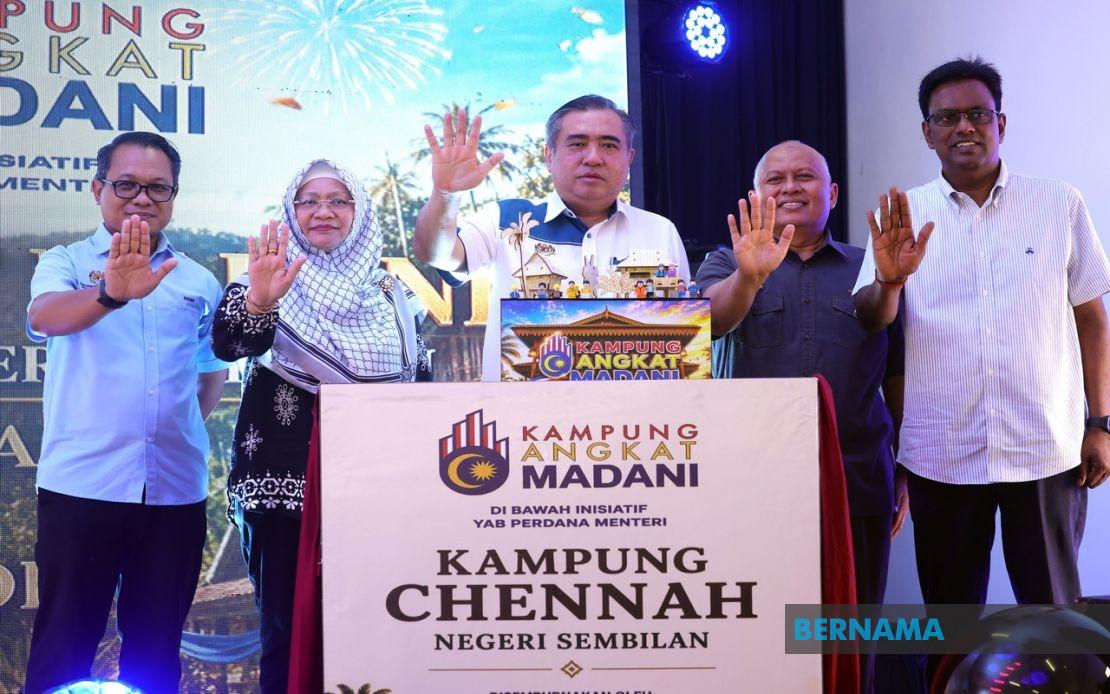
Transport Minister Anthony Loke Siew Fook has moved to clarify that the Kampung Angkat MADANI programme being implemented across the country bears no connection to the current state election cycle, framing it instead as a longstanding component of the government's rural development strategy. Speaking at the launch of the Land Public Transport Agency's initiative in Kampung Chennah, Jelebu, Loke emphasised that this targeted community assistance scheme was conceived and initiated two years prior to the present political moment, with rollout occurring in carefully managed phases designed to reach villages most in need of infrastructure and socio-economic uplift.
The programme represents a deliberate geographical pivot by Malaysia's transport and infrastructure authorities towards settlements positioned far from metropolitan zones, where basic service provision and modern amenities remain insufficient. Loke highlighted that beneficiary villages are selected on the basis of assessed development gaps rather than political considerations, with the underlying methodology focused on identifying specific community requirements and matching these against available resources. The sequential approach allows government agencies to co-ordinate efforts across multiple departments, ensuring that interventions are properly resourced and sustainably implemented rather than hastily deployed during periods of political heightened activity.
Loke's comments directly address emerging questions about the timing of such initiatives during electoral periods. The government operates under established protocols that restrict official programming during campaign windows, a boundary Loke indicated remains firm regardless of ministerial duties continuing. He noted that while his transport portfolio demands ongoing administrative attention, his personal participation in government-sponsored events will cease once nomination day arrives for affected constituencies, a self-imposed discipline he attributed to directives from the Prime Minister aimed at establishing a fresh administrative culture less susceptible to perceptions of electoral manipulation.
The Kampung Chennaih project itself exemplifies the programme's targeting logic. Selected due to its remote geographical positioning and demonstrated community needs, the village has received a RM500,000 allocation channelled toward five distinct improvement projects. These initiatives span functional upgrades to the local library facility, restoration and modernisation of the futsal court, and remedial work addressing drainage inadequacies around the mosque compound. Completion timelines anticipate realisation within two to three months, with ministerial oversight embedded to guard against schedule slippage and quality degradation.
This announcement carries particular significance for rural Malaysia, where infrastructure deficits remain a persistent development challenge. Villages positioned at considerable distance from urban agglomerations frequently experience chronic underinvestment in foundational systems including water delivery, waste management, road quality and recreational facilities. The Kampung Angkat MADANI apparatus attempts systematic redressal of these disparities by deploying transport and infrastructure ministry resources alongside contributions from sectoral agencies, creating integrated development packages rather than isolated ad hoc interventions.
Loke's framing of his ministry's expanded remit warrants examination. Beyond its conventional regulatory function governing aviation, maritime transport, railways and urban mobility systems, the transport portfolio under Loke's stewardship has embraced what he characterises as social responsibility dimensions. This recalibration acknowledges that infrastructure development possesses community wellbeing implications extending well beyond movement facilitation, with strategic investments in remote settlements generating spillover benefits for economic participation, educational opportunity and social cohesion across disadvantaged populations.
The Southeast Asian context heightens relevance of such rural-focused programming. Across the region, uneven development patterns see metropolitan centres absorbing disproportionate infrastructure investment, policy attention and economic dynamism whilst peripheral communities remain marginalised. Malaysia's experience mirrors broader regional trends, with Peninsular and East Malaysian hinterlands frequently neglected in national planning cycles. The Kampung Angkat MADANI approach offers a counterweight, deploying government apparatus intentionally toward settlements otherwise unlikely to capture ministerial attention or budgetary allocation.
Election-period sensitivities around such programmes underscore deeper governance questions relevant to Malaysian voters. Historically, developmental initiatives launched proximate to electoral contests have attracted scrutiny regarding partisan motivation, with opposition voices arguing that timing serves to maximise political benefits rather than optimise community outcomes. Loke's proactive clarification and his articulated commitment to cease personal engagement in government activities during campaign periods signals an attempt to establish cleaner boundaries between developmental governance and electoral competition, whether such boundaries prove effective in practice remains a distinct analytical question.
The allocation of RM500,000 to Kampung Chennaih, whilst representing meaningful resource commitment at village scale, illustrates the incremental nature of rural transformation efforts. Extrapolating across Malaysia's several thousand rural settlements, even systematic implementation of the phased programme structure will require sustained commitment across multiple electoral cycles and competing budgetary pressures. The programme's two-year operational history provides limited evidence regarding scalability challenges, implementation consistency, and measurable livelihood improvements among beneficiary populations, dimensions that will warrant monitoring as deployment proceeds.

