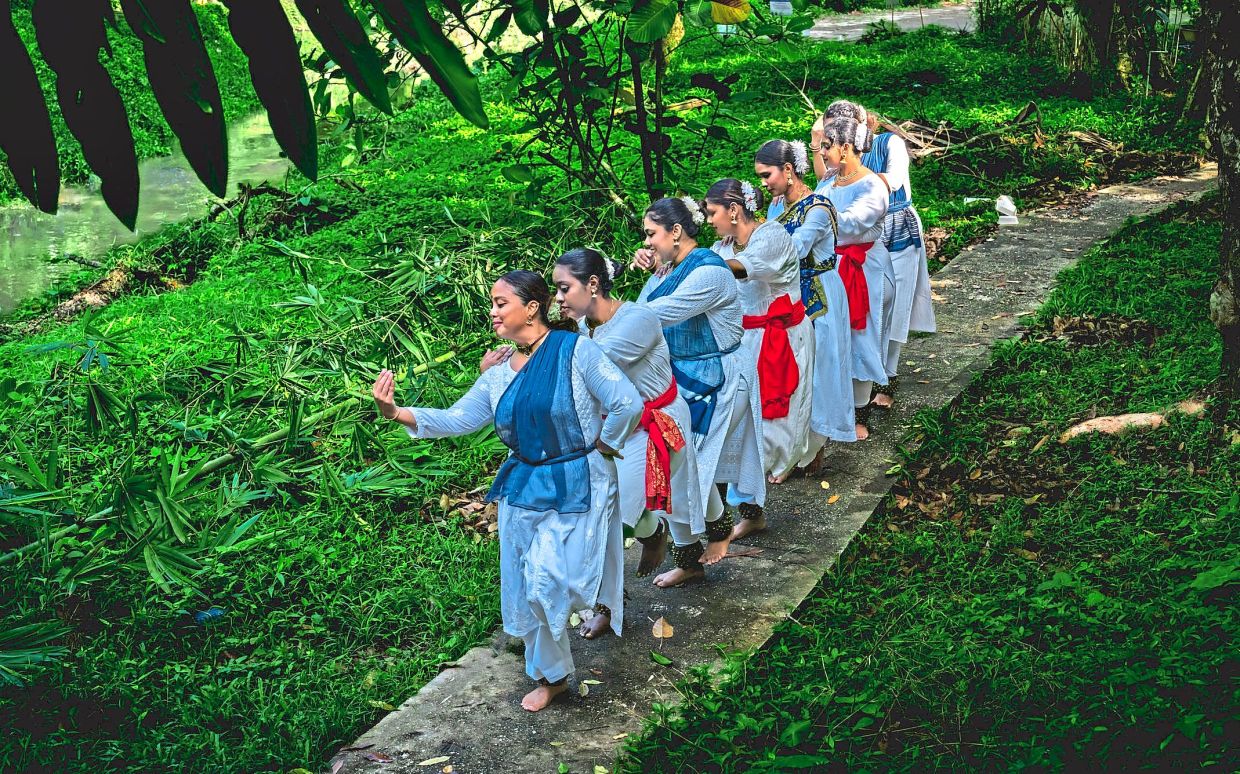
Kuala Lumpur-based Kalpana Dance Theatre has navigated three decades of artistic uncertainty and financial precarity to reach its 30th anniversary this year, guided by founder-director Shangita Namasivayam's commitment to continuous creative reinvention. The company marks this milestone with a production at the Shantanand Auditorium, Temple of Fine Arts on August 8, grounded in an unconventional concept that merges classical bharatanatyam with pressing contemporary concerns about water preservation and environmental stewardship.
The production draws narrative power from two of India's most culturally resonant waterways: the Ganga in the north, considered the nation's holiest river, and the Kaveri in the south, revered as the "Ganga of the South" and critical to agricultural and economic life across multiple southern states. Both rivers have shaped Indian civilization for millennia, inspiring classical and folk traditions that encode spiritual significance alongside practical livelihood realities. Rather than treating these rivers purely as mythological touchstones, Shangita has chosen to use them as a framework for addressing how contemporary societies, particularly younger generations, relate to and exploit vital natural resources.
Shangita's artistic vision reframes water conservation as a moral imperative expressed through dance. She describes the Ganga as "the shore of compassion" and the Kaveri as "the mother of prosperity," positioning each river as both a physical entity and a philosophical concept about human responsibility. By centering the production on water's centrality to survival and peace, she creates pedagogical space for her dancers to grapple with uncomfortable truths about pollution, neglect, and the transformation of sacred ecosystems into toxic environments. This approach converts a classical dance recital into a platform for consciousness-raising, particularly among young performers who might otherwise remain insulated from environmental degradation.
The company has deepened this activist dimension through a substantive partnership with The Alliance of River Three (ART!), a Malaysian volunteer-led environmental organization founded in 2018 by Kennedy Michael. ART! operates with a specific focus on Klang River rehabilitation through community-built River Three Parks, weekly clean-ups, and long-term ecosystem restoration efforts—work recognized in 2020 when the organization won The Star Golden Hearts Awards. Since January, Kalpana Dance Theatre's dancers have participated directly in cleaning and restoration activities at Taman Melawati River Three SDG Park and the Mid Valley River Three SDG Park, projects ART! aims to complete by 2030. This ground-level engagement serves an educational purpose beyond choreography, exposing dancers to ecological realities while building awareness of their generation's relationship with resource management.
The 90-minute thematic presentation features 54 performers ranging from six to 62 years old, including differently-abled dancers, deliberately constructed to ensure equitable participation rather than hierarchical star billing. The script combines Tamil poetry with English narration, creating accessibility across linguistic and generational lines while maintaining artistic sophistication. A 30-member music ensemble, composed of both Malaysian and visiting Indian artistes, provides the sonic foundation, with international collaborators including Chennai-based choreographer PT Narendran, musician OS Arun, and scriptwriter Dr Va Ve Subramanian—all long-standing creative partners developed through decades of collaboration.
Shangita's decision to engage internationally respected bharatanatyam practitioners serves multiple purposes beyond artistic excellence. She explicitly frames these collaborations as developmental opportunities for Malaysian dancers to absorb diverse technical approaches, philosophical perspectives, and interpretive possibilities from master-level artistes. Such intergenerational and cross-border creative exchanges function as implicit knowledge transfer, exposing younger performers to the evolving nature of bharatanatyam as a living tradition rather than a fixed historical artifact. The intensity of working alongside accomplished practitioners accelerates dancer development in ways classroom instruction alone cannot achieve, building confidence alongside technical refinement.
The production's thematic architecture weaves together lyrical beauty with philosophical depth, constructing a narrative that claims relevance across generational and cultural divides. The choice to foreground two geographically and culturally distinct rivers while finding thematic unity between them models a particular kind of analytical thinking—one that identifies common principles across surface differences. For Malaysian audiences unfamiliar with Indian river systems, the production offers an entry point into understanding how water features function simultaneously as practical life-support systems and as repositories of cultural and spiritual meaning. This dual framing becomes especially resonant in Southeast Asia, where monsoon-fed river systems similarly sustain vast populations while facing mounting pollution pressures.
Funding and resource constraints remain persistent challenges for arts organizations operating outside established institutional structures, and Shangita has navigated these pressures by prioritizing experiential opportunities for her students. She articulates a pedagogical philosophy that distinguishes between regular instruction and performance-based learning, arguing that stage experience constitutes an essential heritage component that students must carry forward as practitioners. Performance demands a different quality of preparation, focus, and vulnerability than classroom training, creating conditions where artistes develop capabilities that extend beyond technical execution into emotional authenticity and audience communication. This commitment to regular production schedules, despite financial strain, reflects a deeper conviction about what constitutes complete artistic development.
The convergence of classical dance tradition with environmental activism within a single production represents a significant shift in how cultural organizations conceptualize their social purpose. Rather than positioning arts and activism as separate spheres, Kalpana Dance Theatre has constructed a framework where artistic practice itself becomes a vehicle for consciousness-building and community engagement. This integration challenges prevailing assumptions about the proper domain of classical dance, suggesting that tradition remains vital precisely because it can be mobilized to address urgent contemporary concerns. For Malaysian arts organizations increasingly questioned about their relevance and social contribution, the model offers a template for expanding cultural work's reach beyond established audiences and institutional spaces.

