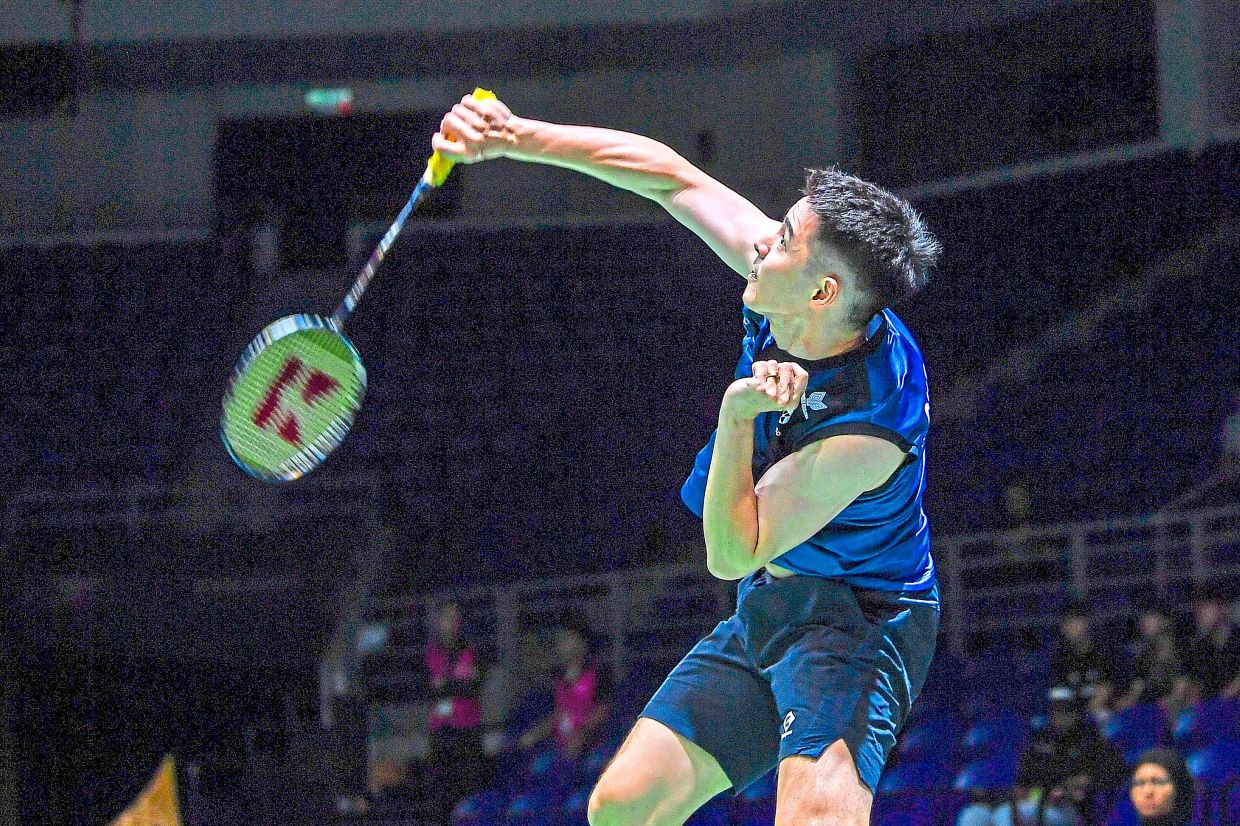
Cheam June Wei's remarkable journey through the Korean Masters gained further momentum on Friday when the Malaysian shuttler dispatched Taiwan's Su Li-yang in a tightly contested quarter-final at the Asan Yi Sun-sin Gymnasium. The independent player secured a hard-fought 23-21, 10-21, 21-18 victory to advance to the semi-final stage, adding another significant scalp to his tournament credentials.
June Wei's path to the last four has been nothing short of extraordinary for an unseeded competitor making waves at a top-tier international event. His earlier victories included a stunning opening-round upset over world number 29 Jason Teh, a result that signalled his potential to trouble even the circuit's established names. That breakthrough was followed by a second-round triumph against China's Dong Tianyao, who ranked 49th globally, demonstrating that his initial success was no mere aberration.
The quarter-final clash against Li-yang proved to be a gruelling affair characterised by extended baseline exchanges and tactical complexity. June Wei's ability to navigate through the pivotal moments—particularly in the first and third sets where he closed out narrow margins—reflected both his physical conditioning and mental resilience. After the match, the Malaysian reflected on his unexpected tournament trajectory with measured candour, attributing his success to a methodical approach rather than any grand strategy. His commentary about focusing on individual points rather than viewing the match as a whole illustrated the compartmentalised thinking often required to manage pressure in demanding situations.
June Wei's progression to the semi-finals carries significance beyond the immediate tournament context. His status as an independent player—operating without the backing of a major national federation or commercial sponsor—highlights the growing capacity of individual athletes in badminton to compete at the elite level when possessing sufficient technical skill and competitive fortitude. This trajectory has implications for Malaysian badminton's developmental pathways and the support structures available to emerging talent.
The men's doubles contingent delivered encouraging results alongside June Wei's individual success. The partnership of Man Wei Chong and Soh Wooi Yik proved ruthlessly efficient in their quarter-final engagement against India's Krishna Prasad Garaga and Pruthvi Krishnamurthy Roy, posting a commanding 21-7, 21-15 scoreline. The magnitude of the victory margin suggested technical dominance and effective court positioning rather than merely winning close points.
Another Malaysian doubles pairing also secured semi-final berths through an all-domestic quarter-final encounter. Tee Kai Wun and Yap Roy King prevailed against Aaron Chia and Aaron Tai with a convincing 21-12, 21-15 result, maintaining consistency across both sets. This outcome meant that Malaysian representation would remain strong in the men's doubles draw, with two pairings progressing to the later stages of the competition.
The mixed doubles category, however, painted a contrasting picture of Malaysian fortunes. All three pairs representing Malaysia were eliminated at the quarter-final juncture, indicating either the strength of opposition at that stage or the specific challenges that mixed doubles presents for Malaysian partnerships. Jimmy Wong and Cheng Su Yin fell to South Korea's second-seeded combination Kim Jae-hyeon and Jang Ha-jeong, losing both sets 17-21 and 18-21 in a result suggesting the Korean pair's superior court control and anticipation.
Loo Bing Kun and Noraqilah Maisarah Ramdan similarly exited against China's third seeds Gao Jiaxuan and Wu Mengying, with margins of 14-21 and 15-21 that pointed to a significant gulf in match execution. Chen Tang Jie and Clarissa San rounded out the Malaysian mixed doubles departures, succumbing to Japan's Haruki Kawabe and Kokona Ishikawa in a closely contested affair where the scores of 20-22 and 17-21 suggested the matches were tightly fought despite the ultimate outcome favouring the Japanese combination.
The disparate results across different event categories at the Korean Masters underscores the varied competitive landscapes within badminton. While Malaysian singles and men's doubles players demonstrated the capacity to trouble seeded opponents and progress through demanding quarter-final encounters, the mixed doubles category proved more challenging. This pattern reflects broader competitive trends in badminton where certain pairings and national teams have developed particular advantages through training methodologies, partnership longevity, and specialised preparation.
For June Wei specifically, the semi-final stage presents both opportunity and elevated challenge. His previous opponents have ranged from established world tour regulars to developing international talents, but the semi-final will likely feature players who have similarly navigated demanding quarter-finals. The psychological advantage of having exceeded expectations combined with the momentum of successive victories may provide intangible benefits as the tournament reaches its climactic stages, though the technical demands will intensify considerably against the remaining field.
The Korean Masters holds significance within the badminton calendar as a prestigious Asian event attracting top-ranked competitors from across the continent. Malaysia's showing across multiple disciplines, though mixed in outcome, reflects the depth of badminton talent within the country and the ongoing competitiveness of Malaysian players on the international circuit. June Wei's unexpected advancement in particular demonstrates that breakthrough performances can emerge from different circumstances and support structures, offering potential lessons about talent development and opportunity realisation in the sport.

