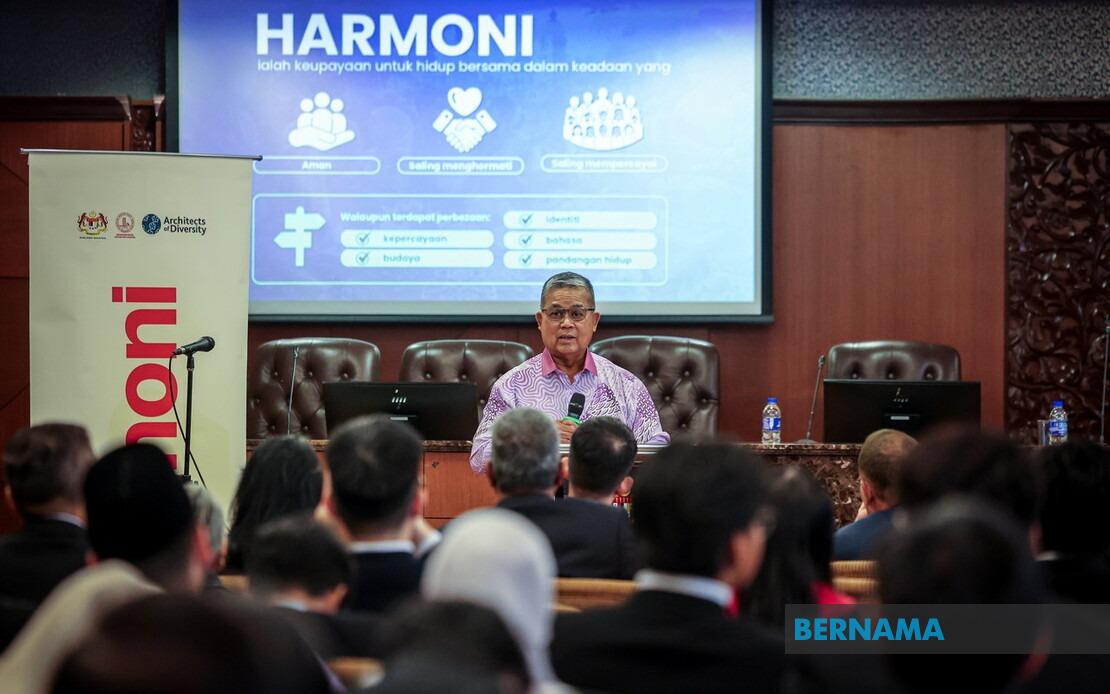
The Department of National Unity and National Integration (JPNIN) has embarked on an ambitious initiative to construct a Community Tension Index, a measurement framework designed to assess the state of social cohesion across Malaysia and track emerging concerns related to religious, racial and royalty-related sensitivities. Minister of National Unity Datuk Aaron Ago Dagang unveiled the project at the 2026 Harmony Symposium, organised by the Secretariat of the Malaysian Parliamentary Cross-Party Group on Racial and Religious Harmony at Parliament Building in Kuala Lumpur on June 26.
The Community Tension Index represents a data-driven approach to understanding the complex landscape of interethnic and interfaith relations in a nation as diverse as Malaysia. By developing systematic metrics and measurement protocols, the government aims to move beyond anecdotal assessments of social stability and instead employ quantifiable indicators that can track trends over time. This proactive monitoring capability would enable policymakers to identify emerging friction points before they escalate into serious conflict, potentially preventing divisive incidents from gaining momentum.
According to Datuk Aaron, the insights gleaned from this index will serve as a strategic foundation for the government's policy interventions and early response mechanisms. Rather than reacting to crises after they occur, Malaysian authorities would be positioned to anticipate areas of tension and deploy targeted measures to address root causes. The timing of this initiative reflects growing recognition that social cohesion requires continuous maintenance and that threats to harmony can materialise rapidly in Malaysia's multicultural context.
A critical backdrop to this development is the evolving nature of threats to national unity. Whereas communal tensions historically occurred primarily in physical spaces, digital platforms have become new frontlines for divisive content and polarising narratives. Between January 1, 2025 and January 31, 2026, the Malaysian Communications and Multimedia Commission (MCMC) removed 1,493 pieces of online content explicitly related to religion, royalty and race (3R) issues. These figures underscore the volume and persistence of inflammatory material circulating through digital channels.
The phenomenon of digital polarisation deserves particular attention as a driver of communal fragmentation. Social media algorithms, designed primarily to maximise engagement and user retention, tend to reinforce existing beliefs and preferences rather than expose users to diverse viewpoints. Datuk Aaron highlighted how these algorithmic mechanisms create "filter bubbles" and "echo chambers"—isolated informational environments where individuals encounter an increasingly narrow range of perspectives that align with their preexisting views. Over time, this algorithmic curation widens the gap in understanding between different communities, as members of distinct social groups inhabit fundamentally different informational universes.
The proliferation of such digital fragmentation represents a qualitatively different challenge from earlier periods of intercommunal tension. When communities occupy separate information spaces with minimal overlap, establishing common ground becomes exponentially more difficult. Misunderstandings multiply, while opportunities for healthy dialogue and mutual understanding shrink. In Malaysia's context, where demographic and religious diversity requires ongoing negotiation and compromise, the narrowing of discursive space poses a substantive threat to the consensus-building necessary for national stability.
Beyond the Community Tension Index, JPNIN is simultaneously advancing a second institutional innovation through preliminary consultations on establishing a National Harmony Commission (SKN). This proposed body would operate as a dedicated mechanism for early prevention, mediation and conflict resolution, addressing disputes through constructive channels rather than adversarial ones. The commission would also investigate incidents and developments that might endanger national harmony, positioning it as both a preventative and investigative institution.
The proposed National Harmony Commission reflects a maturation of Malaysia's institutional approach to managing diversity. Rather than treating harmony as a residual outcome of economic growth or political stability, this institution would establish harmony maintenance as an explicit, formalised function of government. Such dedicated machinery enables sustained focus on interethnic and interfaith relations, ensures continuity of effort across electoral cycles, and provides a neutral institutional space for addressing sensitive matters away from partisan political contestation.
Stakeholder engagement has already commenced on the SKN proposal, with JPNIN conducting consultative sessions across various sectors and communities. This bottom-up approach to institutional design recognises that effective harmony promotion requires buy-in from diverse constituencies. By soliciting preliminary feedback before finalising institutional parameters, the government aims to create a commission that commands legitimacy across Malaysia's major religious and ethnic groups.
For Malaysian readers and policymakers, these initiatives signal a recognition that maintaining national cohesion in an increasingly digitalised society requires deliberate institutional action and sophisticated measurement mechanisms. The Community Tension Index offers a template that other Southeast Asian nations facing similar polarisation challenges might study and adapt. The proposed National Harmony Commission, meanwhile, represents an investment in preventative governance—prioritising the detection and resolution of emerging tensions before they crystallise into lasting communal divisions.
These efforts also reflect broader regional anxieties about digital polarisation. Singapore, Indonesia and other neighbouring nations have implemented similar content-monitoring programmes and are grappling with algorithmic echo chambers. Malaysia's institutional innovations in harmony preservation may inform regional best practices in managing diversity within increasingly fragmented digital information environments. The stakes extend beyond Malaysia itself, encompassing regional stability and the sustainability of pluralist governance models throughout Southeast Asia.

