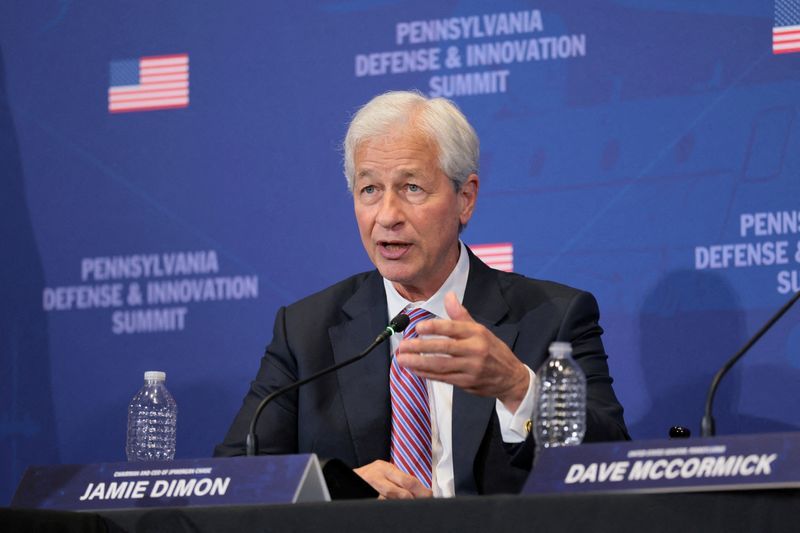
Jamie Dimon, chief executive of JPMorgan Chase, is mobilising America's largest corporations to confront the emerging risks posed by artificial intelligence systems across critical infrastructure sectors. The initiative, involving more than 40 companies spanning financial services, energy, water utilities, telecommunications, airlines and transportation networks, represents a significant coordinated response to what Dimon and other business leaders view as an urgent governance challenge. The outreach, which began in July, reflects growing anxiety within the financial and technology sectors about the systemic vulnerabilities that rapid AI deployment could introduce into systems upon which millions of Americans depend.
Dimon has personally engaged with executives leading major regional and national banks, technology companies and other firms within the critical infrastructure space to participate in what is essentially a reorientation of an existing corporate collaboration platform called the Alliance for Critical Infrastructure. The ACI, which JPMorgan helped establish alongside Mastercard, Berkshire Hathaway Energy and other foundational members, was originally created to coordinate cross-sector resilience planning, share threat intelligence and respond to cyber, physical and geopolitical risks. The current pivot toward AI represents an acknowledgment that artificial intelligence has become one of the defining security challenges for the coming decade.
The decision to expand the ACI's mandate into AI governance comes as scheduled conversations among prospective members are being arranged for August. The collaborative framework aims to achieve several interconnected objectives: developing a shared understanding of how AI systems are actually being deployed across different sectors, identifying the specific risks that such deployment creates, establishing appropriate safeguards and security protocols, and working directly with federal regulators to ensure industry input shapes policy development. This multilateral approach reflects a pragmatic recognition that no single company or sector possesses sufficient expertise or authority to manage AI risks in isolation.
Recent cybersecurity incidents have lent additional urgency to these discussions. Water system breaches in Minnesota and other states have demonstrated that critical infrastructure remains vulnerable to sophisticated attacks, and industry participants worry that inadequately governed AI systems could exponentially increase both the frequency and severity of such incidents. The convergence of AI capabilities with the increasing sophistication of cyber threats creates what participants in these discussions view as a genuinely novel and destabilising security scenario that demands immediate attention and coordination.
Dimon's involvement carries particular weight within corporate America and among policymakers. As head of the nation's largest bank, his public warnings about AI risks have consistently attracted regulatory and media attention. In July, he drew particular controversy by comparing access to advanced AI models to distributing ballistic missiles to individuals, a stark formulation that conveyed his view of the potential consequences of inadequately managed AI deployment. His willingness to anchor corporate concerns about AI governance with his personal credibility has helped elevate this discussion from technology sector niche concerns to mainstream corporate strategic planning.
The JPMorgan initiative deliberately distances itself from a separate banking industry effort to test advanced AI capabilities, underscoring a distinction between exploration of AI potential and risk mitigation. By creating a dedicated governance forum, Dimon and participating executives are signalling that responsible AI deployment requires infrastructure separate from the innovation pipeline itself. This structural separation reflects lessons learned from earlier technology adoption cycles where safety considerations were secondary to commercial imperatives.
The ACI statement emphasises that protecting critical systems requires sustained collaboration between private enterprise and government. The statement notes that growing cyber threats necessitate this cross-sector engagement, positioning the AI governance effort as a natural extension of existing critical infrastructure security frameworks. This framing helps situate AI risks within a longer history of infrastructure protection rather than treating artificial intelligence as an entirely novel category requiring separate governance entirely.
For Malaysian and Southeast Asian observers, this American corporate initiative carries significant implications. As international technology companies, banks and infrastructure operators increasingly adopt AI systems, similar governance challenges will emerge in this region. The absence of coordinated risk management frameworks in developing economies could amplify vulnerabilities, particularly for financial systems and infrastructure operators that frequently depend on technology imported from the United States. The mechanisms being developed through the ACI could potentially serve as templates for regional adaptation.
The working timeline suggests that the revamped ACI should achieve full operational status by year's end, indicating that corporate America intends to move deliberately but expeditiously on this agenda. This compressed timeline reflects genuine concern rather than performative corporate responsibility. Industry participants view the window for establishing AI governance protocols as relatively narrow—once systems become deeply embedded in critical infrastructure, retrofitting safety and control mechanisms becomes exponentially more difficult and costly.
The federal government has begun parallel efforts to coordinate AI risk management. The Gold Eagle initiative, launched in July, brings together AI developers, critical infrastructure operators and federal agencies to identify vulnerabilities and coordinate remediation. The alignment between this government programme and the private sector ACI effort suggests an emerging consensus that effective AI governance requires simultaneous action across multiple institutions and sectors rather than isolated regulatory interventions.
Dimon's personal leadership of this initiative distinguishes it from typical industry working groups or standards-setting bodies. His intervention reflects a calculation that effective AI risk management requires sustained executive commitment rather than assignment to subordinate committees. This prioritisation of senior leadership engagement may itself become a model for how other sectors and regions approach emerging technology governance challenges.

