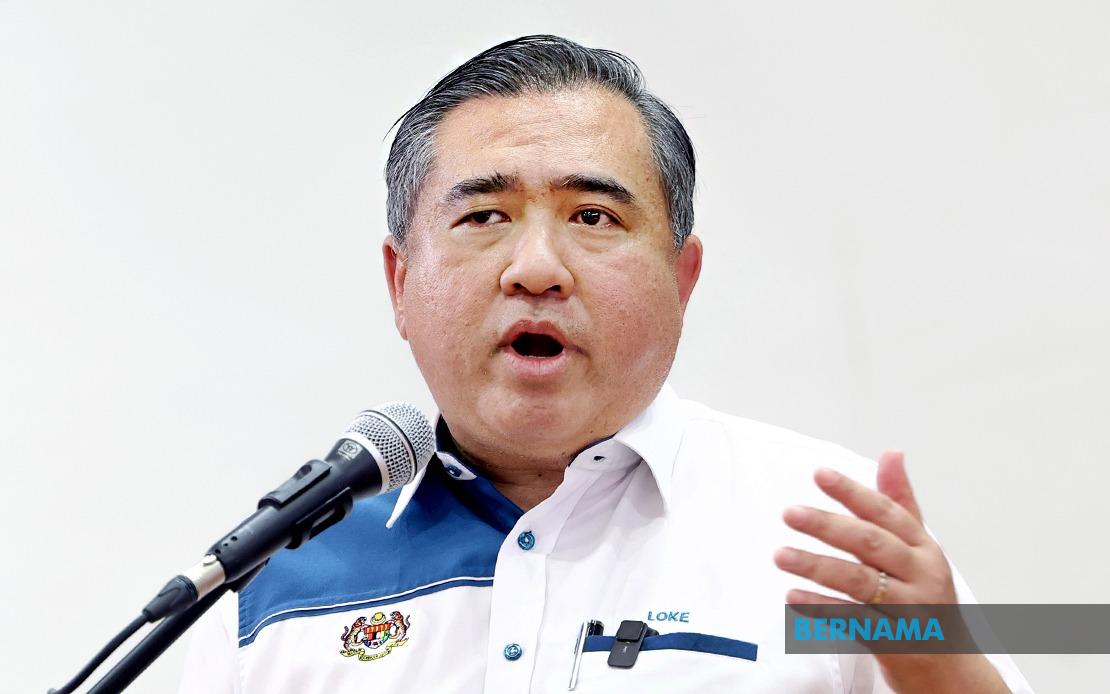
Transport Minister Anthony Loke has instructed the Road Transport Department (JPJ) to pursue legal action against individuals discovered riding motorcycles without helmets during the ongoing Johor state election campaign, drawing on evidence extracted from viral social media footage. The directive represents an attempt to enforce uniform compliance with road safety regulations across all political campaigns, a principle Loke emphasised would apply equally to all parties and candidates regardless of their electoral colour.
Loke's statement, released on July 10, underscored that the enforcement action would extend to members of the coalition his own party leads. He made clear that campaign workers affiliated with Pakatan Harapan, including those from the Democratic Action Party (DAP) of which he serves as secretary-general, would face the same legal consequences as any other motorcyclist breaching helmet regulations. This commitment to impartial enforcement came in response to video evidence circulating online showing PH campaign workers, including DAP members, riding without proper headgear during Johor's electoral activities.
The minister's position reflects a consistent stance he has maintained over an extended period. Nearly six years prior, during the Slim by-election campaign, Loke had raised identical concerns regarding Barisan Nasional leaders engaging in similar conduct. On that occasion, he argued that whilst motorcycle riding itself posed no inherent problem during campaigning activities, every rider bore a personal and civic responsibility to wear helmets and thereby model correct behaviour for the broader public. He has reiterated this framework as universal, transcending partisan boundaries.
Loke's announcement addresses a recurring tension between political campaigning and road safety compliance in Malaysia. Election periods frequently witness intensified street-level campaign activities, including convoy riding, which can create pressure on participants to prioritise visual spectacle or rapid mobilisation over regulatory adherence. By explicitly stating that the Ministry of Transport views such violations with seriousness, Loke sought to signal that electoral campaigns do not create exemptions from road safety law.
The principle undergirding this enforcement action carries significant implications for how Malaysian political culture engages with public safety regulations. Road safety legislation operates independent of party machinery or electoral considerations. Loke emphasised that the legal framework makes no distinctions between candidates, campaign workers, or ordinary citizens—all are equally bound by helmet requirements. This framing attempts to establish that no political figure, regardless of seniority or electoral status, can claim special dispensation from safety compliance.
The viral videos that prompted this intervention highlight how digital media amplification now shapes political accountability in Malaysian contexts. What might previously have attracted limited attention to isolated campaign irregularities now spreads rapidly across social platforms, generating public conversation and creating pressure on regulatory authorities to respond. This dynamic cuts across party lines, creating incentives for enforcement consistency to avoid accusations of selective application of law.
Enforcement through the JPJ represents a shift toward direct legal consequences rather than merely rhetorical appeals to campaign organisers. Summonses constitute formal legal action, creating documented violations that carry penalties including fines. This mechanism aims to generate material consequences sufficient to modify behaviour among campaign operatives, who might otherwise treat safety warnings as suggestions rather than binding requirements.
The decision carries particular weight given Loke's personal position within DAP leadership structures. By explicitly stating willingness to pursue party members despite his organisational role, he attempted to establish personal credibility on the issue. This positioning sought to preempt accusations that enforcement would prove selectively lenient toward government-aligned campaigns whilst targeting opposition activities more aggressively—a pattern that has historically undermined public confidence in regulatory impartiality during Malaysian elections.
For Southeast Asian observers, Malaysia's approach to campaign regulation presents instructive lessons regarding the relationship between electoral competition and administrative enforcement. The region contains numerous jurisdictions where election periods witness corresponding relaxations in regulatory scrutiny, creating implicit hierarchies where political actors enjoy functional immunity during campaign seasons. By contrast, Loke's insistence on consistent application suggests alternative institutional possibilities, though success ultimately depends on whether actual enforcement matches stated principles.
The Johor campaign context adds particular significance to this intervention. As a state election involving major coalitions, any appearance of preferential treatment toward particular parties risks delegitimising broader electoral administration. The fact that violations involved ruling coalition members made enforcement especially consequential for demonstrating institutional independence from political pressure. Regulatory authorities that appear captured by political interests lose public credibility and create cynicism regarding the neutrality of administrative action.
Moving forward, the JPJ's implementation of this directive will substantially determine whether Loke's public commitment translates into meaningful behaviour modification. Inconsistent or selective enforcement would rapidly undermine the credibility of his stated principles. Conversely, rigorous and transparent application across party lines could establish meaningful precedent for treating campaign conduct as subject to the same rules binding ordinary citizens, potentially strengthening public confidence in both electoral administration and road safety compliance during future election periods.

