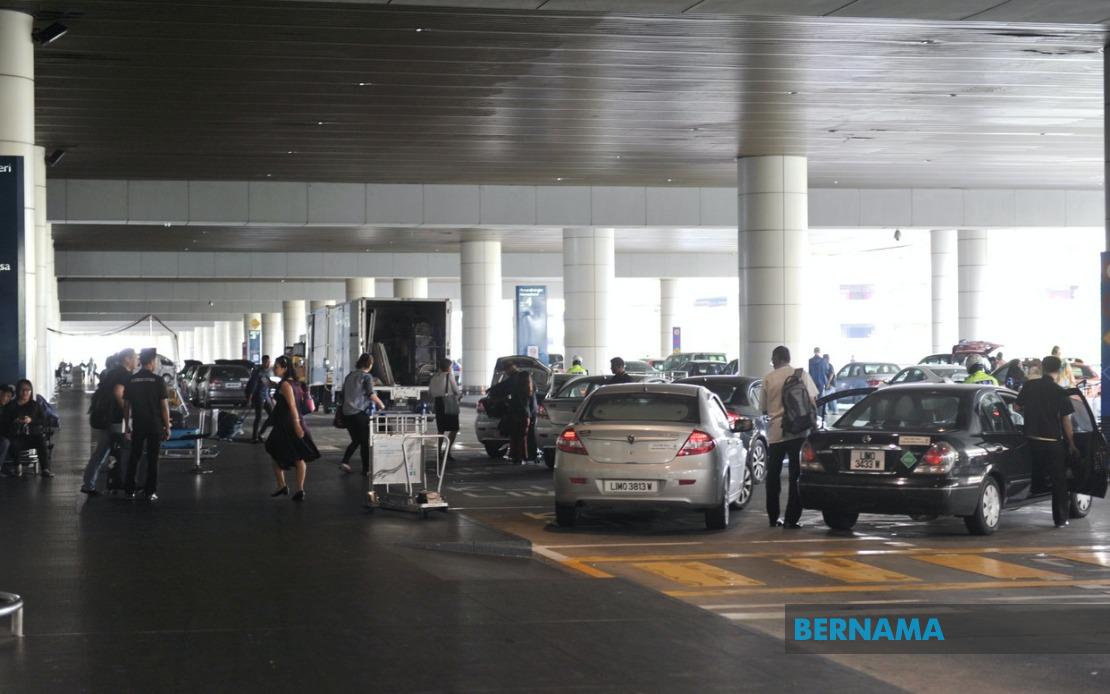
The Road Transport Department (JPJ) is embarking on a comprehensive enforcement crackdown at Kuala Lumpur International Airport, deploying additional personnel and reshaping operational protocols to eliminate unlicensed transport middlemen known colloquially as 'ulat'. Datuk Aedy Fadly Ramli, the department's director-general, announced the initiative following an operational review at KLIA's Terminal 1 and Terminal 2 facilities, acting on directives from the Ministry of Transport to address what has become a persistent problem at the country's busiest aviation gateway.
Under the new operational framework, JPJ will fundamentally restructure its presence across both terminals by implementing round-the-clock coverage through a three-shift rotation system. The existing arrangement, which saw only seventeen personnel stationed at Terminal 1 operating within a constrained window of 7 am to midnight, has proven insufficient to tackle the problem across extended hours when passenger volumes and criminal activity fluctuate unpredictably. The department has identified that illicit tout operations frequently commence as early as 4 am when overnight international flights begin arriving, creating enforcement gaps that unscrupulous operators have exploited systematically.
The expansion strategy prioritizes both quantitative and qualitative improvements to enforcement capacity. Datuk Aedy Fadly instructed Datuk Ahmad Kamarunzaman Mehat, the Selangor JPJ deputy director, to substantially increase staffing numbers at both facilities, with permanent duty officers positioned strategically to maintain continuous surveillance and intervention capabilities. These enhanced personnel deployments will commence implementation from the following week, with JPJ issuing formal operational directives to ensure coordinated execution across all relevant command structures at the airport complex.
Beyond simple numerical augmentation, JPJ recognizes that organizational effectiveness requires leadership calibration at enforcement points. The department will station officers holding higher administrative grades at both terminals to oversee monitoring operations and direct enforcement teams, a structural decision designed to enhance decision-making quality, operational coordination, and the authority required to manage complex situations involving organized tout networks. This supervisory elevation acknowledges that combating sophisticated illegal transport schemes demands personnel with sufficient rank and experience to exercise discretionary judgment in real-time situations.
The urgency underlying this enforcement initiative reflects Malaysia's broader concerns about international perceptions and airport security standards. Illegal transport touts operating at major arrival points generate negative impressions among international visitors and Malaysian nationals returning from overseas, undermining the country's reputation as a well-organized, professional destination. The government recognizes that first impressions at airports significantly influence visitor experiences and shape narrative formation about Malaysia's administrative competence and rule of law commitments. Permitting unlicensed operators to freely solicit passengers at entry points contradicts Malaysia's positioning as a modern, regulated economy and raises questions about governmental authority over transportation infrastructure.
JPJ's strategy extends beyond enforcement operations into collaborative marketing and passenger education initiatives. The department is coordinating with Malaysia Airports Holdings Bhd (MAHB) to amplify awareness campaigns throughout terminal spaces, utilizing digital displays and announcements to redirect passengers toward legitimate, licensed transportation providers. This multi-channel communication approach recognizes that reducing illegal activity requires modifying passenger behavior and preferences, making licensed services appear more accessible and attractive through enhanced information visibility. By making legitimate options more salient at decision-making moments, the strategy acknowledges that some passenger choices reflect inadequate information rather than deliberate preference for informal services.
The enforcement commitment operates against the backdrop of persistent tout operations that have proven difficult to suppress through sporadic or inconsistent interventions. Organized networks of illegal transport middlemen have demonstrated operational sophistication, adapting to enforcement patterns and exploiting scheduling vulnerabilities in JPJ's presence. Datuk Aedy Fadly's assertion that JPJ will implement uncompromising enforcement policies without accommodation for any parties engaged in these activities signals an escalation in departmental resolve and operational tempo. This hardline positioning reflects frustration with previous enforcement outcomes and determination to demonstrate governmental capability to impose order at critical national infrastructure.
The operational implications extend beyond KLIA's perimeter, establishing precedents for how JPJ approaches transportation enforcement at major urban nodes. Strengthened enforcement at Malaysia's primary international gateway demonstrates institutional commitment to regulation and rule-based order in transportation systems. This operational elevation at KLIA may influence subsequent enforcement priorities at other airports, seaports, and land border crossings where similar illicit transport activities occur but receive less visible intervention. The demonstration effect of sustained, intensive enforcement at KLIA carries broader signaling value regarding governmental seriousness about maintaining transportation market integrity across Malaysia's entire transport network.
For Malaysian businesses operating licensed transportation services, the enforcement escalation represents protective intervention in a chronically competitive marketplace distorted by non-compliant operators. Taxi companies, ride-hailing services, and hotel shuttle operators have long complained about unfair competition from unlicensed providers avoiding taxation, insurance, and safety compliance burdens. Strengthened JPJ enforcement targeting these informal competitors theoretically creates more level competitive conditions, though effectiveness depends on consistent implementation rather than episodic campaigns. The commitment to 24-hour patrols addresses the persistent challenge that enforcement officers cannot strategically time their presence to intercept dispersed illegal activity occurring across unpredictable temporal patterns.
The organizational restructuring announced by JPJ reflects broader governmental recognition that specialized airport enforcement requires dedicated, permanent presence rather than rotating personnel pulled from general road transport duties. Establishing permanent duty officers at KLIA acknowledges that airport policing constitutes a distinct operational specialty requiring sustained attention and local knowledge of terminal layouts, flight schedules, and network patterns characterizing illegal transport operations at aviation hubs. This institutional differentiation mirrors international best practices where airport security and transportation enforcement functions receive specialized organizational treatment rather than generalist treatment.
Implementation success remains contingent on sustained political support and budgetary commitment extending beyond initial announcement phases. Historical patterns of Malaysian enforcement campaigns demonstrate that operational intensity frequently diminishes as political attention shifts to competing priorities. Maintaining 24-hour three-shift rotations across two terminals demands significant personnel resources and ongoing financial commitment that could be diverted to other departmental functions under budgetary constraints. The Ministry of Transport's directive provides near-term authoritative backing, but institutionalizing this enforcement posture requires embedding expanded KLIA operations within permanent JPJ resource allocation and organizational structure rather than treating deployment as temporary campaign-based activity.

