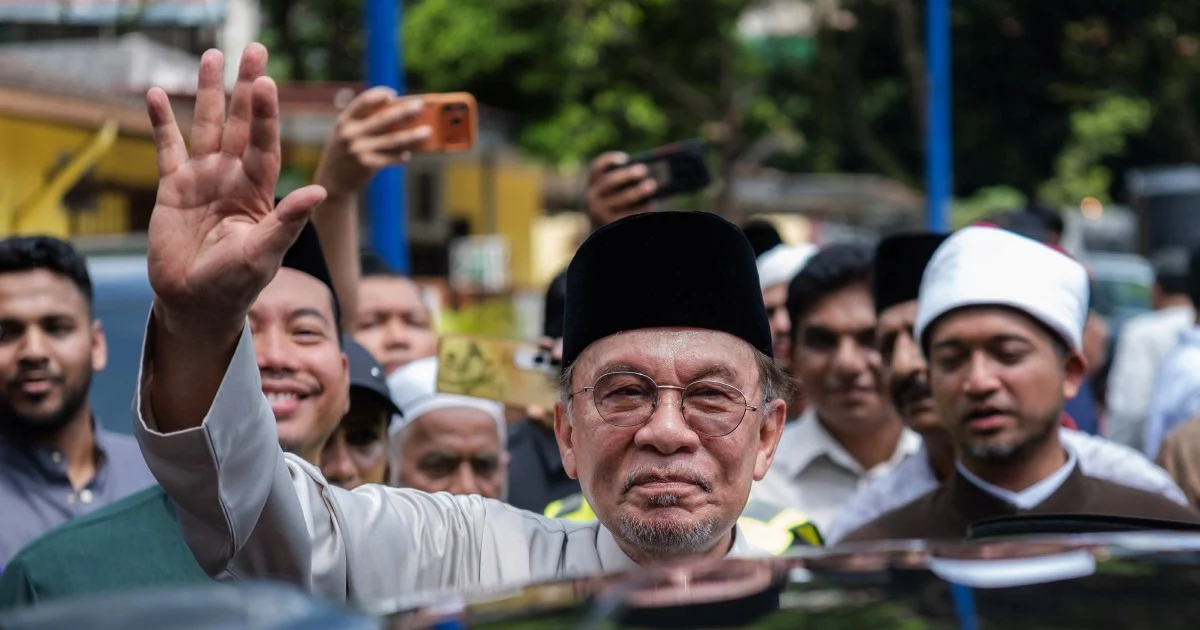
The Johor state election is entering a decisive phase as Malaysia's top political leadership mobilises across the state this weekend, with Prime Minister Anwar Ibrahim and Deputy Prime Minister Zahid Hamidi both scheduled to lead campaign efforts. Their high-profile presence signals the extraordinary weight both federal government figures and their respective political camps are placing on the outcome of this electoral contest, reflecting broader calculations about the state's political future and its implications for the balance of power in Malaysian politics more broadly.
Anwar's anticipated involvement in the campaign trail represents a significant federal commitment to supporting his coalition's slate of candidates, while Zahid's participation similarly underscores the stakes for the United Malays National Organisation and its allies. The convergence of these two figures—who occupy the highest echelons of the government and opposition structures respectively—demonstrates how intensely contested the Johor election has become and the degree to which both sides view the result as consequential for their political fortunes heading into the next general election cycle.
The scheduling of multiple ceramahs and campaign events throughout the weekend reflects a disciplined strategy to maximise media coverage and grassroots engagement across different constituencies. Malaysian election campaigns traditionally rely heavily on these public forums where politicians interact directly with voters, address localised concerns, and build momentum in the final stretch before polling day. The deployment of senior leaders to conduct such events personally, rather than delegating to junior party officials, sends a clear message about the significance the national political establishment assigns to Johor's outcome.
Johor holds particular strategic importance within Malaysia's federal structure and electoral mathematics. The state has historically served as a bellwether for broader national political trends, and its fourteen state assembly seats represent a meaningful portion of the 222-member Dewan Rakyat at the national level. Control of the state government carries tangible consequences for resource allocation, patronage distribution, and the psychological momentum that accrues to whichever coalition emerges victorious. Both the government and opposition camps understand these dynamics intimately, explaining the intensity with which they are now contesting the contest.
The expansion of campaign activities involving federal-level personalities also speaks to how contemporary Malaysian politics increasingly involves metropolitan centres and urban constituencies where swing voters prove decisive. Johor Baru, the state capital, and surrounding urban areas contain concentrations of middle-class voters whose preferences cannot be taken for granted by any political formation. The presence of Anwar and Zahid on the campaign circuit allows these national figures to directly address the concerns of these crucial voter demographics, whether regarding economic management, cost of living pressures, or governance standards.
The campaign intensity reflects broader shifts in Malaysian political competition where coalition formations have become increasingly fluid and voter allegiances less predetermined than in previous electoral cycles. The Johor election therefore serves as a crucial testing ground for competing campaign narratives and political positioning. Both the government coalition and opposition camps will be scrutinising voter response to their messages, campaign organisation, and grassroots mobilisation capacity, with lessons drawn likely to inform strategies for subsequent electoral contests throughout the year and beyond.
Regional implications extend beyond Johor's borders, as the state election outcomes carry potential consequences for the broader Southeast Asian political environment. Malaysia's internal political stability and the effectiveness of its government directly influence its role as an important actor in regional economic integration, security cooperation, and diplomatic initiatives. An election result that produces clear political mandates and stable governance outcomes thus carries implications that ripple through ASEAN and the wider Indo-Pacific region where Malaysia maintains significant strategic interests.
The timing of this election campaign intensification also occurs against a backdrop of sustained domestic economic pressures and inflationary challenges that have preoccupied Malaysian voters across the country. Both political camps will be seeking to frame their respective visions for economic management and public service delivery as superior alternatives. The granular, constituency-level politics of state elections allows for more detailed engagement with local economic grievances than federal campaigns typically accommodate, and this weekend's campaigning will likely feature significant discussion of water supply, public transport, local employment, and other bread-and-butter issues affecting Johor residents' daily lives.
The orchestrated deployment of senior leaders also reflects sophisticated campaign management by both coalitions. Scheduling multiple events across different geographical zones and demographic constituencies within Johor allows for maximum coverage while ensuring that the participation of high-profile figures generates significant media attention and social media engagement. In contemporary Malaysian politics, campaign effectiveness increasingly depends on both traditional ground mobilisation and digital communication strategies, and the presence of figures like Anwar and Zahid provides ready-made news hooks that amplify campaign messages across multiple information channels.
Looking forward, the outcome of this weekend's campaign activities and the subsequent election result will likely shape political calculations within all of Malaysia's major political formations as they prepare for the next phase of electoral contests. The Johor election thus serves not merely as a local matter but as a consequential moment in the broader evolution of Malaysia's democratic process and competitive political landscape. The intensity of this weekend's campaigning reflects the genuine uncertainty about the result and the genuine stakes that both established and emerging political forces perceive in the outcome.

