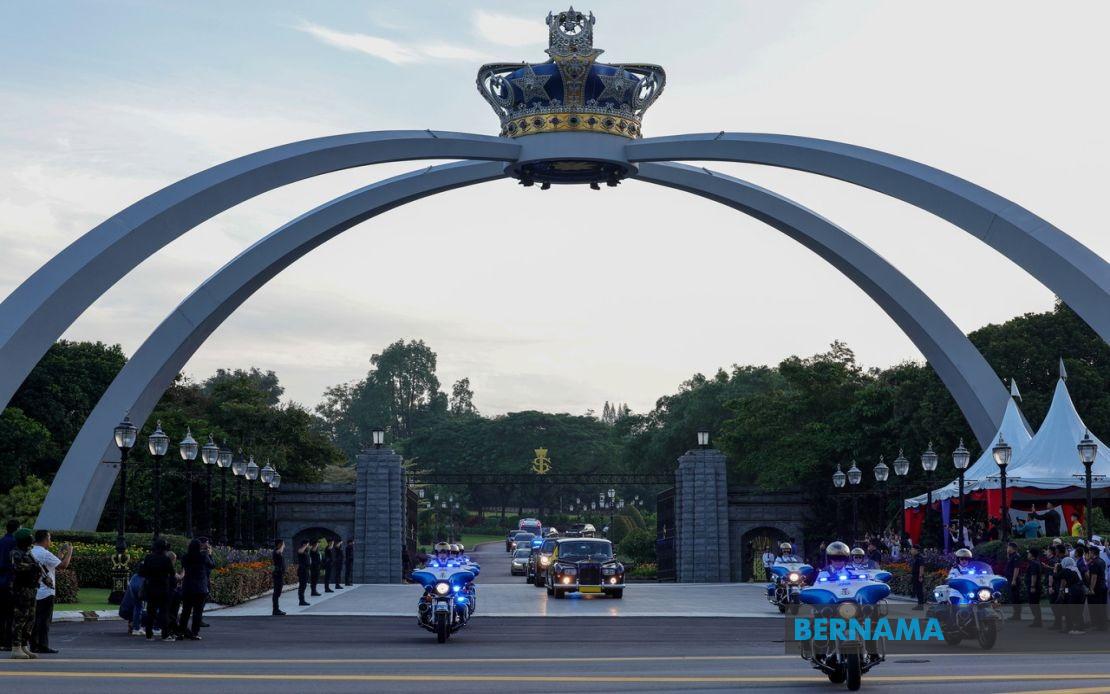
The new Menteri Besar of Johor is scheduled to be sworn in at 3 pm today at Istana Bukit Serene, the state's royal palace located in the heart of Johor Bahru. The ceremony marks the formal conclusion of the state's leadership transition following the election held yesterday, in which Barisan Nasional captured an overwhelming mandate from voters across the southern peninsula state.
The Johor Palace issued an official invitation to media organisations confirming the swearing-in details, though notably the announcement did not reveal the identity of the individual set to assume the role of Menteri Besar. Journalists have been directed to cover proceedings from the Crown Arch entrance to Istana Bukit Serene, indicating a controlled but publicly observable handover of authority. This formal approach underscores the significance of the occasion within Malaysia's constitutional monarchy system, where state rulers retain ceremonial and custodial authority over the appointment and removal of chief ministers.
The path to this moment accelerated significantly today when Sultan Ibrahim Iskandar received an audience with Barisan Nasional chairman Datuk Seri Ahmad Zahid Hamidi at Istana Pasir Pelangi. The meeting, which extended nearly an hour in length, was also attended by Johor's BN chairman Datuk Onn Hafiz Ghazi. Such audiences typically precede formal appointments, suggesting that the Sultan had been deliberating on the selection of the most suitable candidate to lead the state government during this critical juncture.
Barisan Nasional's electoral performance yesterday delivered a resounding endorsement from Johor voters, a result that carries substantial weight in Malaysian political calculations given the state's size, economic importance, and historical significance within the ruling coalition's heartland. The coalition secured 48 of the 56 contested state assembly seats, translating to an 85 percent supermajority that provides the incoming administration with considerable legislative flexibility to pursue its policy agenda without obstruction.
This margin of victory represents not merely a win but a statement of voter confidence, particularly significant in a state that serves as Malaysia's economic and political anchor on the southern peninsula. Johor's role as a manufacturing hub, international trade gateway through Port Klang and Tanjung Pelepas, and home to major federal infrastructure projects means that the state administration's effectiveness directly impacts national economic performance. The scale of the mandate therefore carries implications extending well beyond Johor's borders.
Media operations have been mobilising since midday, with journalists positioning themselves at the Menteri Besar's official residence in Saujana and maintaining vigil outside Istana Bukit Serene's gates. The gathering of press personnel reflects the intense interest within political circles and among the broader public in identifying who will lead the state's 4.1 million population. The drama of not yet knowing the name of the incoming chief minister, despite the electoral result being decided yesterday, exemplifies how Malaysia's system reserves final appointment authority to the Sultan, even after popular ballots have effectively determined the victorious coalition.
This constitutional arrangement, unique to Malaysia's hybrid system of hereditary monarchy and democratic governance, means that the ruler's judgment becomes the final determinant following electoral outcomes. In this instance, Sultan Ibrahim Iskandar's selection will represent his assessment of which individual within Barisan Nasional's elected cohort possesses the requisite leadership qualities, political acumen, and capacity to manage the diverse interests across Johor's complex economic and social landscape.
The significance of this transition extends to Malaysia's broader political trajectory. Johor remains culturally and politically distinctive, maintaining close associations with Umno's traditional voter base and serving as a crucial testing ground for the coalition's ability to retain electoral dominance amid broader changes to Malaysia's political landscape. How the incoming Menteri Besar manages state affairs over the coming months will send signals regarding Barisan Nasional's consolidation of power and its capacity to deliver governance improvements that justified the voters' confidence.
For stakeholders across Southeast Asia monitoring Malaysian political developments, the swearing-in ceremony represents a moment of clarity following the electoral process. Business communities in the region maintain substantial investments in Johor, particularly in manufacturing, logistics, and trade-related sectors, and will be observing closely how the new administration signals its economic priorities and policy directions in its initial pronouncements and legislative agenda. The state's role as a bridge economy between Malaysia and Singapore adds further dimensions to international interest in its governance transitions.
The formal constitutional ceremony scheduled for this afternoon will essentially confirm what electoral mathematics already established yesterday. Yet the occasion itself carries ceremonial weight within Malaysia's political culture, marking the moment when authority formally transfers and new leadership assumes office before the Sultan. As journalists gather and political observers worldwide monitor developments from Johor Bahru, the stage is set for what amounts to a decisive affirmation of Barisan Nasional's continued dominance in one of Malaysia's most strategically important states.

