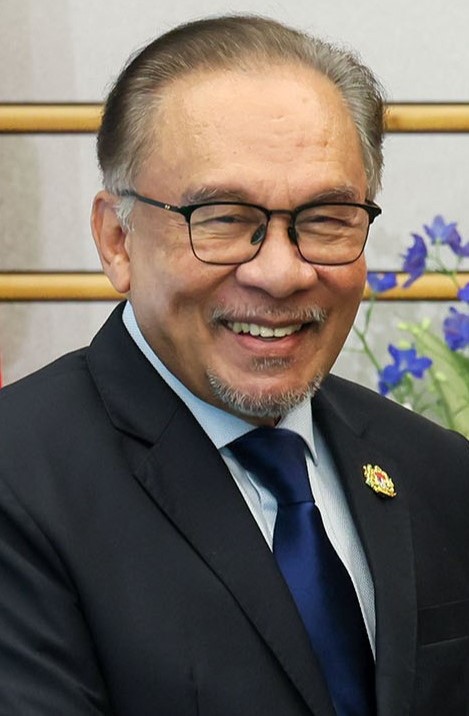
Prime Minister Datuk Seri Anwar Ibrahim disclosed that Johor has received a net financial advantage from the federal government, receiving RM16 billion in allocations whilst contributing RM14 billion in revenue over the past three years. Speaking in Tangkak, the premier highlighted the RM2 billion disparity as evidence of the centre's commitment to equitable development across Malaysia's states, particularly in addressing regional economic disparities.
The disclosure provides a quantifiable measure of fiscal redistribution in Malaysia's federal system, where wealthier and more developed states typically contribute disproportionately to the central exchequer whilst receiving proportionally lower per-capita allocations. Johor, as one of Malaysia's most economically productive states, would normally fall into this category. However, the new figures suggest that federal budget prioritisation has shifted to channel additional resources to the southern state beyond its direct revenue contribution.
This recalibration of federal spending reflects broader policy objectives within the current administration. The Madani government, which took office in late 2022, has emphasised bridging regional development gaps and ensuring that economic gains are distributed more equitably across all states. Johor, historically an economic powerhouse with substantial manufacturing, petrochemical, and tourism sectors, appears to have become a focus area for strategic federal investment, possibly reflecting the government's recognition of the state's ongoing infrastructure needs and development potential.
The announcement carries particular significance for Malaysian state finance dynamics. Typically, states that generate considerable tax revenue—including income tax from residents, corporate taxes, and customs duties—find themselves in a position of net fiscal contribution. That Johor's allocation surplus becomes public and defensible suggests the government is making deliberate policy choices to invest in the state's future growth. This could signal either recognition of untapped economic potential or deliberate efforts to strengthen political and economic ties with a electorally significant state.
The three-year measurement period spanning recent budgets demonstrates consistency in this approach rather than a one-off budgetary decision. Sustained prioritisation of Johor allocations implies structural changes to how federal resources flow southward. These funds likely support infrastructure projects, social services, and development initiatives that extend beyond routine operational expenditure, suggesting medium-to-long-term strategic thinking in federal resource deployment.
For Malaysia's broader fiscal architecture, such disclosures highlight the complexity of centre-state financial relationships. The federal government balances multiple competing pressures: maintaining incentives for revenue-generating states, addressing underdevelopment in less productive regions, supporting population centres with high service demands, and achieving political legitimacy across diverse constituencies. Johor's situation illustrates how these calculations work in practice, with a wealthy state nonetheless receiving enhanced allocations, possibly reflecting its crucial role in Malaysia's economy and its electoral importance.
Regional economic implications warrant consideration as well. Johor's development trajectory influences broader Southeast Asian dynamics, given the state's proximity to Singapore and its significance as a manufacturing and logistics hub serving wider regional supply chains. Enhanced federal investment in Johor infrastructure, industrial capacity, and services strengthens Malaysia's competitive positioning regionally. Improved connectivity, upgraded ports, and expanded industrial zones benefit not just Johor residents but facilitate cross-border economic activity and attract multinational investment seeking Southeast Asian bases.
The announcement also underscores ongoing debates about fiscal federalism in Malaysia. Opposition voices have periodically questioned whether federal budget allocation mechanisms adequately serve all states or whether political considerations unduly influence resource distribution. The Prime Minister's voluntary disclosure of specific figures for Johor appears designed to demonstrate transparent fiscal management and refute suggestions that the government favours certain states over others. By quantifying the state's net benefit, the administration presents evidence of balanced governance.
Looking forward, these spending patterns may influence expectations among other states regarding their own allocations. States that perceive themselves as net contributors might expect similar recalibration, whilst those receiving lower per-capita allocations could argue for enhanced federal support. The Johor disclosure thus potentially opens discussions about whether current distribution formulas across all thirteen states adequately reflect development priorities and ensure equitable growth.
Implementation of these federal allocations will determine their actual developmental impact. How effectively Johor utilises these additional funds—whether for productive infrastructure, human capital development, or service provision—will influence state competitiveness and livelihood improvements for residents. The federal commitment remains meaningful only if deployed strategically to generate sustainable returns and address genuine development bottlenecks rather than dispersed inefficiently across uncoordinated projects.
The financial picture also reflects Malaysia's macroeconomic priorities under current leadership. With global economic uncertainty and domestic fiscal pressures, strategic allocation to economically productive states signals confidence in growth-driven recovery strategies. Investment in states like Johor, which generate significant economic returns, represents a calculated bet on revenue generation that can ultimately strengthen the federal position and fund national development objectives.
Moving forward, stakeholders will watch whether this pattern of enhanced allocations to Johor continues in subsequent budgets and whether similar approaches extend to other states. The precedent established here may shape expectations and influence both state governments' planning and federal budget negotiations in coming years. For Malaysian businesses and investors, such fiscal prioritisation signals policy stability and long-term commitment to supporting state-level economic development, which carries implications for investment confidence and strategic economic planning across the region.