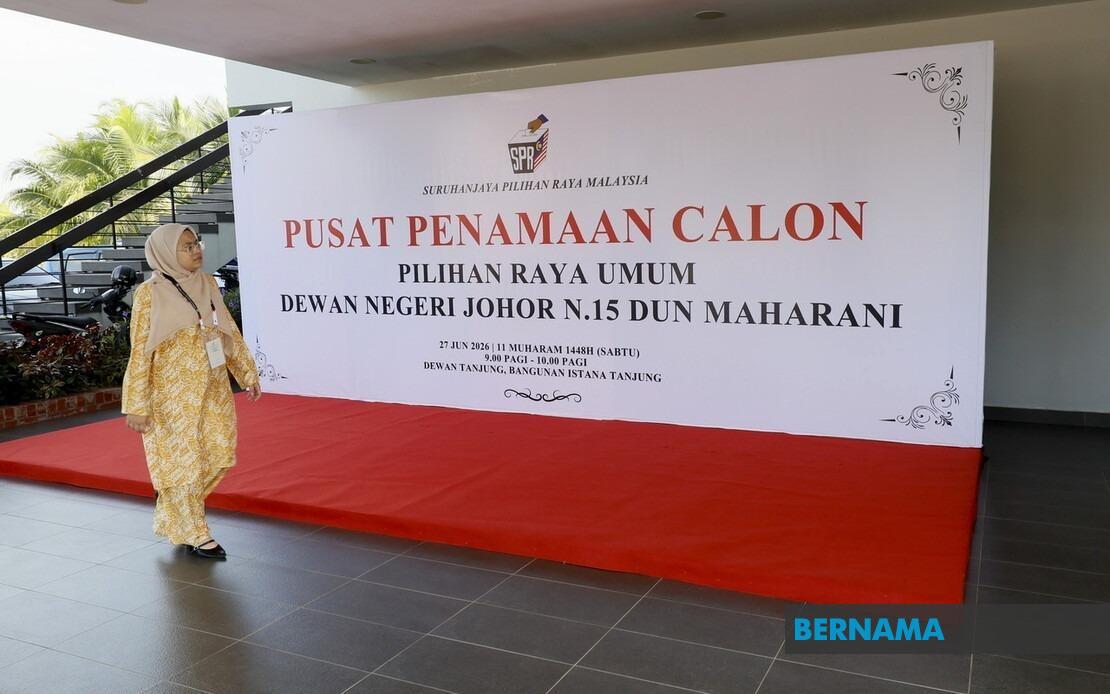
The machinery for Johor's 16th state election springs into action today as nomination centres open their doors across the southern state's 56 constituencies. Beginning at 9 am and running until 10 am, prospective candidates have exactly one hour to lodge their nomination papers with Returning Officers stationed at centres throughout the state. This compressed timeframe represents a critical juncture in the electoral calendar, establishing which aspirants meet the formal requirements to contest the race ahead.
The Election Commission has structured the election calendar to compress the campaign period into a lean 14 days, beginning immediately after nominations are declared and extending through 11.59 pm on July 10. This condensed schedule amplifies the intensity of political activity, forcing parties to make rapid strategic decisions about resource allocation and messaging. Early voting is scheduled for July 7, offering eligible voters—particularly military and police personnel—an opportunity to cast ballots before the main polling day on July 11, which falls just four days later. The dissolution of the State Legislative Assembly on June 1 initiated this sequence, formally ending the previous legislative session and opening the contest.
The electoral register reflects a substantial stake in this contest, with 2,727,926 registered voters eligible to participate. This total comprises 2,703,175 ordinary voters, 12,041 military personnel and their spouses, and 12,710 police officers and their spouses. The magnitude of this electorate underscores Johor's significance within Malaysia's federal structure, making the state's outcome a consequential indicator of broader political sentiment. As nomination forms are processed, the full picture of candidate recruitment efforts will crystallise, revealing how parties have prioritised different constituencies and demographic appeals.
Pakatan Harapan has committed to contesting all 56 seats, distributing nominations among its constituent parties: PKR will field 20 candidates, Amanah 19, and DAP 17. Barisan Nasional similarly presents a full slate through UMNO's 36 candidates, MCA's 16, and MIC's four nominees. This comprehensive engagement by the two historically dominant coalitions reflects their determination to contest every available seat, leaving no ground uncontested. Perikatan Nasional's presence extends across the state through a more fragmented coalition structure: PAS contests 11 seats, Bersatu 16, the Malaysian Indian People's Party five, and Parti Pejuang Tanah Air one. This distribution reveals PN's strategy of leveraging different parties' community connections rather than relying on a single vehicle.
Several smaller and emerging parties inject additional complexity into the electoral landscape. MUDA, which captured one seat in the previous assembly, contests four constituencies this time, suggesting territorial expansion. The Parti Sosialis Malaysia fields a single candidate, while Parti Bersama Malaysia makes its debut in state elections with an ambitious campaign across 15 seats. This last entry particularly warrants attention for Malaysian observers, as new party debuts often signal shifts in voter sentiment or the emergence of political niches previously underserved by established coalitions. The proliferation of contestants across multiple parties may fragment certain constituency races, potentially influencing outcomes in seats where winning margins run thin.
As of the day before nomination, 593 forms had been purchased and 133 prospective candidates had already submitted deposits, indicating brisk activity in candidate recruitment. These figures suggest that many constituencies could see competitive contests among multiple parties, with some races potentially fielding more than the typical two or three main contenders. The advance deposits signal serious intent from these candidates, as the financial commitment represents a concrete demonstration of candidacy rather than speculative interest. Over the coming hours, the full roster of nominees will become apparent, allowing analysts and party strategists to assess which constituencies face genuine multi-way competition and where races remain essentially two-cornered affairs.
The previous assembly's composition provides crucial context for understanding the probable dynamics of this election. Before dissolution, Barisan Nasional dominated with 40 seats, whilst Pakatan Harapan held 12, Perikatan Nasional controlled three, and MUDA retained one. This arithmetic meant BN required only marginal gains to secure a decisive majority, yet the intervention of multiple competing forces and the possibility of seat swings introduces genuine uncertainty. The strength of UMNO's performance, traditionally the BN anchor in Johor, will significantly influence the overall result, particularly given its nomination allocation of 36 seats, which exceeds its previous tally. Whether UMNO can expand its representation or merely consolidate existing strength remains a pivotal question.
Nomination day traditionally creates vibrant scenes at polling centres as party supporters converge to demonstrate backing for their candidates. The Election Commission has reminded all stakeholders that nomination proceedings must comply with the Election Offences Act 1954 and relevant local authority regulations, with particular restrictions placed on campaign noise and vehicle-mounted loudspeaker usage. These regulatory guardrails aim to maintain decorum during what can occasionally become boisterous occasions. Police deployment has been configured accordingly, with 4,832 personnel assigned to manage security and traffic flow, including coordinated road closures and diversions affecting 19 major routes near nomination centres. This substantial security footprint reflects the anticipated size of gatherings and the logistical complexity of managing simultaneous activities across 56 separate locations throughout Johor's extensive geography.
Weather considerations, whilst often overlooked, carry practical implications for nomination day operations. The Malaysian Meteorological Department forecasts morning rain across several Johor districts, with thunderstorms anticipated in the afternoon, potentially affecting traffic conditions and turnout at nomination centres, particularly in western and central districts. Such precipitation could influence the timing of candidate arrivals and supporter gatherings, though the compressed one-hour submission window means weather delays pose real risks for last-minute candidates. The combination of anticipated rain, security deployments, and simultaneous processing at 56 centres creates a complex logistical environment requiring careful coordination.
For Malaysian observers and regional analysts tracking electoral developments in Southeast Asia's most urbanised states, Johor's election carries significance beyond state-level politics. The contest will provide early indicators of Pakatan Harapan's capacity to rebuild support following federal electoral setbacks, UMNO's consolidation efforts under its current leadership, and the viability of Perikatan Nasional as a sustained political force. The emerging role of smaller parties, particularly MUDA and the newcomer Bersama, may reveal evolving preferences among younger and urban voters. Conducted relatively soon after the 2023 federal election, this state contest offers voters an opportunity to recalibrate their political preferences, making the July 11 result a potentially influential precedent for future contests. The nomination process beginning today will definitively establish which candidates and parties will contend for these stakes over the coming weeks.

