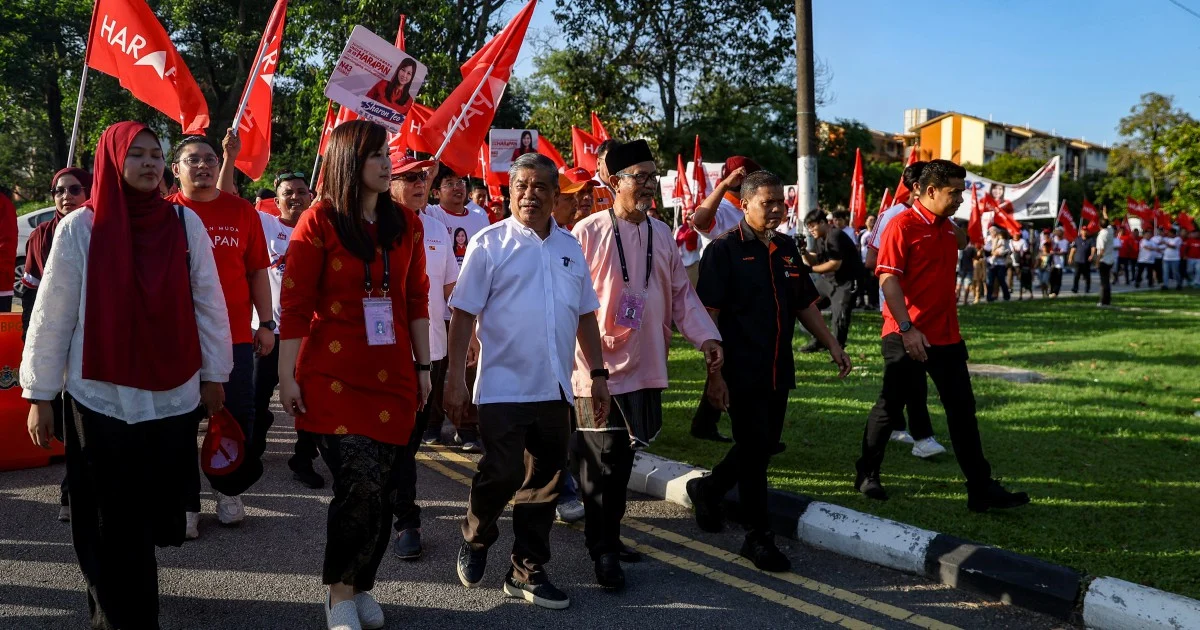
Sharon Teo's nomination filing at the Dewan Muafakat Taman Mawar in Pasir Gudang drew visible grassroots enthusiasm, with supporters gathering to demonstrate backing for the Pakatan Harapan coalition through repeated chanting of "Johor undi Pakatan Harapan". The scene underscores the coalition's efforts to mobilise voter sentiment in the Permas constituency, a traditionally significant battleground in Johor politics that has frequently determined the broader direction of state-level electoral outcomes.
The nomination ceremony marked a formal step in Teo's candidacy as Pakatan Harapan seeks to consolidate support across multiple constituencies in what observers view as a closely contested electoral environment. The coalition's strategy appears focused on energising its voter base through high-visibility nomination events designed to generate momentum heading into the campaign period. Permas, located within the broader Pasir Gudang administrative area, has historically attracted substantial political attention due to its demographic diversity and swing-voter composition.
Pakatan Harapan's positioning in Johor has shifted considerably over recent electoral cycles, with the coalition attempting to regain ground lost in previous state and federal contests. The nomination of Teo represents part of a broader slate-building exercise aimed at presenting competitive candidates across the state's constituencies. Her candidacy signals the coalition's commitment to contesting seats that offer realistic paths to representation, though Johor's electoral landscape remains fragmented across multiple political contenders.
The visible turnout and vocal support at the nomination centre suggest that campaign mobilisation efforts are translating into tangible grassroots activity. For Malaysian voters in Johor and observers tracking regional political dynamics, such scenes provide indicators of organisational capacity and volunteer engagement levels that often correlate with electoral performance. The chanting reflected a coordinated demonstration rather than spontaneous gathering, indicating pre-event planning and supporter mobilisation by the coalition's campaign apparatus.
Permas represents one of several constituencies where opposition coalitions have targeted resources and candidate recruitment efforts. The constituency's voter composition includes urban professionals, small business operators, and working-class households, demographic groups that have demonstrated variable voting patterns across recent elections. Understanding these constituencies' political leanings remains crucial for any coalition seeking to build winning majorities at the state level.
For Pakatan Harapan, Johor has remained strategically important despite electoral reversals in recent contests. The state's 56 state assembly seats represent a significant portion of any potential state-level majority, making the coalition's performance here consequential for national political dynamics. Should the coalition improve its standing in Johor, it could enhance its national political positioning and messaging credibility heading into potential federal contests.
The nomination period itself carries procedural significance, as candidates must formally file papers, submit required documentation, and satisfy electoral commission requirements before campaigns formally commence. Teo's filing at Permas follows the broader nomination schedule established by the Election Commission for the Johor state election, with multiple candidates from competing coalitions and independent candidates submitting their candidacies across constituencies.
Support demonstrations at nomination ceremonies have become standard features of Malaysian electoral contests, serving multiple functions for candidates and their political organisations. They provide photo opportunities and media visibility while simultaneously allowing parties to assess volunteer availability and public sentiment in specific constituencies. The chanting of coalition slogans creates a sense of collective political identity and can influence local voter perceptions regarding which candidates or coalitions possess genuine grassroots momentum.
ForJohor's electoral calculus, the outcome in constituencies like Permas could prove decisive in determining which coalition secures the state government. Analysts have noted that several Johor constituencies remain genuinely competitive, with outcomes potentially swinging based on voter turnout, tactical voting patterns, and local issue priorities. Sharon Teo's nomination and the support demonstrated at her filing event represent early indicators of how electoral competition may develop across these critical constituencies.
Looking forward, the Permas constituency race will likely feature multiple candidates competing for a seat that commands attention from party strategists and campaign organisers. The enthusiasm demonstrated at Teo's nomination suggests that Pakatan Harapan intends to pursue this seat actively, deploying resources and volunteers to build voter support during the official campaign period. For Malaysian political observers and voters in Johor specifically, monitoring how support intensity translates into actual electoral results will provide valuable data regarding coalition competitiveness and voter sentiment across the state.

