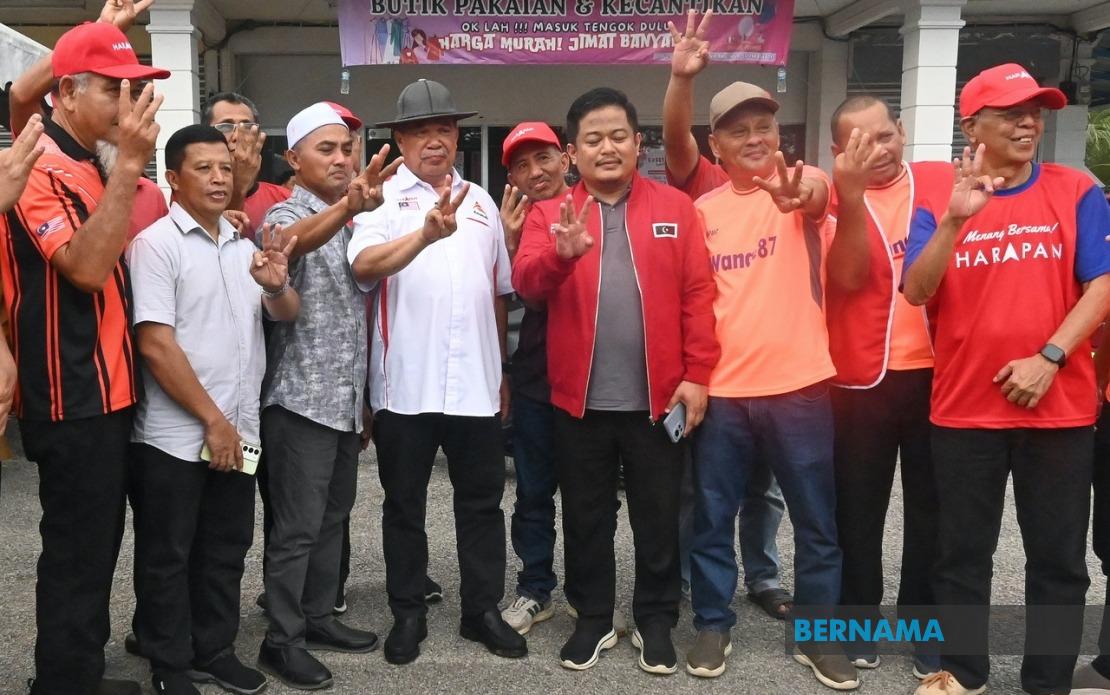
Pakatan Harapan's coalition leadership is banking on voter trust in Johor's upcoming state election, with Amanah president Datuk Seri Mohamad Sabu making a direct appeal for electoral support to prove the opposition's recently unveiled manifesto represents genuine reform rather than hollow campaign rhetoric. Speaking after a campaign event in Rengit, Mohamad Sabu framed the choice before voters on polling day as fundamental: without PH control of the state government, the party cannot deliver on the commitments it has made to address Johor residents' concerns and grievances.
The minister's plea underscores an implicit weakness in opposition campaigns across Malaysia—the challenge of convincing voters that alternative governments can execute their policy agenda when they lack the institutional machinery of state power. Mohamad Sabu's argument suggests PH views the manifesto not merely as campaign window-dressing but as a substantive programme developed through extensive grassroots consultation. He stressed that the coalition spent considerable time listening to voters in communities across the state, absorbing their complaints and priorities, before drafting the platform. This narrative emphasises responsiveness to local concerns rather than top-down political pronouncements, a distinction that carries weight in Malaysian electoral politics where incumbent governments are frequently perceived as distant from ordinary citizens' needs.
Critics from opposing parties have dismissed the PH manifesto as derivative, accusing the coalition of recycling pledges without original thinking. Mohamad Sabu's rebuttal hinged on a subtle but important distinction: anyone can write manifesto promises, but implementation separates serious political movements from those merely seeking office. This framing attempts to redirect electoral debate from the substance of individual policies toward the question of political competence and execution. For Malaysian voters evaluating coalition performance, this represents a familiar tension—manifestos proliferate during campaigns, yet voter experience of government is ultimately shaped by whether elected officials translate pledges into functioning programmes.
The minister, who also holds the Agriculture and Food Security portfolio in the federal government, projected confidence that if PH secures victory, administrative machinery would mobilise rapidly. He indicated that implementation of key manifesto commitments would commence as early as July 12, immediately following the July 11 polling date. This promise of prompt action appeals to voters fatigued by delays and bureaucratic inertia, a sentiment that resonates particularly in states experiencing infrastructure gaps or service delivery challenges. The compressed timeline signals intent, though executing complex policy changes within days of assuming office would test any administration's capacity.
PH's campaign reception has reportedly strengthened in rural Johor constituencies, marking a notable shift in the coalition's electoral positioning in the state. Mohamad Sabu contrasted the current environment with 2018, when PH was still establishing its brand recognition in villages and agricultural communities. He noted that the party's visibility and approachability has increased measurably, with constituents recognising coalition figures and seeking engagement through photographs and conversation. This pattern suggests growing familiarity with PH as a genuine electoral alternative rather than a distant opposition entity, a prerequisite for mobilising rural voter turnout in state elections where urban participation typically exceeds countryside levels.
The transformation in rural reception reflects both organisational effort and broader political dynamics. PH's participation in federal government from 2018 to 2023 elevated the coalition's profile in communities where opposition parties traditionally struggled to compete against entrenched incumbents. However, the subsequent loss of federal power created space for PH to reposition itself as a principled alternative, unburdened by the unpopularity that sometimes attaches to governing coalitions facing economic headwinds or internal tensions. For rural voters, this rebrand coincides with renewed campaign activity and direct outreach, creating opportunities for political conversion among constituencies previously loyal to Barisan Nasional or Perikatan Nasional.
Johor's electoral dynamics carry significance beyond state-level politics. As Malaysia's second-largest state by population and a traditional power base for ruling coalitions, Johor's political direction influences the broader trajectory of Malaysian politics. An electoral upset favouring PH would signal that opposition mobilisation can penetrate previously fortified strongholds, potentially emboldening similar campaigns in other states. Conversely, a victory for incumbent coalitions would reinforce perceptions of PH's declining electoral fortunes following the 2023 federal election outcome. The manifesto campaign represents PH's attempt to frame the election around policy substance and implementation capacity rather than personalities or national political drama.
The timing of Mohamad Sabu's remarks reflects campaign strategy in the final days before voting. With early voting scheduled for security forces and polling day set for July 11, the window for persuasion has narrowed considerably. Opposition mobilisation during this phase focuses on consolidating support among undecided voters and maximising turnout among party sympathisers. The emphasis on manifesto implementation and evidence-based governance appeals to voters seeking rational policy arguments rather than emotional appeals or partisan tribalism. Whether this approach succeeds depends partly on whether Johor voters prioritise institutional competence over incumbent comfort or factional loyalties.
The broader context of Malaysia's political fragmentation complicates PH's messaging. Multiple competing coalitions and independent candidates contest Johor seats, splintering opposition votes and potentially benefiting incumbent parties receiving consolidated support. PH must convince voters that supporting the coalition maximises the chance of governmental change, requiring threshold levels of support to secure legislative majorities. This strategic calculation shapes campaign messaging, with party leaders emphasising momentum and electoral viability as reasons to support PH candidates rather than smaller opposition parties or independents.
As voting approaches, Mohamad Sabu's manifesto appeal encapsulates broader questions about electoral choice in Malaysia. Voters must assess whether campaign promises reflect genuine policy commitments or tactical positioning. They must evaluate whether supporting opposition coalitions advances preferred policy outcomes or constitutes protest votes without consequential impact. They must weigh incumbent performance against opposition potential. These calculations unfold differently across Johor's diverse constituencies, with urban, suburban, and rural voters weighing factors distinct to their communities. The manifesto, presented as evidence-based and consultative, represents PH's attempt to transcend these divisions through appeals to shared interests and competent governance.

