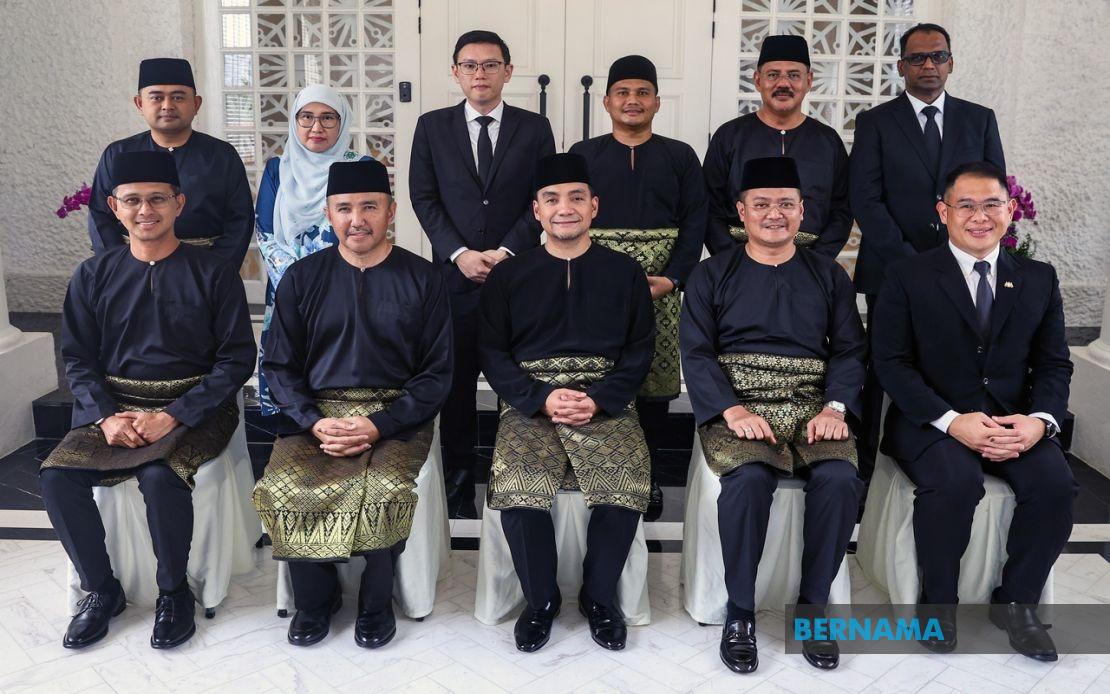
Johor's administrative leadership has been formally completed with the swearing-in of a restructured State Executive Council comprising ten members, four of whom are making their debut in state executive roles. The ceremony at Istana Bukit Serene on July 18 marked the official transition, with all appointees taking their oaths before Tunku Mahkota Ismail, the Regent of Johor.
The four new faces represent a deliberate injection of fresh talent into the state government's decision-making apparatus. Md Israk Abdullah, representing the Kukup constituency, assumes leadership of the Agriculture, Agro-Based Industry and Rural Development portfolio—a critical assignment given Johor's significant agricultural base and rural communities. P. Pannir Selvam from Perling takes charge of the Unity, Heritage and Culture Committee, tasked with managing Johor's multicultural identity and heritage preservation initiatives. Hasrunizah Hassan, the sole female new appointee from Pulai Sebatang, heads the Women, Family and Community Development Committee, reflecting growing emphasis on gender representation in state governance. Dr Muhammad Naqib Md Ghazali, entering exco from Panti, leads the Education and Information Committee, a role encompassing both educational policy and government communications.
The retention of six sitting exco members signals continuity in key administrative functions, allowing experienced officials to maintain momentum on ongoing initiatives. This balance between renewal and stability represents a measured approach to governance, neither abandoning institutional knowledge nor neglecting the injection of new perspectives that electoral victories often facilitate. The six retained members continue directing their respective committees across housing, youth development, religious affairs, health, investment, and public works—portfolios fundamental to state operations and citizen welfare.
This executive restructuring arrives in the wake of Barisan Nasional's commanding performance in the sixteenth Johor State Election, where the coalition captured 48 of 56 available seats. That electoral mandate provided the political foundation for Menteri Besar Onn Hafiz's appointment to a consecutive second term, confirming the electorate's confidence in the incumbent administration's direction. Onn Hafiz himself demonstrated personal electoral strength by retaining his Machap seat with a majority exceeding 15,375 votes, effectively securing both his individual position and broader party legitimacy across his constituency.
The composition of the new exco reflects careful calibration of representation across Johor's diverse districts and demographic groups. The assignment of committee portfolios to specific exco members suggests strategic consideration of their local bases and perceived expertise. The concentration of rural-development focused appointments—notably in agriculture and women's community affairs—acknowledges the substantial rural population that remains integral to Johor's economy and society despite the state's significant urban centers. This geographical and sectoral balance helps ensure that state-level decision-making incorporates perspectives from constituencies across Johor's geography.
For Malaysian political observers, the Johor exco appointments carry implications extending beyond the state itself. Johor remains Malaysia's second-largest state by population and economy, with considerable political influence within the broader Barisan Nasional coalition. The performance of this newly constituted exco will be closely monitored as a bellwether for BN's overall administrative competency and ability to translate electoral victories into effective governance. Success or difficulty in Johor tends to reverberate through national political conversations and affects perceptions of the coalition's capabilities nationwide.
The participation of four new exco members also suggests a deliberate effort to refresh the talent pipeline within Johor's Barisan Nasional structure. Competitive politics in Malaysia increasingly demand that governing coalitions demonstrate capacity to identify and elevate younger or less-established legislators into executive responsibility. The Johor appointments reflect this imperative by providing four individuals their first experience in state-level decision-making authority, while maintaining sufficient continuity through the retention of experienced hands. This generational mix potentially strengthens the coalition's long-term viability by creating leadership depth.
The committee structure itself merits attention as an institutional design question. The Education and Information Committee, now headed by Dr Muhammad Naqib, carries particular significance in contemporary Malaysia's complex media and information environment. Education policy, meanwhile, remains a politically sensitive domain where state and federal responsibilities intersect in complex ways. The assignment of these portfolios to exco leadership indicates Johor's intention to maintain active engagement with both education development and information management—areas where state governments increasingly compete to shape narratives and outcomes.
The gender dimension of these appointments warrants examination. Hasrunizah Hassan's appointment as sole female exco member among four new inductees, though representing progress, also reflects the modest representation of women in Malaysia's state-level executive structures generally. While she leads a committee addressing women's affairs, the broader question of women's presence across diverse portfolio areas remains pertinent in Malaysian governance discussions. Her appointment nonetheless provides a figurehead for women's issues advocacy within the Johor administration.
The swearing-in ceremony's formality—conducted before the Regent with formal presentation of appointment letters—underscores the constitutional significance of these roles. In Malaysia's constitutional monarchy system, state executive councils derive authority partly from vice-regal sanction, making such ceremonies more than ceremonial. The involvement of Tunku Mahkota Ismail personalizes the transfer of executive responsibility and connects exco members symbolically to Johor's traditional institution of monarchy.
Looking forward, the performance of this restructured council will define Johor's governance trajectory through the exco's term. The new members face learning curves adjusting to executive decision-making's rhythms and responsibilities, while retaining experienced colleagues provide guidance. The committee assignments appear designed to leverage perceived strengths—placing agricultural leadership with Md Israk, cultural stewardship with Pannir Selvam—though time will reveal whether these expectations translate into effective policy delivery and community satisfaction.
The successful swearing-in of Johor's new exco marks the formal completion of the state government's post-election restructuring. The combination of electoral validation, experienced continuity, and measured introduction of new leadership figures positions Johor's administration to pursue its governance agenda. Whether this reconstituted council effectively translates Barisan Nasional's electoral mandate into substantive policy achievements will occupy Johor observers and political analysts over coming months and years.

