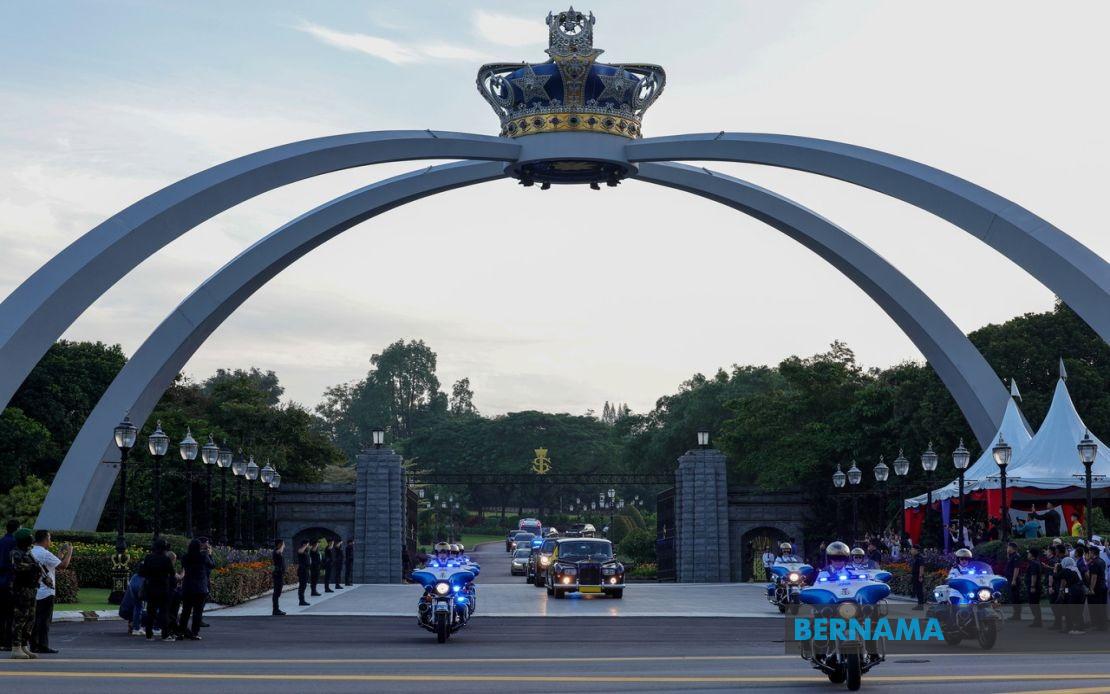
The formal swearing-in of Johor's newly constituted State Executive Council, originally scheduled for Friday at the royal palace Istana Bukit Serene in Johor Bahru, has been deferred to Saturday. Media outlets received notification of the change on Friday morning, though state authorities provided no clarification regarding the reasons behind the last-minute adjustment to the official programme.
The ceremony was set to unfold under the patronage of Tunku Mahkota Ismail, the Regent of Johor, whose presence underscores the constitutional significance of the occasion. The rescheduled event is expected to draw senior state leadership, including Menteri Besar Datuk Onn Hafiz Ghazi, Johor Royal Council president Datuk Dr Rahim Ramli, and State Secretary Datuk Mohammed Ridha Abd Kadir, mirroring the dignified protocol typically observed during such state functions.
The delay arrives barely a week after Onn Hafiz's own swearing-in as Menteri Besar on the preceding Sunday, cementing his position for a second consecutive term at the helm of Malaysia's southern state. His reinstatement followed Barisan Nasional's commanding performance in the 16th Johor State Election, held the preceding Saturday, where the coalition reclaimed its traditional dominance with a decisive margin.
Barisan Nasional's resounding electoral victory delivered 48 of the 56 available seats in the Johor State Legislative Assembly, a result that underscored public endorsement of the coalition's governance in the state. This supermajority affords the incoming administration substantial legislative flexibility and a strong mandate to pursue its policy agenda without the constraints of a fragmented opposition.
Onn Hafiz, who simultaneously holds the Machap state assembly seat, now heads a reconfigured executive branch tasked with addressing the immediate priorities facing Johor. The composition of the State Executive Council typically reflects a balance of political representation from the coalition partners, strategic geographical considerations, and the Menteri Besar's assessment of ministerial competence and portfolio alignment.
The postponement of such ceremonial proceedings, whilst seemingly procedural, occasionally signals logistical considerations or scheduling complications within the state administration's machinery. In Malaysia's hierarchical governance structure, the swearing-in of Exco members represents a constitutional threshold beyond which the state government formally assumes executive responsibility and accountability for administrative matters.
For stakeholders monitoring Johor's political trajectory, the composition and tenor of the incoming Exco will carry implications extending beyond the state's borders. As Malaysia's industrial heartland and a crucial economic corridor anchoring the broader Southeast Asian manufacturing and logistics landscape, Johor's governance quality directly influences investor confidence, business continuity, and regional competitiveness.
The Saturday ceremony will formally inaugurate what observers anticipate will be a period of consolidation and reform within the Johor state administration. With electoral legitimacy firmly secured, the Menteri Besar's administration faces the substantive task of translating campaign promises into tangible policy outcomes addressing infrastructure development, economic diversification, and public service delivery.
The lack of disclosed rationale for the postponement reflects established protocol in Malaysian political communications, where administrative adjustments at this level typically receive minimal elaboration to media outlets. However, the brief deferral underscores the logistical complexity underlying ceremonial state functions that must accommodate multiple stakeholders and coordinate with royal household schedules and requirements.

