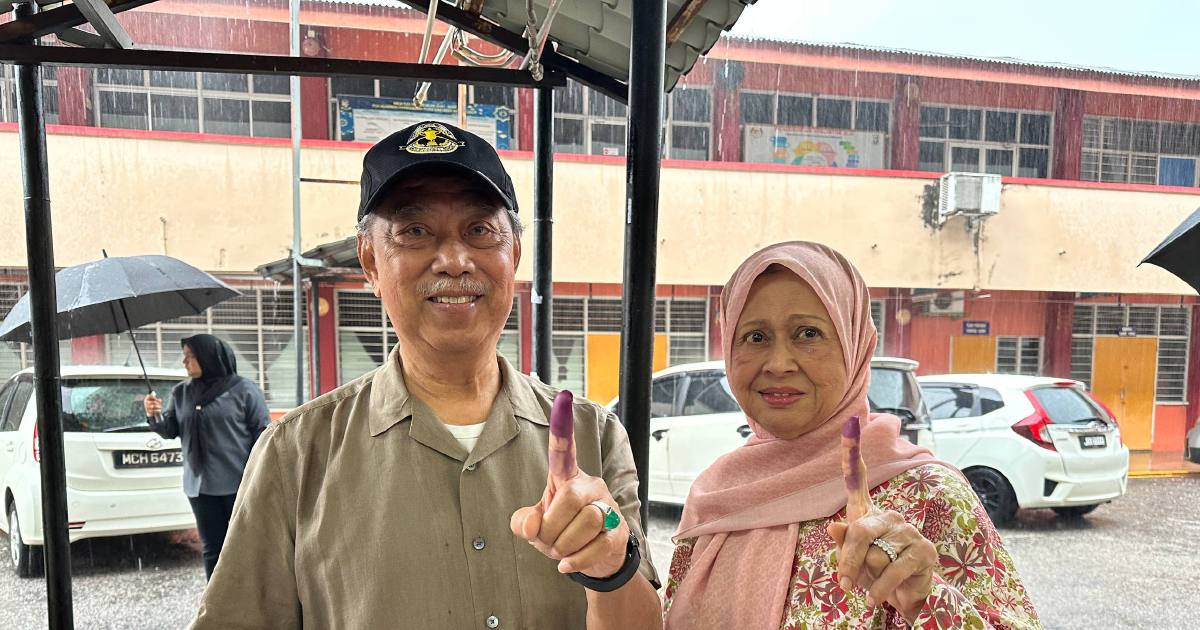
Polling day in Johor unfolded against a backdrop of challenging weather conditions today, yet Bersatu remained confident that voter participation would surpass the 70 per cent threshold. The party's optimism reflects broader expectations that electoral enthusiasm in the southern state could translate into solid turnout despite meteorological obstacles, a phenomenon that historically tends to affect different demographic groups unevenly across the state's diverse constituencies.
Heavy rainfall swept across multiple districts during morning hours, creating logistical challenges for voters commuting to polling stations. Such weather patterns in Johor—a state characterised by its tropical climate and vulnerability to sudden downpours—have previously influenced voting patterns, though their impact varies considerably depending on local geography, accessibility of polling facilities, and the demographic composition of individual constituencies. Urban areas with better transport infrastructure typically experience higher resilience to weather-related disruptions compared to rural districts.
Bersatu's projection of exceeding 70 per cent turnout carries significance beyond mere statistical interest. Electoral participation rates serve as critical indicators of voter confidence and engagement in the political process. A turnout above this level would represent substantial engagement from the Johor electorate, suggesting that despite weather challenges, voters perceived the election as sufficiently important to warrant braving inclement conditions and navigating potential impediments to reach polling booths.
The significance of this election extends beyond immediate state-level politics into the broader tapestry of Malaysian political alignment and regional power dynamics. Johor, as one of Malaysia's most populous and economically consequential states, carries outsized weight in national political calculations. The results would send signals about electoral sentiment across a crucial swing region, potentially influencing confidence in Bersatu's coalition positioning and ability to mobilise its voter base effectively.
Weather-related voting challenges in Malaysia have received increasing attention from election observers and administrators in recent years. The unpredictability of tropical rainfall patterns, combined with the fixed nature of polling day schedules, creates inherent complications for voter accessibility. Election commissions across the region have experimented with various solutions—from extending voting hours to improving shelter facilities at polling stations—to mitigate weather-induced suppression of turnout.
Bersatu's confidence in achieving strong participation numbers may also reflect organisational preparation and ground-level mobilisation efforts conducted in the weeks preceding the election. Modern Malaysian political parties have invested substantially in voter identification, transportation assistance, and communication campaigns designed to maximise participation among their supporters. The capacity to overcome weather barriers often correlates directly with the sophistication of campaign machinery and volunteer coordination structures.
Comparative regional analysis reveals that Southeast Asian states frequently experience weather-related voting challenges, particularly during monsoon seasons. Thailand, Indonesia, and the Philippines have all grappled with similar issues, yet election participation statistics demonstrate that committed electorates frequently transcend environmental obstacles. Malaysia's relatively established electoral infrastructure and voter literacy rates position it more favourably than several neighbouring countries in managing such disruptions.
The 70 per cent threshold itself merits examination. In recent Malaysian state elections, turnout figures have fluctuated considerably, influenced by numerous variables including perceived stakes of the election, partisan polarisation, campaign intensity, and demographic factors. A 70 per cent figure would represent robust participation under most circumstances, and particularly noteworthy when achieved despite adverse weather. For context, Malaysian federal elections have occasionally surpassed 80 per cent turnout, though state-level elections frequently register somewhat lower figures.
From Bersatu's perspective, strong turnout carries particular strategic implications given the party's current positioning within Malaysian political coalitions. The party's capacity to mobilise supporters serves as tangible evidence of organisational vitality and grassroots support, factors that influence perceptions of electoral viability and coalition negotiating power. In this respect, turnout figures function as political currency beyond their immediate electoral relevance.
Weather conditions continued to dominate the campaign narrative throughout the day, with media outlets providing regular updates on rainfall intensity and potential impacts on voting accessibility. Such reporting, while primarily informational, subtly emphasises the commitment demonstrated by voters who navigate challenging conditions to participate, thereby reinforcing democratic engagement messaging regardless of ultimate turnout figures achieved.
Looking ahead, the final turnout statistics would provide valuable data for Malaysia's election management authorities. Weather-related impacts on participation, measured against pre-election expectations, inform ongoing discussions about electoral administration improvements. These discussions prove particularly relevant as Malaysia confronts the intersection of increasingly unpredictable climate patterns and the imperative to maintain robust democratic participation standards.
The unfolding situation in Johor represents a microcosm of broader challenges facing democratic systems across the tropical regions of Southeast Asia. Reconciling environmental variability with electoral accessibility remains an ongoing concern, one that demands creative solutions balancing logistical feasibility with democratic principles of equal participation opportunity.

