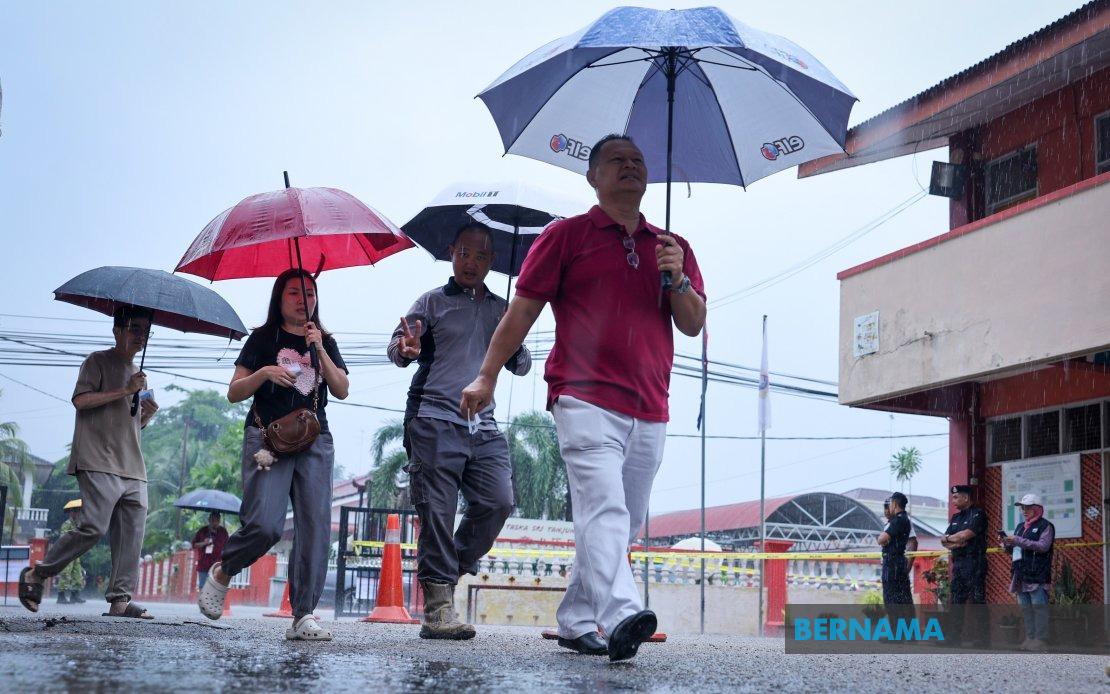
The 16th Johor State Election unfolded on July 11 with polling operations running largely without incident, though voters in different districts encountered vastly different weather patterns. While most of the state enjoyed clear skies throughout the morning, the Muar district was drenched by persistent heavy rainfall that began in the early hours, yet neither condition deterred substantial voter participation. The Election Commission had positioned officials, security personnel and observers at 1,076 polling centres across the state from 7am onwards, ensuring readiness well before voting commenced at 8am.
The contrast in weather proved a compelling story across polling venues. At Sekolah Kebangsaan Seri Pantai in Mersing, voters including persons with disabilities and elderly citizens arrived early under blue skies to exercise their franchise. Similarly pleasant conditions prevailed at Dewan Raya Taman Ungku Tun Aminah in Johor Bahru, Sekolah Menengah Kebangsaan Senggarang in Batu Pahat, and Sekolah Jenis Kebangsaan Cina Kulai, where observers reported smooth flow of voters throughout the morning. Yet the narrative differed dramatically in the southern district, where venues including SJKC Limbong and Sekolah Kebangsaan Ismail 1 operated under soggy conditions that did nothing to suppress participation.
The 2.7 million eligible voters who turned out were selecting representatives for 56 state assembly seats, with 172 candidates competing across the constituencies. This scale of contest represented a significant political exercise for Malaysia's southernmost state, with the outcome potentially reshaping the regional political landscape. The Election Commission had structured polling operations carefully, with voting stations set to close at staggered times throughout the afternoon before immediate commencement of the counting process. This logistics arrangement ensured that results would flow through the evening as different polling districts completed their operations.
The political context heading into election day carried considerable weight for stakeholders across the peninsula. Barisan Nasional entered the contest as the incumbent force, having held 40 of the 56 seats before the state legislative assembly's dissolution on June 1. Pakatan Harapan, the main opposition coalition, held 12 seats in the previous assembly, while Perikatan Nasional occupied three and the younger MUDA party held a single seat. The distribution suggested a competitive contest, with BN's majority of approximately 70 percent of seats vulnerable to erosion if opposition coalitions could consolidate voter support effectively.
For Malaysian observers and regional political analysts, the Johor election carried implications extending beyond state-level governance. As the nation's largest state by population and economic output, Johor's political direction often signals broader trends affecting federal politics and inter-coalition dynamics. The performance of Pakatan Harapan in particular would offer early indicators of the coalition's ability to translate recent national government experience into sustained grassroots support, while any Perikatan Nasional gains might reflect the continued appeal of that grouping despite its exclusion from federal power.
The weather challenges, particularly in Muar, tested the operational resilience of the Electoral Commission's arrangements. Heavy rainfall throughout the morning could have suppressed turnout had polling centres been inaccessible or voter comfort significantly compromised, yet reports from ground observers indicated that electoral officials and security personnel maintained professional standards despite the conditions. The early arrival of officials at venues before 7am proved instrumental in ensuring that despite weather obstacles, the democratic machinery functioned without reported complications.
Voter behaviour patterns observed during the morning polling period suggested sustained engagement with the electoral process across demographic categories. The specific notation that persons with disabilities and senior citizens numbered among the earliest arrivals at Mersing's polling centre reflected deliberate accommodations made by the Electoral Commission to facilitate participation by citizens who might face mobility or health constraints. Such practices represent standard but important components of modern election administration that ensure inclusive participation regardless of physical circumstances.
The staggered closing times for polling stations, determined in advance by the Electoral Commission, meant that counting operations would necessarily proceed in sequence throughout the afternoon and evening hours. This administrative arrangement, while potentially extending the duration of result announcements, serves multiple purposes including allowing Electoral Commission staff to manage counting operations without excessive time pressure and permitting media monitoring of individual constituency results as they progressively become available. Early closing stations would generate results in the late afternoon, potentially shaping narrative momentum before night-shift counting completed results from late-closing venues.
For the broader Malaysian political ecosystem, the Johor outcome would carry relevance for understanding current voter sentiment regarding federal and state governance quality, economic management, and coalition performance. The result would either validate Barisan Nasional's continued hold on Malaysia's most economically significant state or signal the opposition's capacity to dislodge established power bases. Regional observers across Southeast Asia similarly watch Malaysian elections as indicators of political stability and democratic health, with Johor's result potentially affecting perceptions of Malaysia's overall political trajectory heading into potential federal elections.

