The nomination phase of Johor's 16th state election concluded without incident on June 27, as returning officers shuttered all 56 polling centres across the state at 10am. The morning window for candidate submissions, which opened at 9am, allowed party representatives and independent candidates to lodge their nomination papers within the one-hour timeframe established by electoral authorities. The orderly conclusion of this critical procedural step marks the formal transition from candidate registration to active campaigning, with the focus now shifting to verification of eligible contenders and confirmation of how many nominees are running in each of the state's seats.
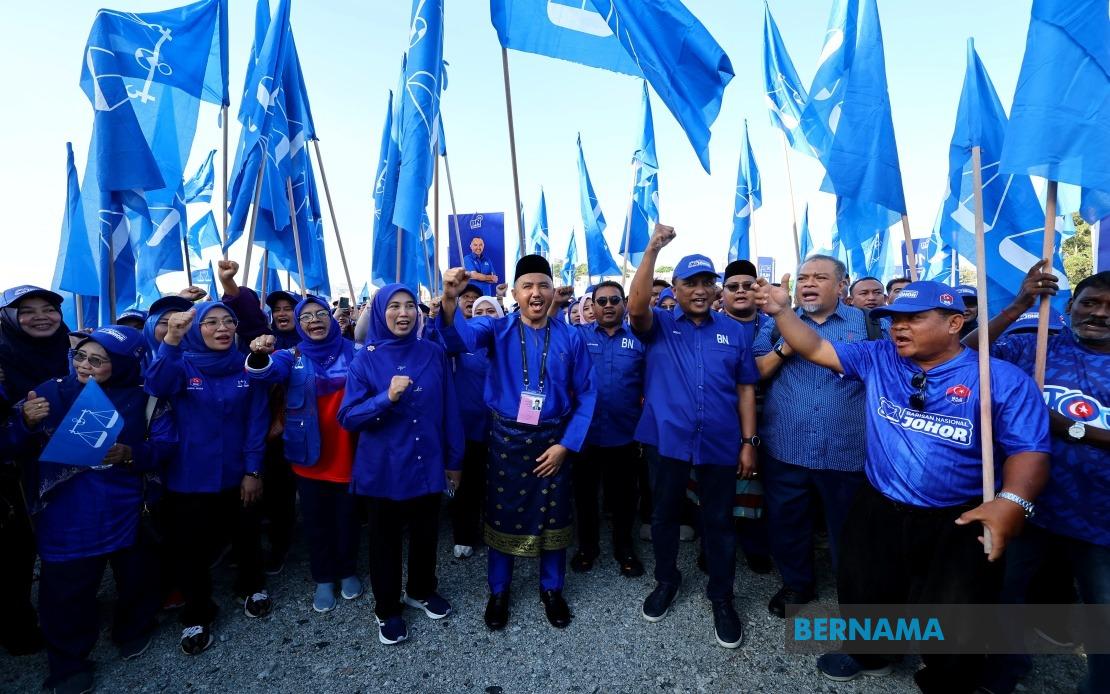
Throughout the morning, nomination centres across Johor maintained calm operations despite the significant political activity. Supporters of various parties congregated at venues to accompany their respective candidates, creating visible demonstrations of grassroots enthusiasm without disrupting the administrative process. The presence of uniformed police (PDRM) and volunteers from the People's Volunteer Corps (RELA) ensured that proceedings remained orderly and secure, forestalling any potential confrontations or disturbances that might have complicated an already complex logistical exercise. Election officials reported no incidents of provocation or misconduct, underscoring the professionalism with which both organisers and participants approached the nominations stage.
With nominations formally closed, the Election Commission (EC) has now established the campaign calendar that will define political activity through July. Candidates and their parties begin a precisely calibrated 14-day campaign period that runs until 11.59pm on July 10, giving campaigners a defined window to canvas voters, hold rallies, and advance their platforms. This regimented approach reflects the EC's effort to create transparent, predictable conditions for electoral competition while preventing campaign fatigue or exhaustion of public attention. The campaign phase represents the most visible and contentious element of any election, where ground support networks, media strategy, and candidate messaging converge to shape voter perception.
The electoral timeline culminates in two significant dates in the coming fortnight. Early voting has been scheduled for July 7, accommodating those unable to vote on the primary election day and providing a preliminary indicator of turnout levels and electoral mood. Polling day itself falls on July 11, when Johor's eligible electorate will cast ballots to determine the composition of the state assembly. This two-phase voting arrangement reflects modern electoral practice, offering convenience while maintaining the integrity of the voting process through security protocols and verification procedures.
The franchise for this election encompasses a substantial cross-section of Johor's population. The Election Commission has registered 2,727,926 eligible voters, a figure comprising 2,703,175 ordinary citizens entitled to vote in their respective constituencies. Additionally, 12,041 military personnel and their spouses hold voting rights, as do 12,710 police personnel and their spouses, reflecting the franchise extension to uniformed services personnel—a structural feature of Malaysian electoral law that recognises their stake in the democratic process. This voter universe represents a significant proportion of Johor's adult population and indicates the scale of political engagement that the state election will generate.
The electoral dynamics of Johor carry implications extending beyond the state's borders. As Malaysia's third-largest state by population and a crucial economic hub, Johor's electoral outcome will provide insights into broader Malaysian political trends and voter sentiment. The state's long-standing status as a political bellwether means that party performance here often presages outcomes in future federal elections or other state contests. For opposition parties and the ruling coalition alike, Johor represents a critical test of their respective organisational capacity, message resonance, and ability to mobilise supporters in a competitive environment.
The nomination process itself, while administratively routine, encapsulates important democratic principles. The requirement that candidates formally register and submit nomination papers ensures transparency regarding who is contesting and provides an official record for electoral authorities and the public. The open and observable nature of this process—with supporters accompanying nominees to polling centres—creates a visible dimension to democratic participation and reinforces the principle that elections occur in public view rather than behind closed administrative doors. This transparency builds confidence in the electoral system's legitimacy, particularly crucial in contested or polarised political environments.
Security arrangements surrounding the nomination process reflected heightened awareness of potential disruption. The deployment of PDRM and RELA personnel at all 56 centres represented a coordinated approach to risk management, acknowledging that large gatherings of political supporters can occasionally generate tension. The fact that such security presence proved unnecessary—with no incidents reported—suggests either that participants exercised appropriate restraint or that the visible security presence itself deterred potential misconduct. Either interpretation underscores the importance of orderly procedures and professional administration in maintaining democratic norms during contested electoral periods.
As the campaign period unfolds, attention will focus on how candidates and parties utilise their 14 days to influence voter choice. Ground operations, public forums, digital campaigning, and media engagement will intensify across the state. The dynamics of Malaysian state politics—with its complex interplay of party affiliations, personality-driven competition, and localised issues—will shape how parties position themselves and which messages resonate with voters. Johor's electorate will ultimately determine whether incumbent arrangements remain stable or whether electoral shifts occur that reconfigure the state's political composition and influence Malaysia's broader political trajectory.

