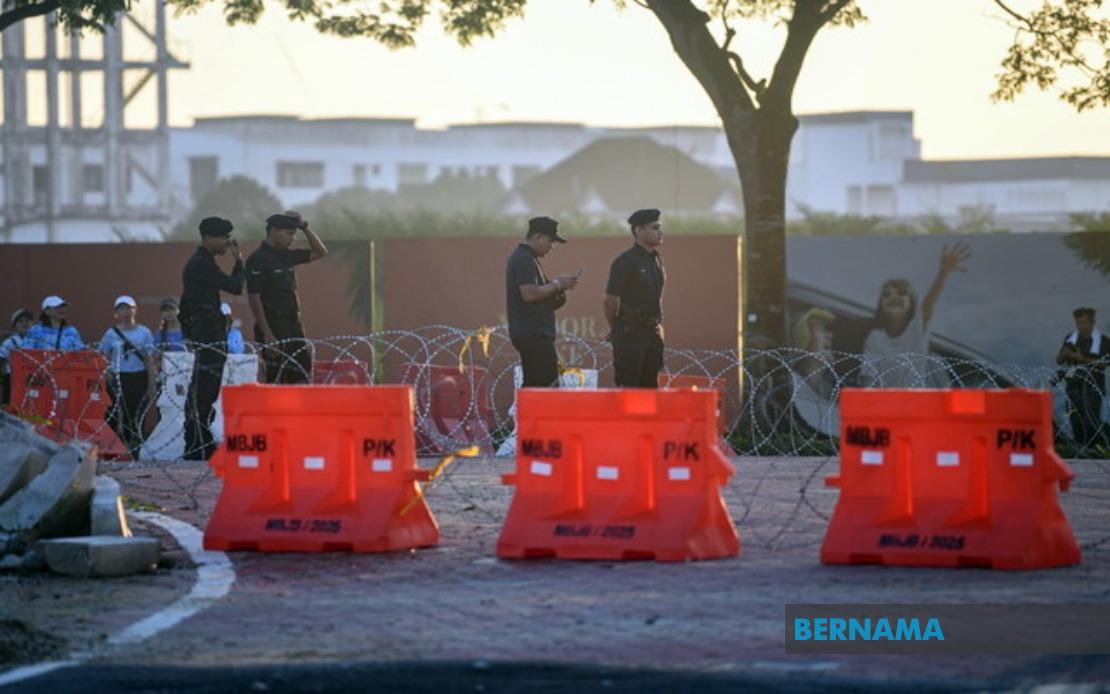
Nomination proceedings for Johor's 16th state election unfolded across 56 centres throughout the state on June 27, with favourable atmospheric conditions facilitating an orderly administrative process from start to finish. The Election Commission orchestrated the receipt of nomination documents from 9am through 10am, with officers completing final preparations before candidates and their representatives arrived to lodge their candidacies for the 56 state assembly seats up for grabs.
The nomination centres maintained discipline and organisation throughout the morning and afternoon, with security personnel deployed strategically at all locations to preserve order and prevent disruptions. Early arrivals of party supporters, some gathering as dawn broke around 7.30am, demonstrated the enthusiasm different political factions brought to the nomination exercise, yet these demonstrations remained peaceful and controlled. The presence of dedicated security teams ensured that the democratic process proceeded without incident despite the considerable attendance at multiple centres simultaneously.
Weather forecasters from the Malaysian Meteorological Department anticipated that most Johor districts would experience dry conditions through the morning hours, with scattered thunderstorms likely developing across several areas during the afternoon. This meteorological outlook proved relatively favourable for the nomination exercise, which concentrated its administrative work in the early hours of the day before weather patterns shifted. Such environmental considerations matter significantly in state-wide electoral events, as inclement weather can impede voter accessibility and candidate movement between nomination points.
The Johor State Legislative Assembly comprises 56 seats, a figure that determined the number of nomination centres required to accommodate all interested candidates. The state administration had dissolved the assembly on June 1, initiating the formal election calendar that the Election Commission subsequently published. Early voting is scheduled for July 7, providing voters who cannot cast ballots on the main polling day with an alternative opportunity to participate in the democratic process. The general polling day itself is fixed for July 11, marking the deadline by which all votes must be counted and results declared.
Election Commission data reveals the substantial electoral constituency involved in this state contest: 2,727,926 registered voters across Johor will ultimately determine the composition of the state legislature. This total comprises three distinct categories of eligible participants. The largest segment consists of 2,703,175 ordinary voters—Malaysian citizens meeting standard residency and age requirements. A second group encompasses 12,041 military personnel and their spouses, recognising the armed forces' participation in the electoral process. The third group includes 12,710 police personnel and their spouses, similarly acknowledging law enforcement's voting entitlements.
For Malaysian political observers, Johor state elections carry particular significance within the broader national context. The state represents one of the country's largest and most influential political jurisdictions, with its outcomes frequently interpreted as indicators of broader sentiment across the peninsula. The nomination day itself represents a crucial administrative checkpoint, determining which candidates will actually compete for voter support and establishing the final roster of contenders who will appear on ballot papers. The smooth conduct of this process reflects competent electoral administration and suggests the commission has adequately resourced and planned for the subsequent stages of the election campaign.
The timing of early voting on July 7, several days before the main poll, accommodates citizens with legitimate reasons for being absent from their constituencies on July 11. Military deployments, official duties, and medical requirements all fall within the categories that traditionally permit early voting participation. This advance voting mechanism has become standard practice in Malaysian elections, recognising that rigid single-day polling would exclude substantial segments of the eligible population from meaningful participation.
As political parties now move beyond the nomination phase into active campaigning, the composition of candidates formally registered on June 27 becomes fixed. No additional candidates can enter the contest, and those who failed to secure nomination—whether due to internal party selection processes or eligibility issues—cannot reverse that outcome. This finality underscores the importance of the nomination exercise, which serves as the formal gate through which only qualified candidates pass into the election proper.
For Johor voters and observers tracking the state's political trajectory, the next milestone involves assessing which candidates managed to secure nomination and what demographic shifts or new entrants have emerged in various constituencies. The election campaign period, stretching from nomination day through July 11, will see intensive political activity as parties mobilise supporters and candidates present their platforms. The weather patterns forecast to shift toward afternoon thunderstorms across several Johor districts may influence campaign logistics as the election timeline progresses toward polling day.

