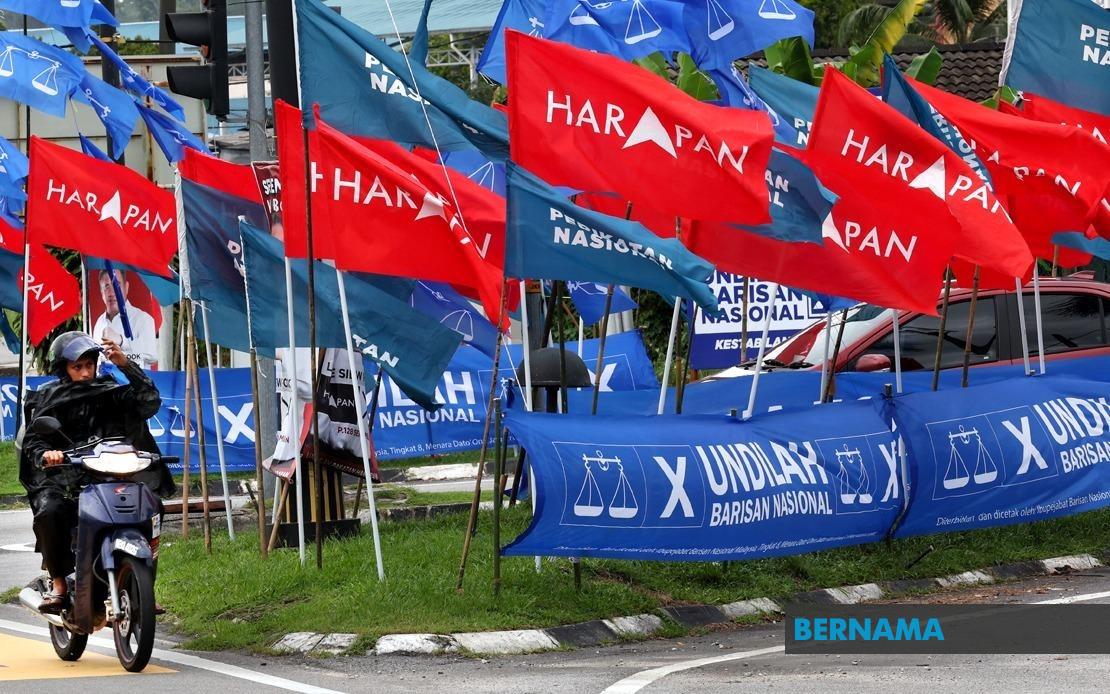
The Johor state election campaign is entering its most intense phase as candidates from competing coalitions scramble to consolidate support in the race's final 48 hours. With polling day set for Saturday, all three major political alliances—Pakatan Harapan, Barisan Nasional, and Perikatan Nasional—are deploying their heaviest weaponry in a coordinated effort to capture the 56 contested state seats across Johor. The 172 candidates still vying for election have abandoned any pretence of measured campaigning, pivoting instead towards high-visibility public events and intensive community engagement designed to capture wavering voter sentiment at the decisive moment.
The presence of top-tier national leadership has become a defining feature of these final campaign days, fundamentally reshaping the dynamics of what was already a competitive three-way contest. Prime Minister Anwar Ibrahim, serving simultaneously as Pakatan Harapan chairman, has scheduled three major rallies for the evening, with particular focus on the Puteri Wangsa constituency—a seat that observers have flagged as genuinely competitive and symbolically important for the coalition's broader narrative. Puteri Wangsa candidate Maszlee Malik has actively mobilised his base through social media, framing attendance at the coalition's Grand Finale Harapan Johor Selatan rally as both a political imperative and a social phenomenon worth experiencing. This cultivation of momentum through headline acts and celebrity politicians reflects a broader strategic calculation that undecided voters in the election's final hours respond primarily to visible, high-energy commitments from established political figures rather than detailed policy argumentation.
Healthcare concerns have unexpectedly intersected with campaign strategy on the Pakatan Harapan side. Paloh candidate Dr A. Ruban, who paused his campaign schedule for medical treatment, returned to the field within 24 hours, a decision that speaks to the perceived intensity and personal stakes of this particular contest. His public announcement that he was back on the ground within a day of seeking medical attention was framed not as a necessity but as a political commitment, illustrating how candidates are constructing narratives about sacrifice and dedication during these final stages. Such decisions carry subtle messaging about which candidates are willing to subordinate personal wellbeing to electoral victory, a framing device that can resonate particularly powerfully in the compressed timeframe of a campaign's conclusion.
Barisan Nasional's leadership has adopted a complementary but distinct final-sprint strategy centred on reinforcing party confidence and consolidating its existing voter base. Coalition chairman Datuk Seri Dr Ahmad Zahid Hamidi personally visited the Endau and Kempas constituencies to energise party workers and candidates, a tactic designed less to convert opposition voters than to maximise turnout among committed supporters. Menteri Besar Datuk Onn Hafiz Ghazi, who is simultaneously the Machap candidate, has leveraged his position as Johor's chief executive to frame the coalition's campaign message around development outcomes and governmental record. Barisan's Larkin candidate Mohd Hairi Mad Shah has adopted a more granular approach through his Ziarah Kasih programme, which emphasises personal relationship-building and one-on-one voter engagement rather than mass rallies. This bifurcated strategy—high-profile leadership appearances paired with door-to-door constituency work—reflects Barisan's traditional electoral architecture, which depends heavily on local grassroots networks and personal clientelist relationships.
Perikatan Nasional has positioned itself as the insurgent force in this final campaign push, organising a mega rally in Endau featuring both its chairman Datuk Seri Ir Dr Ahmad Samsuri Mokhtar and PAS president Tan Sri Abdul Hadi Awang in support of Endau candidate Hasnul Hakimi Hussien. The decision to concentrate firepower on a single spectacular event rather than dispersing leadership across multiple venues represents a calculated risk that reflects Perikatan's resource constraints relative to the other two coalitions. Kahang candidate Mazlan Bujang's Facebook declaration that every remaining hour of campaigning remains meaningful underscores the coalition's philosophy of maximising visibility and presence even when headline-grabbing resources may be more limited. This resource differential creates distinct campaign styles: while Pakatan Harapan and Barisan Nasional can simultaneously stage multiple prime ministerial and ministerial events, Perikatan must concentrate its efforts to generate comparable media impact and voter attention.
The diversity of campaign methodologies being deployed across the three coalitions reveals underlying differences in their organisational capacities and voter-engagement philosophies. Parti Bersama Malaysia, competing as a smaller challenger, has adopted the Bersama Tour Truck initiative, a mobile campaign vehicle through which Kota Iskandar candidate Sahrudin Omar can maintain visibility while conserving resources. Larkin candidate Norsinah Abu has deliberately chosen small-group community dialogues over mass rallies, a strategy that privileges depth of engagement and interpersonal persuasion over breadth of voter contact. These varying approaches across multiple political entities suggest that Johor's electorate is being targeted through fundamentally different campaign modalities, creating a complex information environment where individual voters may receive starkly different campaign messages depending on their geographical location and exposure to particular candidates' chosen tactics.
The intensity of these final campaign days reflects broader changes in Malaysian electoral politics since the 2022 general election. Campaign schedules have become more compressed, with candidates front-loading their grassroots engagement into the final week rather than distributing activity more evenly across the campaign period. The proliferation of social media engagement by candidates—evidenced by Instagram appeals for rally attendance and Facebook updates on campaign progress—has created new channels through which candidates can maintain pressure on potential supporters while simultaneously building narrative momentum through digital platforms. This hybrid approach, combining traditional mass rallies and door-to-door canvassing with real-time social media messaging, has become the default campaign template for competitive Malaysian elections, regardless of coalition affiliation.
The Johor election's final countdown period has become symbolically important not merely as a mechanism for converting remaining undecided voters but as a test of organisational prowess and political vitality. The willingness of national figures to travel to Johor, the deployment of elaborate convoy programmes and tour trucks, and the endless circulation of candidates across constituencies all serve partly to demonstrate to supporters and observers that each political force remains energised and credible. In Malaysia's competitive electoral environment, the appearance of momentum and organisational confidence can itself become a factor influencing voter decision-making, particularly among those genuinely undecided. The final 48 hours of campaigning thus function not only as a tactical window for persuasion but as a crucial opportunity for political parties to project an image of vitality and popular support that extends beyond the specific policy arguments being advanced in ceramahs and community meetings.
For Malaysian observers tracking Johor's political evolution and broader national implications, these final campaign days provide essential insight into how the three major coalitions are positioning themselves post-Anwar era politics. Pakatan Harapan's reliance on Prime Minister Ibrahim's personal presence and star power suggests the coalition's awareness that it must maintain strong performance in Johor to sustain claims to national legitimacy. Barisan Nasional's methodical focus on consolidating traditional support networks indicates a party still attempting to rebuild electoral credibility after years of setbacks. Perikatan Nasional's concentrated rallies and grassroots engagement from smaller candidates reflects an opposition force attempting to punch above its weight through targeted constituency focus. These distinct strategic approaches will produce divergent electoral results across different constituencies, creating a final outcome that likely reinforces regional variation in coalition strength and reveals persistent geographical patterns in Malaysian voter behaviour.

