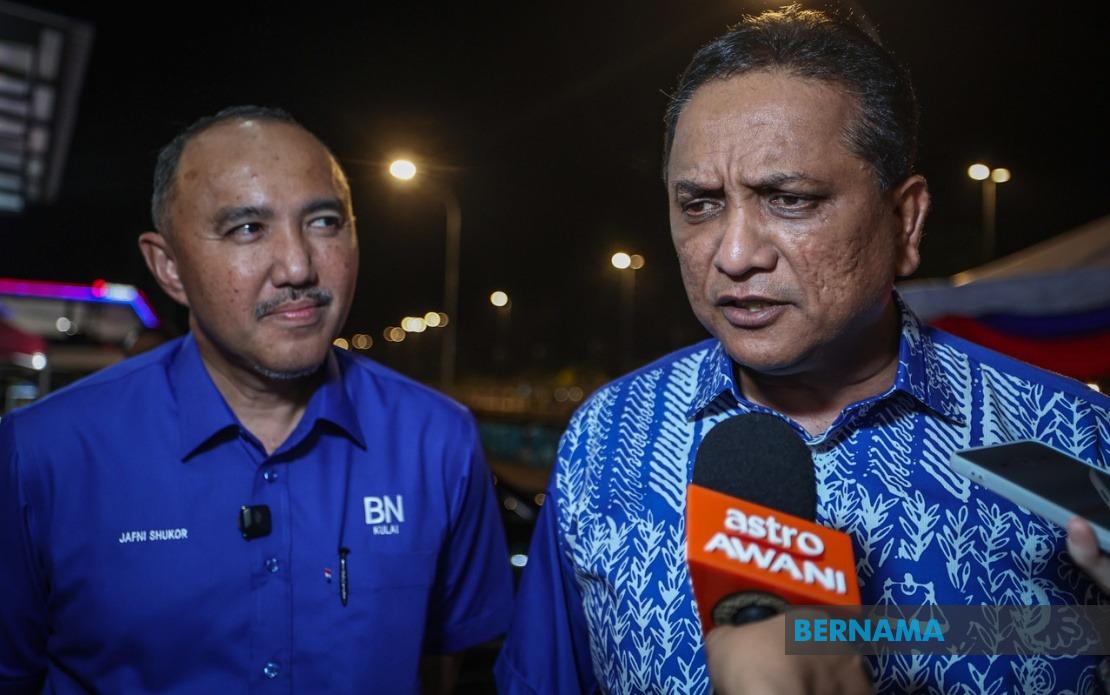
Datuk Seri Reezal Merican Naina Merican, a senior figure within UMNO's highest decision-making body, has firmly rejected characterisations of the Johor state government as being under the Regent's thumb. Speaking to journalists in Johor Bahru on June 25, the politician stressed that descriptions of Tunku Mahkota Ismail as orchestrating state affairs as a puppet master are wildly overblown and lack substantive foundation. His remarks come amid heightened tensions within Johor's political establishment as the state gears up for its electoral exercise, with the Election Commission having designated June 27 as the nomination day and July 11 as polling day.
The underlying dispute centres on the proper scope of the Regent's authority and influence within Johor's governance framework. Reezal Merican articulated a constitutional defence of the monarch's position, arguing that Tunku Mahkota Ismail's vocal pronouncements on development initiatives and administrative matters fall squarely within his legitimate purview as Regent. Rather than representing undue interference, the UMNO official characterised such interventions as the fulfilling of institutional responsibility toward the Johor populace. The Regent's office, in this reading, serves as a crucial stabilising mechanism that ensures accountability among the state's political executive, including the Menteri Besar and senior administrative personnel.
The controversy has been intensified by the recent political exit of Datuk Dr Mohd Puad Zarkashi, the former Speaker of the Johor State Legislative Assembly, who abandoned his party affiliation while levelling accusations against Menteri Besar Datuk Onn Hafiz Ghazi. Reezal Merican expressed scepticism regarding the former Speaker's motivations, suggesting that the timing and framing of these allegations deserve scrutiny. By raising questions about Puad's intentions in dragging the royal institution into state-level political disputes, Reezal Merican sought to discredit the narrative being advanced by dissident figures within the broader political constellation.
The tension between state elected officials and the palace reflects broader constitutional questions about the role of constitutional monarchs in Malaysia's system of governance. While the Federal Constitution and individual state constitutions vest formal executive authority in elected representatives, the institution of the Sultan or Regent carries significant symbolic weight and, in practice, considerable informal influence. In Johor, where the royal house maintains a particularly prominent position in public consciousness and administrative tradition, these boundaries can become contested, especially during periods of political flux.
Reezal Merican's intervention serves multiple purposes within UMNO's internal and external political calculus. By defending both the Regent's prerogatives and the integrity of the state government, he attempts to reconcile two potentially competing narratives. First, he affirms the Regent's constitutional role and legitimacy, thereby protecting the institution that remains central to Johor's identity and social order. Second, he implicitly defends the Menteri Besar and the state administration against accusations of being subservient to palace interests, thus preserving the credibility of elected government.
The UMNO leader explicitly rejected any suggestion that party structures or operations in Johor have been compromised by palace influence. His assertion that he has never encountered within Supreme Council deliberations any indication that Johor UMNO functions as a palace instrument was designed to reassure party members and the broader electorate that party democracy remains intact. In the Malaysian political context, where questions of institutional autonomy and democratic legitimacy frequently intersect with questions of royal authority, such affirmations carry weight beyond their immediate rhetorical value.
The timing of these exchanges matters considerably. With the Johor election imminent, public discourse about governmental legitimacy and the proper distribution of power among institutions takes on heightened political significance. Opposition figures and dissident members of the ruling coalition may seek to leverage grievances about royal influence as part of their electoral strategy, arguing that voters deserve greater transparency and democratic control over decision-making. Reezal Merican's pushback reflects UMNO's determination to counter this narrative before it gains traction among the electorate.
From a constitutional standpoint, Reezal Merican's position aligns with mainstream Malaysian jurisprudence regarding the separation of powers and royal prerogative. The Regent's authority to issue directives, shape policy priorities, and exercise oversight represents a normal feature of Malaysia's constitutional monarchy system, not an aberration or usurpation of elected officials' responsibilities. However, the specific intensity of Tunku Mahkota Ismail's engagement in state administration has prompted commentary about whether these functions are being exercised in a manner consistent with established conventions.
The dispute also reflects generational and stylistic differences within Johor's political elite. Younger or more reform-minded officials may chafe against what they perceive as excessive deference to palace preferences, while traditionalists and those closely aligned with royal interests naturally emphasise the Regent's constructive role in promoting good governance and development. These tensions, while framed in terms of institutional architecture, ultimately derive from substantive disagreements about policy direction and political influence.
For Malaysian observers beyond Johor, these developments illustrate the ongoing negotiation of power relationships between elected governments and constitutional monarchs across the country. While the Federation remains formally committed to parliamentary democracy and constitutional rule, the practical operation of authority involves complex interplay between multiple institutional actors. The Johor situation provides a case study in how these tensions surface, are publicly debated, and ultimately resolved through political negotiation rather than constitutional adjudication.
Looking ahead to the June 27 nomination day and July 11 polling, the framing of these institutional relationships will likely influence voter calculations. Whether the electorate accepts Reezal Merican's characterisation of the Regent as fulfilling legitimate constitutional functions or embraces alternative narratives about excessive palace influence may depend partly on how effectively each camp articulates its position in the coming weeks. The UMNO leader's intervention establishes an early marker in what is likely to be a contested electoral campaign.

