%22%2F%3E%3C%2Fpattern%3E%3C%2Fdefs%3E%3Crect%20width%3D%22100%25%22%20height%3D%22100%25%22%20fill%3D%22url(%23ph33owcg)%22%2F%3E%3Crect%20width%3D%22100%25%22%20height%3D%22100%25%22%20fill%3D%22url(%23ph33owcp)%22%2F%3E%3Ctext%20x%3D%2250%25%22%20y%3D%2250%25%22%20text-anchor%3D%22middle%22%20dominant-baseline%3D%22central%22%20fill%3D%22rgba(255%2C255%2C255%2C0.95)%22%20font-family%3D%22Georgia%2C%20'Times%20New%20Roman'%2C%20serif%22%20font-weight%3D%22700%22%20font-size%3D%22272%22%20letter-spacing%3D%22-0.02em%22%3EJohor%3C%2Ftext%3E%3C%2Fsvg%3E)
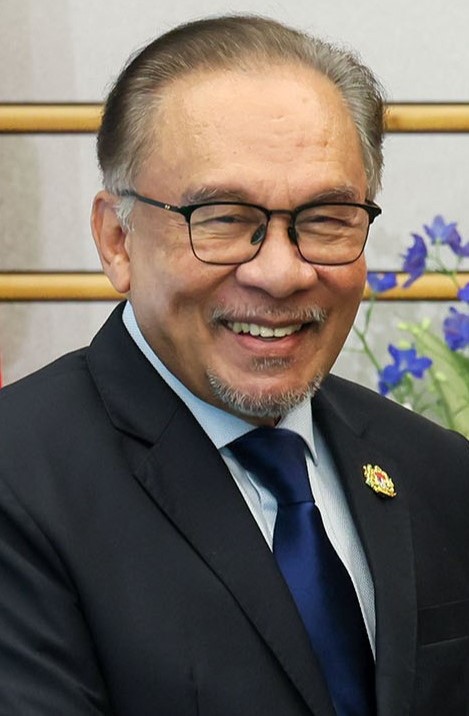
The Regent of Johor, Tunku Mahkota Ismail, received Prime Minister Datuk Seri Anwar Ibrahim in a formal audience on June 22, a meeting that served to reaffirm the collaborative ties binding Putrajaya and the southern state. The encounter signals continuity in the political partnership between the federal administration and Johor's leadership, an important alignment given the state's economic significance and population size within the Malaysian federation.
Such high-level engagements between the Regent and the Prime Minister carry symbolic weight beyond the formal courtesies involved. Johor, as the nation's second-largest state by population and a major economic hub, holds considerable political influence within Malaysia's federal structure. The voluntary granting of an audience by the Regent to the sitting Prime Minister demonstrates recognition of legitimate federal authority and a commitment to maintaining functional governance channels between state and national levels.
The timing of this meeting reflects the broader political landscape in Malaysia, where coordination between state governments and the federal centre remains essential for policy implementation across various sectors. Johor has historically played a pivotal role in Malaysia's economic development, particularly through port operations in Port Klang and Johor Port, manufacturing industries, and its strategic geographic position serving as a gateway to Singapore and the wider Southeast Asian region.
The relationship between Putrajaya and Johor carries additional significance given the state's demographic importance. With a substantial population that influences national electoral outcomes, the state's stability and alignment with federal priorities contribute meaningfully to the government's ability to execute its agenda across education, infrastructure, and economic development initiatives.
This audience also reflects the protocol and respect traditionally maintained within Malaysia's constitutional monarchy framework, where state rulers occupy positions of considerable ceremonial and symbolic importance. The fact that such a meeting warranted public acknowledgement suggests both parties view the engagement as sufficiently significant to communicate to the broader public, reinforcing narratives of institutional harmony and effective governance structures.
For Malaysian businesses and investors, particularly those operating in Johor or contemplating expansion into the state, such demonstrations of federal-state cooperation provide reassurance regarding the stability of the operating environment. Clear communication channels and positive relations between different levels of government typically facilitate smoother administrative processes and more predictable regulatory landscapes.
The meeting also carries implications for Southeast Asian regional dynamics, given Johor's role as a crossroads for economic activity in the region. Strong internal governance structures and unified federal-state direction strengthen Malaysia's ability to pursue coherent regional economic strategies, negotiate effectively with neighbouring countries, and maintain investment appeal to both domestic and foreign capital.
Governance specialists observe that maintaining positive working relationships across different tiers of government remains crucial for federations like Malaysia, where constitutional arrangements distribute powers across state and federal authorities. Regular high-level engagement, such as the Regent's audience with the Prime Minister, helps prevent the adversarial dynamics that can sometimes emerge when state and federal governments operate from opposing political positions.
The strengthening of ties between Putrajaya and Johor also resonates with the broader Malaysian public discourse around national unity and institutional effectiveness. Citizens across the nation observe how their respective states interact with the federal government, and such meetings influence public perceptions regarding the functionality of the democratic system and the willingness of different power centres to cooperate for the common good.
Looking forward, the continuation of such formal engagements will likely remain important as Malaysia navigates complex governance challenges spanning economic recovery, infrastructure development, and social cohesion. The demonstrated commitment to maintaining strong federal-state relations through Johor's Regent audience with the Prime Minister sets a positive precedent for how Malaysia's various governmental institutions can work in concert, even amid the competitive pressures that inevitably characterise political systems in democratic societies.