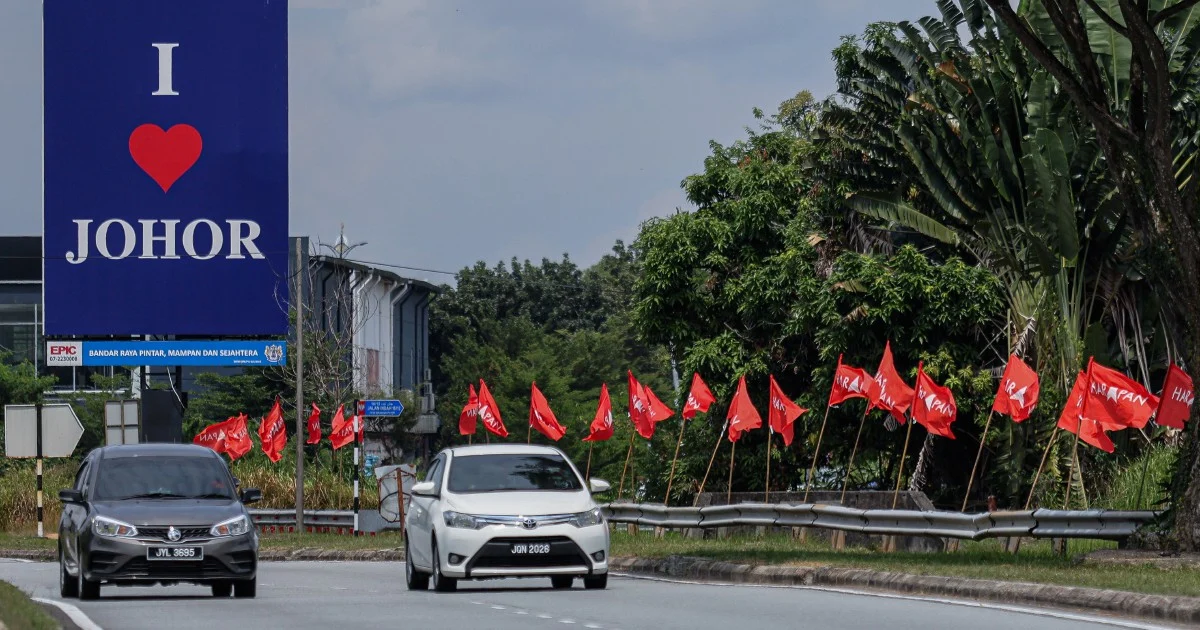
The upcoming Johor state election represents far more than a personality contest for the position of menteri besar, according to a senior PKR youth official speaking in Johor Baru. The framing matters considerably, as state elections across Malaysia have historically been dominated by media and public discourse focused on who leads the government, often overshadowing substantive policy discussions. This reshaping of the narrative could prove significant for how voters approach their decision-making process and what criteria they ultimately prioritise when casting their ballots.
The party representative argues that the electorate would be better served by evaluating which coalition possesses the most cohesive team and the clearest, most achievable vision for advancing Johor's economic prospects. This argument reflects a broader shift in political discourse, particularly among younger politicians who contend that governance effectiveness depends on institutional strength, policy coherence, and long-term planning rather than individual charisma alone. The emphasis on collective capability rather than a single leader's appeal represents a departure from traditional Malaysian electoral dynamics.
Johor, as Malaysia's second-largest state by population and a critical economic engine in the southern corridor, faces considerable developmental pressures. The state accounts for significant manufacturing output, port operations, tourism revenues, and agricultural production. Future governance must address infrastructure modernisation, workforce development, and regional integration with Singapore and other neighbouring economic zones. These multifaceted challenges require sustained institutional competence rather than individual brilliance.
The economic dimension carries particular weight in the current climate. Post-pandemic recovery remains uneven across sectors, foreign investment has shown volatility, and rural-urban disparities persist in several districts. Voters naturally want assurance that their chosen government can navigate these complexities, attract quality investment, and create employment opportunities across demographic groups. Coalition-level stability and coordinated policy execution become crucial factors in achieving these outcomes, arguably more so than the specific identity of a single executive.
Social development concerns complement economic considerations. Education quality, healthcare accessibility, affordable housing, and communal harmony represent persistent concerns across Johor's diverse constituencies. These issues demand sophisticated, integrated approaches that span multiple government agencies and require budget coordination at various administrative levels. The capacity of a ruling coalition to function as a coordinated unit directly impacts implementation effectiveness.
The PKR youth position also touches on internal coalition dynamics. Political partnerships in Malaysian federalism often involve multiple parties with distinct ideologies and voter bases. Whether coalition members can work constructively toward shared objectives, respect ministerial portfolios, and avoid public squabbling significantly influences a government's effectiveness. Voters demonstrating preference for coalition strength over individual leaders might inadvertently strengthen institutional discipline within political partnerships.
Historically, Johor has experienced several transitions in menteri besar appointments that occurred without state elections, reflecting the fluid nature of coalition politics at the state level. This reality underscores that the parliamentary election result might not determine the final composition of the state executive. Consequently, voting based primarily on menteri besar preference could prove misaligned with actual governance outcomes. Voters selecting based on coalition capabilities might make choices more resilient to such post-election developments.
The messaging strategy suggests PKR believes their coalition presents a more compelling platform of comprehensive governance proposals compared to emphasis on individual leadership qualities. This positioning could either represent genuine confidence in institutional strength or a tactical response if polling suggests their menteri besar candidate faces unfavourable perceptions. Understanding voter receptiveness to this reframing will illuminate whether Malaysian voters increasingly prioritise policy substance and institutional competence over personalised leadership narratives.
Regional implications extend beyond Johor's borders. How voters respond to this call for coalition-focused evaluation could influence political discourse across other Malaysian states approaching electoral cycles. If this approach resonates significantly, it might encourage other coalitions and candidates to develop and articulate more detailed governance platforms, potentially enriching public debate quality. Conversely, if voters continue prioritising individual leadership, this PKR initiative may have limited broader impact despite its intellectual merit.
The economic interdependencies between Johor and other Southeast Asian economies add another dimension to governance competence discussions. As a state bordering Singapore and integrated into broader regional supply chains and investment flows, Johor requires administrations capable of managing sophisticated economic relationships and international negotiations. Coalition stability and institutional capability become markers of capacity to function effectively within these complex regional networks.
Younger voters, who the PKR youth leader's message ostensibly targets, may indeed prove more receptive to policy-focused arguments than their older counterparts. Generational shifts in political priorities could mean that emphasising team strength and developmental vision captures meaningful voting blocs previously unmobilised through traditional personalised appeals. This generational dimension adds nuance to how the campaign might unfold across different voter demographics.
Ultimately, the PKR position reflects a broader truth about Malaysian governance: state-level administrations require sustained institutional capacity, coordinated policy implementation, and stable coalitions to deliver tangible improvements in residents' lives. Whether framing the Johor election around coalition strength versus menteri besar personalities genuinely influences voter behaviour will reveal important insights about evolving Malaysian electoral preferences and whether emphasis on governance substance can successfully compete with traditional focus on individual leadership.

