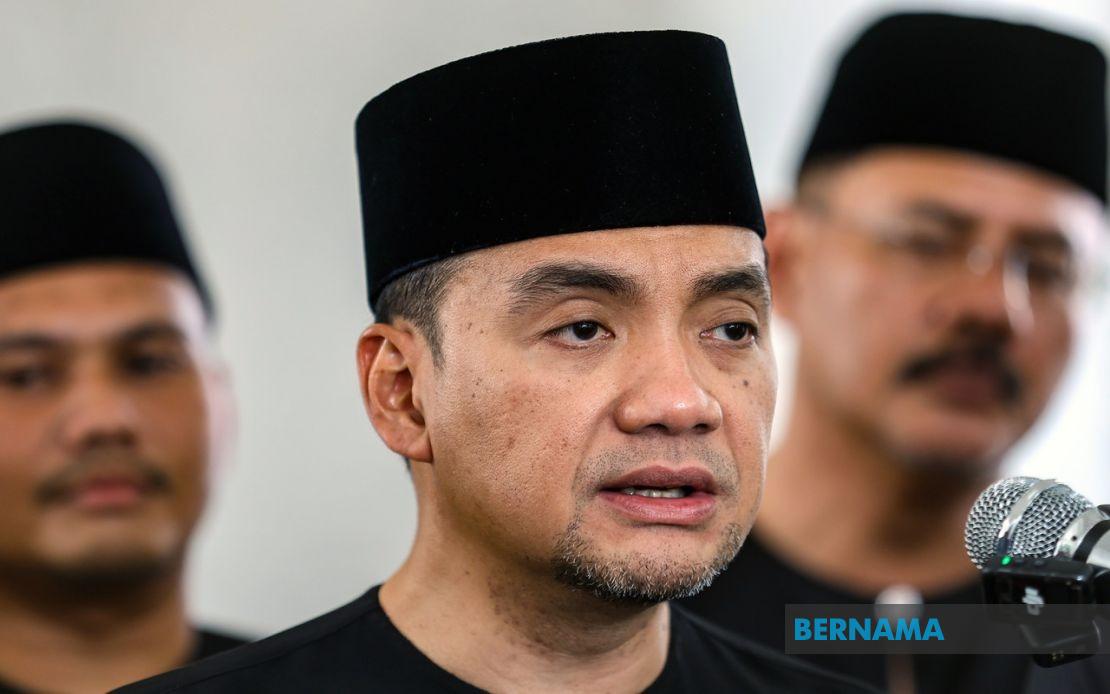
Johor's state government has rolled out a fresh initiative aimed at reinvigorating congregational prayer practices, with particular focus on the evening prayer times that have traditionally seen lower mosque attendance. The Semarak Maghrib and Isyak programme represents an extension of earlier efforts to promote dawn prayer gatherings and reflects a strategic approach to strengthening religious engagement across the state's mosque network.
Menteri Besar Datuk Onn Hafiz Ghazi unveiled the initiative as part of a broader vision to position mosques as vibrant community hubs rather than purely worship venues. According to the Johor leader, the programme addresses a recognised challenge in modern Islamic practice—maintaining consistent congregational turnout during non-mandatory prayer times. By creating structured activities and social engagement around Maghrib and Isyak prayers, the state hopes to deepen the spiritual commitment of the Muslim community while simultaneously fostering interpersonal bonds through shared devotion.
The Semarak Maghrib and Isyak programme carries particular significance given that it was pledged during the Barisan Nasional campaign for Johor's recent state election. This positioning underscores how mosque revitalisation has become a tangible political commitment rather than merely aspirational messaging. The implementation across mosques throughout Johor signals a systematic, state-level approach to addressing religious participation gaps, with government coordination ensuring consistency in programme delivery and quality.
According to Onn Hafiz, the initiative builds upon previous success with a statewide Subuh prayer promotion campaign. The expansion to include evening prayers demonstrates recognition that comprehensive mosque engagement requires attention to multiple prayer times. While dawn prayers have traditionally maintained stronger congregational presence due to their mandatory nature and pre-dawn timing requirements, Maghrib and Isyak prayers offer different scheduling possibilities and social dynamics that could be leveraged for broader community participation.
The inaugural event at Masjid Jamek As-Syakirin in Bukit Saujana featured structured religious content alongside prayer observance, including a scholarly lecture on the 40 Hadith focusing on the Islamic concept of intention determining actions. This pedagogical component reflects understanding that sustainable prayer participation often requires intellectual engagement alongside spiritual practice. The recitation of Surah Al-Mulk during the gathering further emphasised the programme's integration of devotional elements with community activity.
The appointment of Johor Bahru district kadi Mohd Zaini Mohd Salleh to deliver religious instruction at the inaugural event signifies institutional coordination between state religious administration and the initiative. This involvement of formal religious authority figures lends credibility and ensures theological consistency in messaging. For Malaysian readers familiar with mosque governance structures, such appointments indicate serious governmental investment rather than grassroots mobilisation alone.
Onn Hafiz's framing of Semarak Maghrib and Isyak within the broader context of syiar Islam—the propagation and expression of Islamic values—connects the immediate goal of attendance increase to longer-term aspirations of building a religiously-oriented society. This language reflects contemporary Malaysian political discourse where religious identity and governance increasingly intersect, particularly in states like Johor where Islamic institutions maintain significant social influence.
The programme's emphasis on mosque-centred community building speaks to a recognised challenge across Southeast Asia: maintaining traditional religious institutions' relevance amid urbanisation and competing recreational alternatives. By positioning mosques as venues for knowledge dissemination, social connection, and spiritual nourishment rather than purely ritual spaces, Johor's approach acknowledges modern worshippers' expectations for multi-faceted community engagement.
For Malaysian Muslim communities, particularly in Johor, the Semarak Maghrib and Isyak initiative offers structured pathways for deepening religious practice without requiring radical lifestyle changes. Evening prayer times align more readily with modern work schedules than dawn prayers, potentially making participation more accessible to working professionals. The programme thus addresses practical barriers to congregational worship while simultaneously building social capital within mosque communities through shared activities and learning opportunities.
The broader implications for Malaysia's religious landscape extend beyond Johor. As other states observe the implementation and outcomes of this programme, similar initiatives may emerge, creating a model for state-level religious engagement strategies. The approach demonstrates how government resources and coordination can support mosque-centred activities without infringing on religious autonomy, balancing institutional support with community ownership.
Onn Hafiz's appeal for sustained community participation underscores that programme success ultimately depends on grassroots commitment rather than top-down mandate alone. The Menteri Besar's emphasis on making mosque attendance habitual—transforming individual prayer acts into communal cultural practices—suggests understanding that institutional initiatives require enthusiastic community embrace to achieve lasting impact.
Looking forward, the Semarak Maghrib and Isyak programme serves as a measurable test case for state-sponsored mosque revitalisation in contemporary Malaysia. Attendance metrics, community feedback, and long-term participation patterns will indicate whether structured evening prayer programmes effectively address modernisation challenges facing traditional religious institutions. Success could establish a template for similar initiatives across other Malaysian states and contribute meaningfully to discussions about institutional Islam's evolving role in increasingly urbanised Southeast Asian societies.

