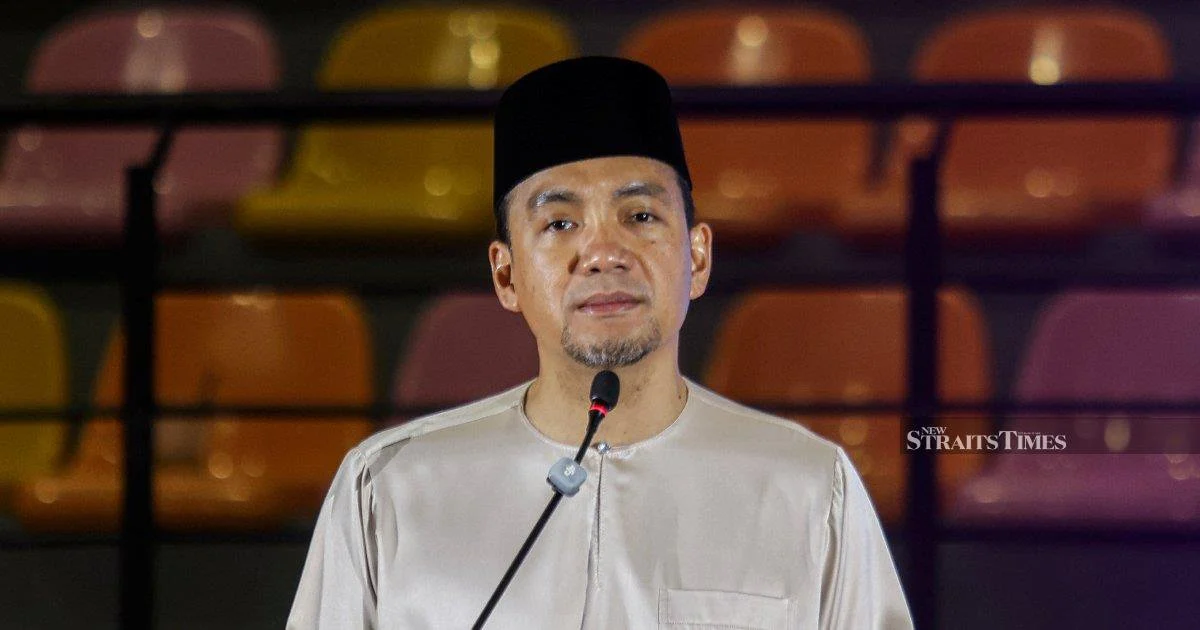
The Johor government has formally demanded an investigation into Network School following mounting concerns about alleged connections to Israeli interests, signalling a hard line stance on organisations perceived as threatening state sovereignty and national interests. The call from Johor's leadership reflects deepening sensitivities in Malaysia regarding foreign influence and ideological movements that officials believe may conflict with the nation's constitutional framework and established foreign policy positions.
Johor's position on the matter underscores a broader pattern of scrutiny directed toward educational institutions operating within the state, particularly those with international affiliations or funding sources that raise questions about their underlying objectives. The government has explicitly warned that it will not permit any entity to operate within Johor as a conduit for spreading ideologies deemed incompatible with Malaysian law, state autonomy, or the interests of its residents.
The Network School controversy touches on sensitivities that have long characterised Malaysian public discourse, where questions about institutional independence, foreign sponsorship, and ideological orientation remain subjects of intense debate. Educational bodies operating in Malaysia face increasing expectations of transparency regarding their governance structures, funding origins, and curricular philosophies, particularly when international partnerships or financial relationships are involved.
The Johor government's intervention suggests that relevant authorities will examine the school's administrative framework, source of financing, and pedagogical approach to determine whether any aspects violate Malaysian regulations or contravene established state policy. This investigatory process will likely extend to scrutinising the institution's leadership, advisory boards, and any formal or informal ties to foreign entities or movements.
For educational institutions operating across Malaysia, this development serves as a reminder that state governments maintain considerable authority in monitoring compliance with local regulations and national values. The Johor administration's willingness to initiate such investigations indicates that educational institutions cannot assume immunity from government oversight, even those positioned as progressive or internationally oriented establishments.
The situation also reflects the Malaysian government's broader approach to managing organisations with transnational dimensions. Officials have consistently expressed concern about maintaining tight control over the types of institutional activities and ideological frameworks that operate within national borders, viewing such oversight as essential to protecting social cohesion and preventing what policymakers characterise as destabilising external influence.
Network School's operational model, which likely emphasises contemporary pedagogical approaches and international engagement, may have inadvertently triggered official scrutiny through its institutional connections or public communications. The investigation will presumably determine whether the school's international dimensions represent legitimate educational collaboration or something authorities view as problematic ideological transmission.
The investigation into Network School occurs within a wider Malaysian context where educational institutions have become focal points for government attention regarding curriculum content, institutional independence, and values formation. State authorities increasingly intervene when they perceive that schools or educational organisations may be promoting perspectives that diverge from official national narratives or constitutional positions.
For parents and stakeholders considering Malaysian educational options, the Johor case demonstrates that school selection involves assessing not only academic quality but also institutional robustness and alignment with regulatory expectations. International educational models operating in Malaysia must navigate an environment where government authorities maintain vigilant oversight of institutional autonomy and ideological orientation.
The investigation's eventual findings will likely influence how other educational institutions with international dimensions structure their operations, particularly regarding transparency in governance, clarity of funding sources, and explicit alignment with Malaysian constitutional values. Schools operating in Johor and throughout Malaysia may face increased pressure to demonstrate through concrete documentation that they maintain appropriate boundaries between educational provision and ideological advocacy.
This episode highlights the enduring tension in Malaysia between embracing educational internationalisation and maintaining government assurance that such engagement does not compromise national interests or sovereignty. The Johor government's decisive action signals that state authorities will continue asserting their prerogative to investigate and potentially restrict organisations whose activities they deem incompatible with official policy objectives.
The resolution of this matter will carry significance beyond Johor, potentially establishing precedents for how state governments throughout Malaysia address similar concerns involving educational institutions with international connections. Regulatory clarity emerging from this investigation may ultimately reshape the operational environment for schools seeking to offer globally-engaged educational experiences within Malaysia.

