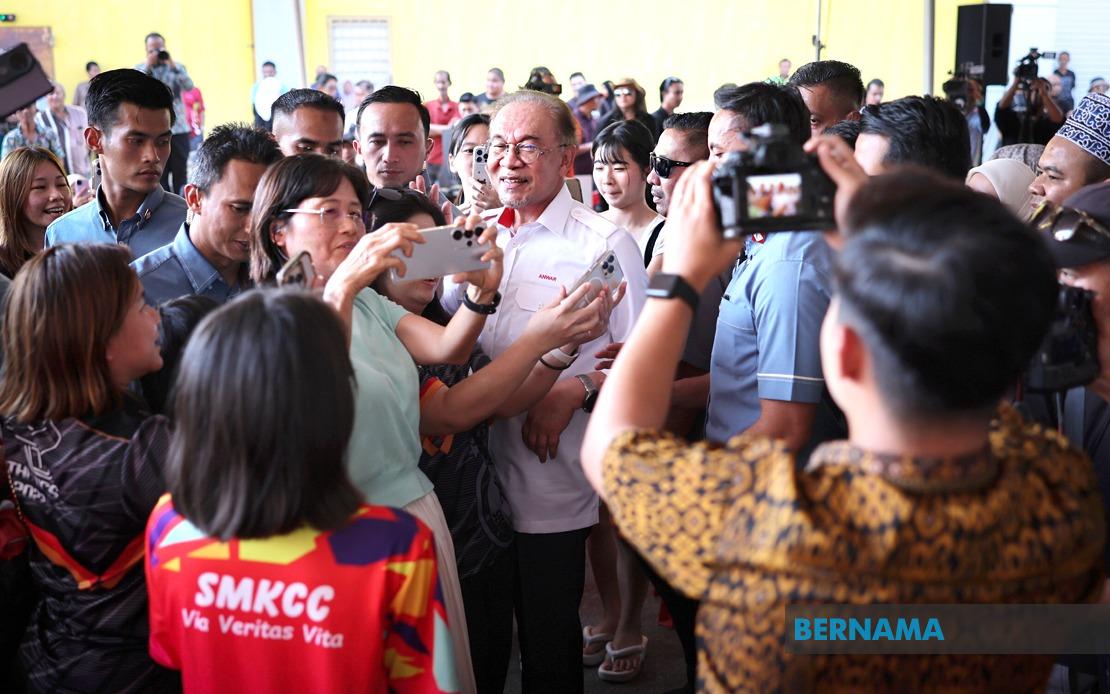
The 16th Johor State Election campaign reached its culmination point on July 10, with all major political coalitions orchestrating high-profile closing events across the southern state. With polling day imminent, candidates and party leaders deployed carefully crafted final pitches designed to sway undecided voters before the official campaigning period expired at 11:59 pm. The intensity of last-minute engagements underscored the competitive nature of this electoral contest, one that carries significant implications for Malaysia's broader political landscape and the state's governance trajectory.
Pakatan Harapan's leadership structure visibly mobilised across multiple constituencies to energise the coalition's supporters. Prime Minister Datuk Seri Anwar Ibrahim personally conducted an ambitious five-venue tour beginning in Bukit Gambir and extending through Bukit Batu and Layang-Layang before culminating in Pasir Gudang for the 'Johor Ke Depan, Undi Harapan Grand Finale Programme'. This geographical spread reflected a strategic determination to maintain campaign momentum across diverse electoral pockets. Anwar's decision to channel his message through social media underscored the contemporary nature of election communication, reaching voters beyond the confines of physical campaign events.
The coalition's ground operations demonstrated varied approaches suited to local contexts. In Larkin, PH's candidate Suhaizan Kaiat adopted an understated strategy of mall walkabouts rather than formal rallies, a tactic designed to foster personal connections with ordinary shoppers. His accompanying presence of Parti Amanah Negara Vice President Datuk Seri Dr Dzulkefly Ahmad symbolised the cross-coalition coordination underlying PH's electoral machinery. Suhaizan's emphasis on voter feedback as a responsibility rather than a mandate offered a reflexive tone, suggesting openness to constituent concerns rather than triumphalism.
Barisan Nasional's closing activities reflected a distinct spiritual and introspective dimension. Deputy Prime Minister Datuk Seri Dr Ahmad Zahid Hamidi participated in the 'BN Grand Supplication & Doa Selamat' gathering in Kulai, a religious invocation event signalling reliance on divine intervention alongside electoral competition. This approach resonated with Malaysia's religious sensibilities and may particularly appeal to voters prioritising moral and spiritual considerations. Such appeals represented a deliberate counterbalance to purely policy-focused messaging, acknowledging the multidimensional nature of voter decision-making in Malaysian society.
Incumbent Johor Menteri Besar Datuk Onn Hafiz Ghazi's public apology constituted a notable strategic pivot. Through Facebook, he acknowledged administrative shortcomings throughout his tenure, an admittance that suggested either genuine humility or tactical recognition that voter sentiment had shifted against BN. This posture contrasted sharply with typical incumbent messaging, which generally emphasises achievements and durability. The vulnerability displayed through such an apology potentially aimed at salvaging voter credibility rather than conveying campaign confidence.
Mitra Perikatan Nasional components pursued separate strategic trajectories. Bersatu President Tan Sri Muhyiddin Yassin framed the election in terms of informed voter deliberation, essentially requesting citizens to synthesise campaign information into rational choices. This intellectual appeal distinguished Bersatu's positioning from emotional or religious-based messaging. The two-week campaign period was characterised as sufficient for voters to accumulate comparative data, placing responsibility on electors to exercise discernment rather than merely responding to last-minute persuasion.
Bersama's closing concert featured party luminaries Datuk Seri Rafizi Ramli and Nik Nazmi Nik Ahmad, with Rafizi pledging a comprehensive final address that would synthesise, analyse, and rebut campaign-period issues. This metacommunicative approach—discussing the discourse itself rather than advancing new arguments—suggested Bersama's attempt to demonstrate intellectual command over electoral narratives. Such positioning appealed to voters viewing politics through analytical rather than purely partisan lenses.
MUDA's 'Puteri Wangsa Grand Finale Lecture' added a generational dimension to closing campaigns. MUDA President Amira Aisya Abd Aziz's emphasis on voter agency reflected the younger party's democratic ethos, reframing the electorate as possessing fundamental power rather than merely participating in a pre-determined process. This rhetorical choice resonated with electorate segments increasingly conscious of their democratic prerogatives and increasingly sceptical of traditional hierarchical political structures.
Weather considerations added practical complexity to polling day preparation. The Malaysian Meteorological Department forecast clear morning conditions but afternoon rainfall potential, necessitating voter adjustment for precipitation possibilities. Election organisers would need to account for weather-related barriers to voting, particularly affecting mobility in rural constituencies where transportation challenges could compound precipitation difficulties. Advance planning for such contingencies reflected sophisticated election administration aware that weather represented a tangible participation variable.
The electoral battlefield encompassed 56 state legislative assembly seats across Johor, with 172 candidates competing for positions representing the state government. This numerical scale illustrated Johor's significance within Malaysia's federal system—the state's economic weight, population concentration, and geographic position rendered it strategically consequential for national coalition mathematics. A decisive PH or BN performance in Johor would substantially influence broader Malaysian political alignment, making this election outcome extend far beyond state-level governance concerns.
The conclusion of the formal campaign period represented merely the penultimate moment in a dynamic political process. Voters would determine outcomes through their accumulated assessment of competing visions, candidate credentials, and coalition performance records. The multiplicity of closing messages—spiritual invocation, intellectual analysis, generational empowerment, administrative accountability—reflected Johor's heterogeneous electorate and the competing visions of governance undergirding Malaysia's contemporary political competition. Tomorrow's polling would translate these diverse campaign narratives into concrete electoral outcomes reshaping state administration and contributing to broader national political recalibration.

