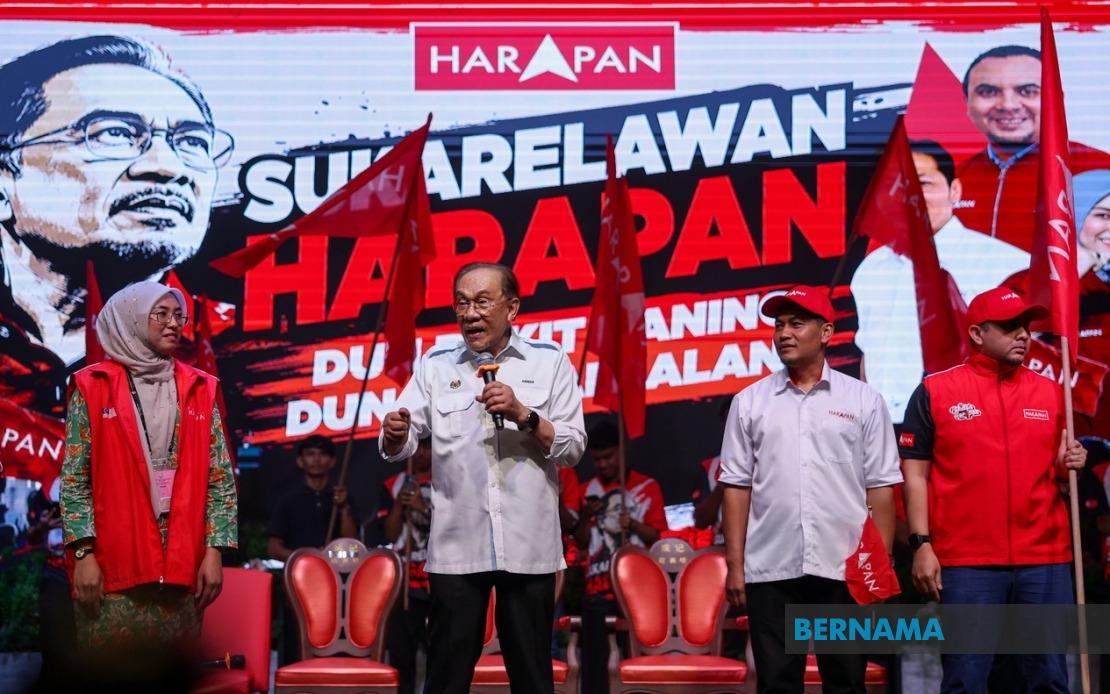
Prime Minister Datuk Seri Anwar Ibrahim has framed the Johor state election as a pivotal moment for young voters to reshape Malaysian politics by abandoning divisive racial rhetoric in favour of leaders demonstrating genuine commitment to youth welfare. Speaking at campaign events in Muar, Anwar emphasised that the younger generation must evaluate candidates on their track record addressing education quality, job creation, and state infrastructure rather than succumbing to inflammatory messaging designed to pit ethnic communities against each other. His remarks reflected a broader strategic pivot by Pakatan Harapan to mobilise youth activism as a counterweight to traditional communal politics that has long dominated Malaysian electoral contests.
The Prime Minister launched a sharp critique of what he characterised as poisonous political narratives that deliberately manufacture inter-ethnic tensions. He specifically condemned rhetoric encouraging Malays to fear Chinese Malaysians, fostering resentment toward Indian Malaysians, and stoking suspicion between different racial groups. Anwar argued that such divisive messaging serves the interests of entrenched elites who enrich themselves while ordinary citizens remain preoccupied with manufactured conflicts. This framing attempts to reposition Pakatan Harapan as the party of national unity and inclusive governance, contrasting sharply with competitors accused of perpetuating outdated communal approaches that fragment rather than strengthen the nation.
Addressing a substantial youth turnout at the Bukit Naning volunteer programme launch, Anwar expressed genuine enthusiasm about what he interpreted as evidence of generational political awakening. He told assembled supporters that his more than decade-long campaign for reform had never witnessed comparable enthusiasm from young people, suggesting the moment represented a historic inflection point in Malaysian democratic participation. This observation carries significance beyond rhetorical flourish. Malaysia's youth demographic increasingly questions traditional patronage networks and identity-based voting patterns, creating space for politicians willing to address substantive governance failures rather than rely exclusively on communal messaging.
The Prime Minister directly appealed to young Malays, Chinese, and Indian voters to recognise their collective stake in demanding better governance from their political representatives. He urged the assembled youth not to accept what he termed the "rotten political system" characterising Malaysian politics, instead positioning them as agents capable of driving transformative change. This approach acknowledges a fundamental shift in how younger Malaysians evaluate political options. Unlike previous generations who frequently voted along strict communal lines, younger voters increasingly prioritise bread-and-butter issues like graduate unemployment, affordable housing, education quality, and government competence.
The timing of Anwar's intervention carries particular weight given Malaysia's demographic composition. Young voters aged 18 to 40 represent a substantial and growing portion of the electorate. Their political behaviour directly influences electoral outcomes across states and the federal level. By explicitly calling for youth engagement and mobilisation, Anwar attempted to convert demographic advantage into electoral momentum. The Johor contest, with 172 candidates competing across 56 state seats, represents one of the largest electoral battlegrounds in recent Malaysian politics, making it an effective testing ground for youth-focused campaign strategies.
Anwar's emphasis on the incompatibility of racial divisive politics with modern independent Malaysia suggests a deliberate effort to frame contemporary electoral competition as a clash between progressive and regressive political models. He asserted that Malaysia's historical strength derived from its multiethnic social contract and peaceful coexistence across communities. Attempting to stoke racial conflict, in his framing, constitutes sabotage against this foundational achievement. This argument implicitly positions Pakatan Harapan as the guardian of the original constitutional settlement, challenging competitors on their own terrain rather than ceding issues of national identity and social cohesion entirely.
The scale of early voting provisions and the election schedule itself reflect broader trends in Malaysian electoral administration. With early voting scheduled for July 7 and general polling on July 11, the Johor contest accommodates diverse voter circumstances while maintaining election integrity. These logistical arrangements matter for youth mobilisation given younger voters' varied work schedules and geographic mobility. Anwar's campaign explicitly directed young supporters to conduct grassroots outreach across villages, neighbourhoods, and districts, leveraging the volunteer programme structure to transform campaign workers into direct community messengers.
Internally, Pakatan Harapan's candidate slate in Johor included Nazri Abd Rahman contesting the Simpang Jeram seat and Md Ysahrudin Kusni in Bukit Naning, suggesting the coalition attempted to balance established political figures with relatively new entrants. This strategy acknowledges that youth voters frequently respond to candidates perceived as distinct from traditional political establishments while requiring sufficient organisational backing to mount competitive campaigns. The tension between novelty and institutional support characterises many contemporary coalitions attempting to rebrand themselves as agents of change.
The broader regional implications of Anwar's youth-focused campaign strategy extend beyond Johor itself. Southeast Asian democracies increasingly confront questions about how traditional political systems accommodate younger voters' distinct preferences and priorities. Malaysia's experience demonstrates both the potential for youth mobilisation to reshape electoral outcomes and the persistence of structural factors—including gerrymandering, media access disparities, and incumbent advantages—that constrain genuine political transformation. Anwar's emphasis on youth responsibility reflects recognition that demographic advantage alone proves insufficient without corresponding shifts in campaign organisation, messaging strategy, and institutional adaptation.
Anwar's exhortation to young voters to avoid remaining mere bystanders carries psychological as well as political weight. It frames political participation not as peripheral to their lives but as essential to securing their own futures. This reframing attempts to overcome documented Malaysian youth cynicism about whether electoral participation actually influences governance outcomes. By connecting personal economic interests—education access, employment prospects, cost of living—directly to electoral choices, Anwar argued that political engagement serves clear material purposes rather than representing abstract civic duty. Whether this framing successfully mobilises youth voters on a sustainable basis will determine whether the Johor contest represents genuine political realignment or temporary electoral flux.

