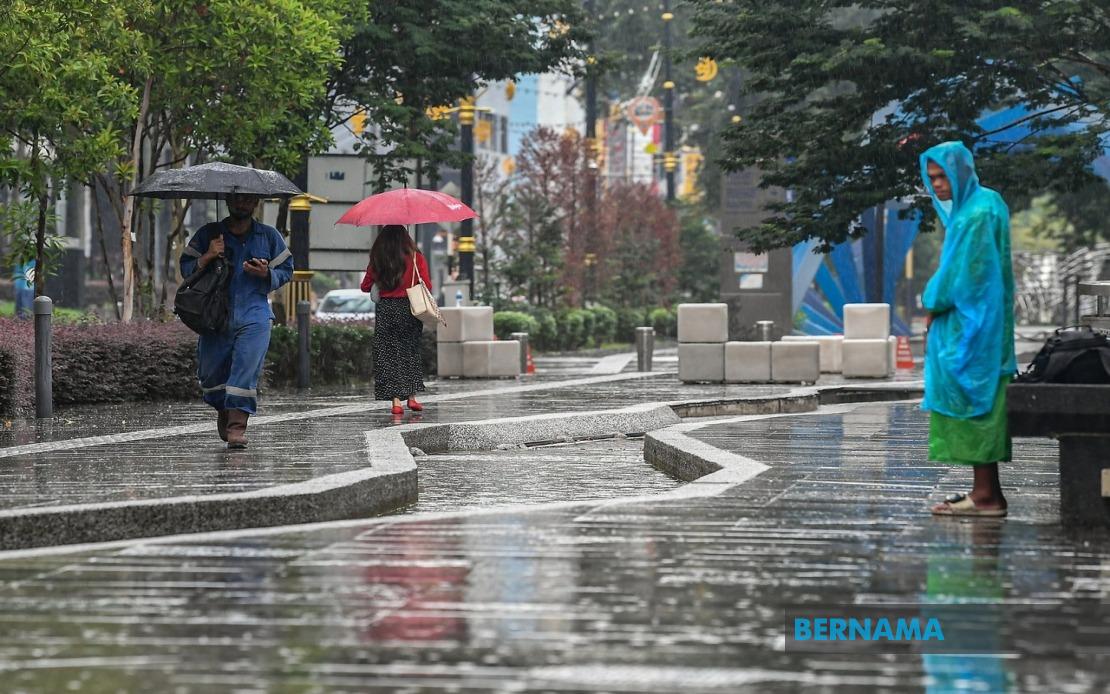
Weather officials have issued a cautionary forecast for Johor's state election nomination day, warning that rainfall is expected to affect more than two-thirds of the state's electoral landscape on June 27. The Malaysian Meteorological Department's Johor director, Azlai Ta'at, identified seven districts that will likely experience morning precipitation: Johor Bahru, Muar, Batu Pahat, Kota Tinggi, Pontian, Tangkak and Kulai. Only Segamat, Kluang and Mersing are anticipated to enjoy clear conditions during the early hours, creating a patchwork of climatic conditions across the state as candidates begin formal procedures.
The timing of these weather patterns presents a logistical consideration for the nomination process, which will compress into a narrow two-hour window from 9 am to 10 am across 56 designated nomination centres. Candidates, party representatives and their supporters will need to navigate the nomination venues during the period when rain is most likely to persist. While MetMalaysia characterised the situation as presenting only a slight "challenge", the concentration of rain during peak morning hours could affect turnout and the ease with which campaign machinery mobilises supporters to these venues.
Temperature conditions will remain consistent with Johor's typical tropical profile. Across the state, minimum temperatures are expected to fluctuate between 24 and 25 degrees Celsius, while afternoon highs will reach between 31 and 34 degrees Celsius. Segamat is forecast to register the highest temperatures, potentially reaching 34 degrees Celsius as it remains sheltered from rainfall. The combination of rain in the morning followed by heat in the afternoon creates conditions that could test the endurance of campaign workers and supporters throughout the day.
The weather forecast takes on broader significance because it extends beyond nomination day itself. MetMalaysia has predicted that afternoon thunderstorms will dominate much of Johor during the launching phase of the official campaign period, which begins immediately after candidates are officially announced by returning officers following the morning nomination process. This means the campaign launch will coincide with atmospheric instability, with thunderstorms expected in Johor Bahru, Segamat, Kluang, Kota Tinggi, Pontian, Mersing and Kulai. Batu Pahat and Tangkak are forecast to experience sustained rainfall, while Muar is the lone district expected to escape both morning rain and afternoon storms, instead facing hot and humid conditions.
The Election Commission has structured the electoral calendar to provide adequate preparation time, setting July 7 as the early voting date and July 11 as polling day. This spacing allows campaign teams to recover from the nomination day disruptions and establish their grassroots operations throughout the intervening period. However, the weather conditions on the nomination day itself will set the tone for how smoothly the first official actions of candidates proceed. The EC has registered 2,727,926 voters across Johor, comprising 2,703,175 ordinary voters, 12,041 military personnel and spouses, and 12,710 police personnel and spouses, representing a substantial electorate that will ultimately decide the composition of the Johor state assembly.
Coalition politics in this election reflect Malaysia's fragmented political landscape. Pakatan Harapan has committed to contesting all 56 seats, deploying 20 PKR candidates, 19 from Amanah and 17 from DAP, representing the opposition coalition's determination to recapture state-level influence. Barisan Nasional, the traditional governing coalition, is also fielding a full slate of 56 candidates, with UMNO providing 36 candidates, MCA contributing 16 and MIC four, signalling a consolidated challenge to Pakatan's ambitions in a state where electoral competition remains genuinely competitive.
Perikatan Nasional's participation adds further complexity to the race dynamics. The coalition is advancing PAS candidates in 11 seats, Bersatu in 16, the Malaysian Indian People's Party in five and Pejuang in one. This fragmentation of the Islamist and Bumiputera-focused vote presents strategic calculations for all competing parties, as Perikatan's combined strength could potentially influence outcomes in tight contests. Additional contenders include the Malaysian United Democratic Alliance fielding four candidates, Parti Sosialis Malaysia with one candidate, and Parti Bersama Malaysia making its electoral debut with an ambitious 15-seat strategy.
The competitive intensity of this election reflects broader patterns in Malaysian electoral politics, where state-level contests have become increasingly significant battlegrounds for national coalitions. Johor's electoral weight cannot be understated given its population size, economic importance and strategic location. The state has historically served as a testing ground for political shifts that eventually ripple through national politics, making the nomination day proceedings and subsequent campaign period especially consequential for coalition positioning ahead of potential federal elections.
MetMalaysia's advisory for the public to remain alert to weather changes carries practical importance beyond meteorological interest. Campaign activities, candidate visibility efforts and voter engagement will all depend partly on climatic cooperation during this critical launch phase. The organisation of nomination centres, transport logistics for candidates and supporters, and the initial momentum that campaigns generate throughout the afternoon campaigning period will all be influenced by whether the predicted thunderstorms materialise as forecast. Political parties have grown increasingly sophisticated in utilising weather windows for outdoor campaign events, and the afternoon storm predictions may force recalibration of launch-day strategies.
For Malaysian and Southeast Asian observers of electoral politics, Johor's 2024 state election represents a significant moment in the region's democratic cycle. The coalition configurations, voter turnout patterns and campaign effectiveness under challenging weather conditions will provide insights into the durability of current political alignments and the evolving preferences of a large and diverse electorate. Whether the rain and thunderstorms prove merely meteorological footnotes or substantive obstacles to campaign momentum remains to be seen when nomination day unfolds.

